

A coworker's gentle observation stopped someone mid-burnout: "No one is going to name the building after you." They were barely sleeping, barely eating, grinding away for a salary that wouldn't change whether they worked 50 hours or 70. That sentence untangled something. Now they work no harder than necessary.
That's the thing about words that stick — they're rarely the ones we plan to remember. They arrive unbidden, sometimes in crisis, sometimes in an ordinary moment, and they reshape how we move through the world.
People online have been sharing the sentences that did this for them, and what emerges is less a collection of motivational quotes and more a map of how we actually change our minds. A father telling his daughter, "I don't just love you, I like you," sounds simple until you realize how much weight those five words can carry. A grandmother's Spanish phrase — "Cada nuble pasa" (every cloud passes) — becomes a lifeline during rough seasons, passed down through generations like a small, portable compass.
We're a new kind of news feed.
Regular news is designed to drain you. We're a non-profit built to restore you. Every story we publish is scored for impact, progress, and hope.
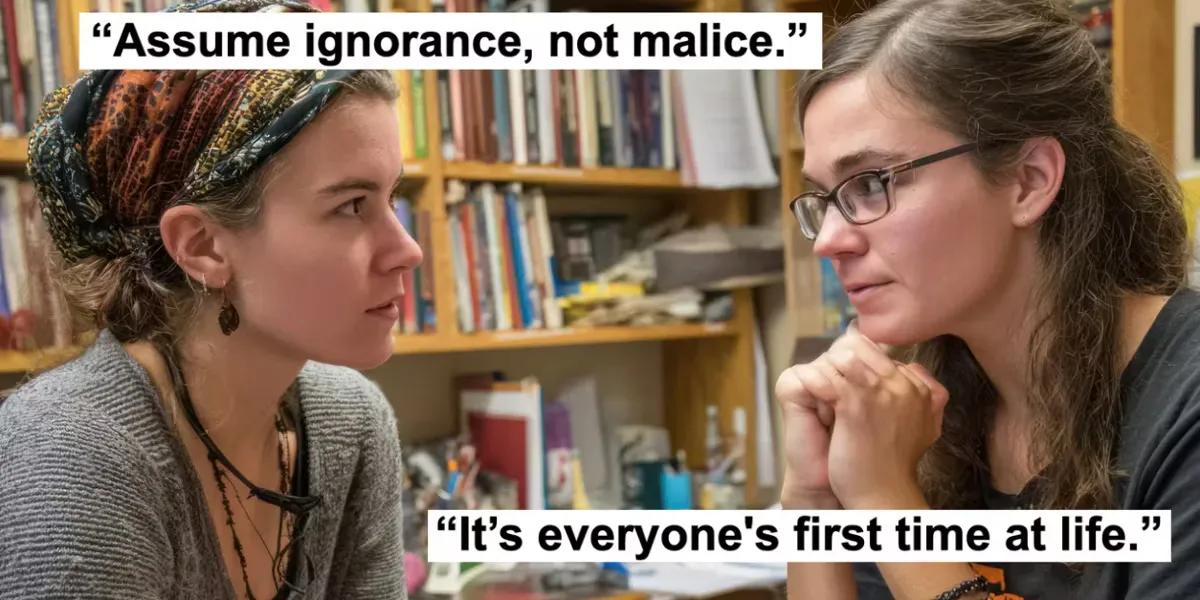
Start Your News DetoxSome of these sentences work by cutting through our own delusions. "Assume ignorance, not malice" stops us from catastrophizing about someone's motives. "You may be the sweetest peach, but not everyone likes peaches" releases us from the exhausting project of being universally liked. "If you were a bad person you wouldn't worry that you're bad" is the kind of thing a therapist might say, but it lands differently when it's just... said.
Others work by permission. "If you're afraid of doing something, do it scared" doesn't erase the fear — it just clarifies that fear isn't a stop sign. "If you make a decision and it's wrong, make another decision" (spoken by someone who was 22 and stoned, for what it's worth) dissolves the paralysis of perfectionism. Very few choices, the person realized, can't be unmade.
The most powerful ones seem to arrive in moments when we need them most. A suicide hotline counselor reframing a caller's despair: "It sounds like you really just want out of your situation, not your life." A husband's quiet words at a casket: "He's not there," meaning he's not suffering anymore, he's in your heart. A grief counselor telling a bereaved parent that healing isn't about "getting through it" but learning to carry it — that the goal shifts from escape to integration.
What these sentences share is specificity and gentleness. They don't shout. They don't demand. They arrive as observations, often from people who knew us well enough to see what we couldn't see ourselves. A girlfriend drawing a boundary. A father naming what he actually felt. A stranger on a crisis line hearing what was really being said.
The invitation at the end of these stories is quiet but real: if a sentence has changed how you see yourself or your life, say it out loud to someone. Write it down. Pass it on. You don't know who else is waiting for exactly those words.





