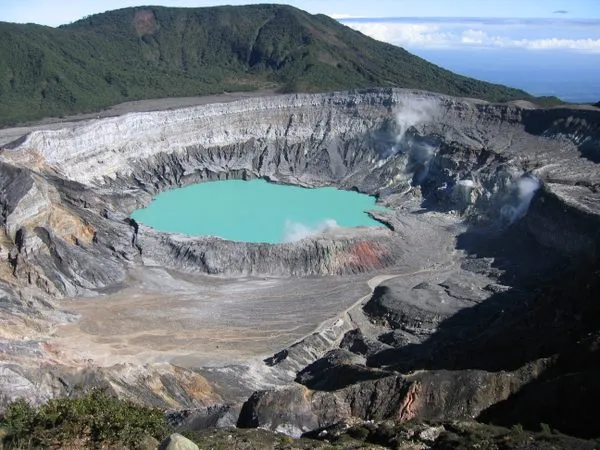
The world's largest open volcano sits in central Costa Rica, and people line up to stand 20 meters from its edge. Poás Volcano National Park draws thousands of visitors each year to peer into a crater that bubbles with a greenish-blue to yellow sulfuric lake, steaming and hissing in the humid mountain air. On clear days, you can see Arenal, another major volcano, rising in the distance across the landscape.
The park exists because of one student's inspiration in the 1960s. Mario Boza, a Costa Rican, visited national parks in the United States and came back convinced his country needed the same protection for its wild places. His Master's thesis became a blueprint: protect the Poás area before development could claim it. In 1971, the volcano and surrounding jungle were granted National Park status, locking in conservation for the 6-park Central Conservation Area that now encompasses thousands of protected hectares.
That protection matters. The park is a haven for birds that exist nowhere else on Earth — resplendent quetzals with their iridescent green feathers, toucans, hummingbirds — all thriving in the dense vegetation that cloaks the rolling hills around the volcano. The area feeds into the same water systems that supply the coffee farms you might recognize from your morning cup at Starbucks.
We're a new kind of news feed.
Regular news is designed to drain you. We're a non-profit built to restore you. Every story we publish is scored for impact, progress, and hope.
Start Your News DetoxLiving with an active volcano
Poás isn't dormant. The 8,885-foot volcano has erupted regularly since 1828, most recently in 2017 and 2019. In April 2017, a blast threw rocks and debris across the viewing platform, damaging structures and forcing the park to rethink visitor safety. Now, everyone heading to the platform must take safety training first. The walk up is short — just 0.3 miles — but you'll wear a hardhat the whole way. Visitors go in groups with a guide and get a maximum of 20 minutes at the platform.
That walk reveals the volcano's toll on the landscape. As the jungle thins, you see the effects of acid rain etched into the vegetation. The platform itself sits in a zone where the air carries sulfur and steam. It's not comfortable, exactly. But it's real — a visceral reminder that you're standing on the edge of something genuinely powerful, not just looking at a postcard.
The park complex includes a museum, lecture hall, and hiking trails through the surrounding forest. After the 2017 eruption, local trails like the route to Lake Botos (another high-altitude volcanic lake, this one a striking green) were closed and reinforced with new shelter infrastructure. The park is learning to let people experience the volcano while keeping them safe from it.
Poás remains one of Central America's most visited natural sites — a place where conservation policy, geological drama, and human curiosity meet at 8,885 feet above sea level.