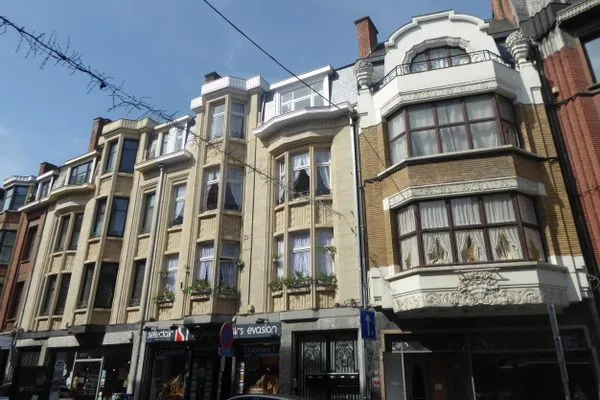
An hour southeast of Brussels, Namur sits quietly with its 17th and 18th century center largely intact—a deliberate choice made after World War I devastated the region. But between the old city and the train station, something different emerges: the Quartier des Carmes, a neighborhood of slightly taller buildings with curved streets and geometric Art Deco facades that feels like stepping into the 1930s.
After the First World War ended, Namur faced an acute housing crisis. A single block in the city centre remained undeveloped, occupied by two religious congregations—the Carmes and Croisiers. When the city purchased these properties in the 1920s, the plan was ambitious: create a direct pedestrian link from the city center to the train station while building dozens of new homes. In 1927, architect Adolphe Ledoux designed the neighborhood with curved streets meant to weave naturally into Namur's existing layout. Construction ran from 1928 until World War II interrupted the work, but that compressed timeline created something coherent: a neighborhood where most buildings share the same visual language.
The architecture tells two related stories. Most buildings are pure Art Deco—brick facades with geometric patterns and ornamental details that speak to the optimism of the interwar period. A smaller number adopted the cleaner Modernist style, with white facades and simpler lines. Both approaches coexist without jarring, the result of careful planning in an era when such consistency was still possible.
We're a new kind of news feed.
Regular news is designed to drain you. We're a non-profit built to restore you. Every story we publish is scored for impact, progress, and hope.
Start Your News DetoxFor decades, the Quartier des Carmes remained largely overlooked, a functional neighborhood rather than a destination. That changed in 2010 when the city commissioned lighting designers to illuminate the facades at night, suddenly revealing the architectural detail that had been there all along. The following year, nearly every building was catalogued in Belgium's Inventory of Cultural Real Estate Heritage—not legal protection exactly, but official recognition that these buildings mattered at the municipal level.
The real turning point came in 2020 when the Galerie Wérenne, a 1930s shopping arcade, completed its restoration. The neighborhood had already begun to attract visitors and residents drawn to its coherent design and preserved character. By 2026, the entire area will become a pedestrian zone, completing a quiet transformation from overlooked housing project to recognized heritage district.
It's a small story about how cities remember themselves—not through grand monuments, but through the decision to preserve the ordinary streets where people actually lived.