

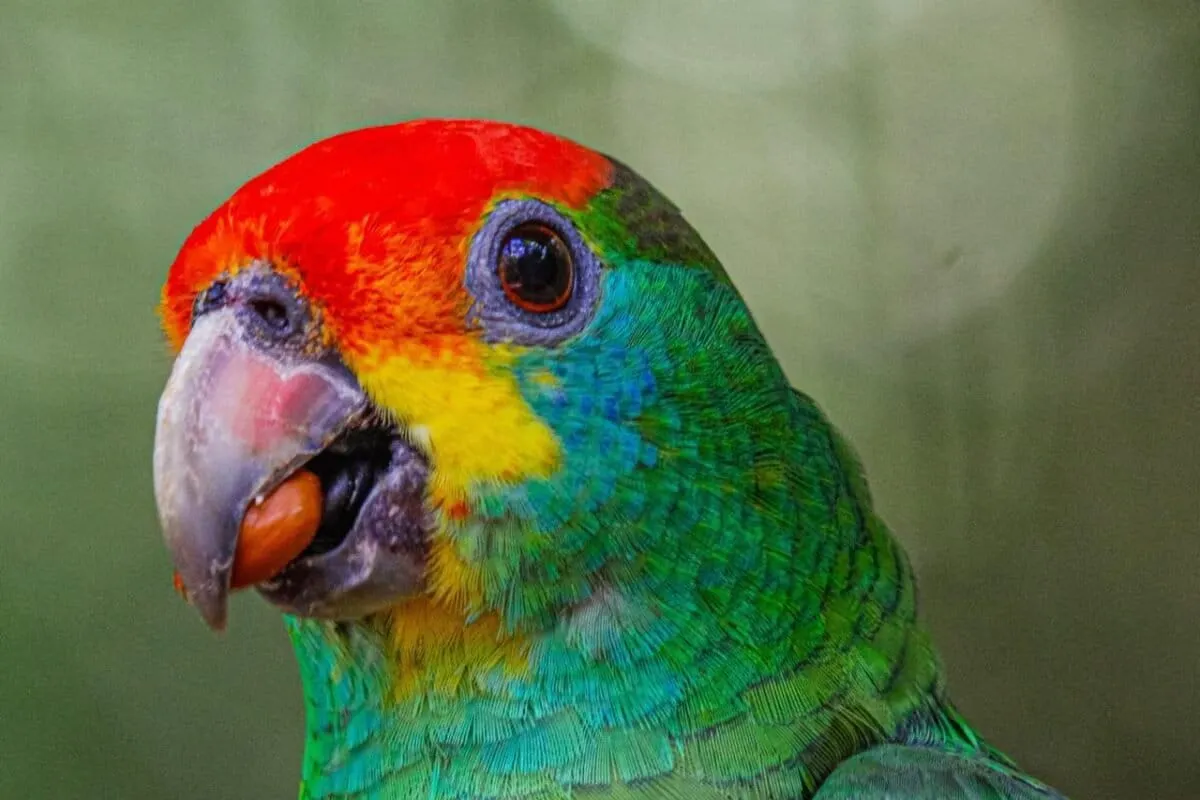
Twenty brilliantly colored red-browed amazons took flight over a reserve in northeastern Brazil in January 2025—the first time these parrots had been seen in Alagoas state in living memory. For researchers leading the effort, it wasn't just a species milestone. It was the sound of an ecosystem waking up.
"It's not just the animals, but their sounds that are returning to the forest," says Luiz Fábio Silveira, deputy director of the University of São Paulo's Museum of Zoology, who leads the Project for the Evaluation, Recovery and Conservation of Endangered Birds (ARCA). Videos from community monitors in the Coruripe reserve show the parrots wheeling through the canopy—a noise that had been absent for so long that its return signals something larger shifting.
The Atlantic Forest of northeastern Brazil is one of the planet's most fragmented ecosystems. Only 3% remains in Alagoas state, scattered across isolated patches. What makes this particular reserve different is that it's large enough—a thousand hectares—to potentially support a breeding population. But size alone doesn't heal a broken ecosystem.
We're a new kind of news feed.
Regular news is designed to drain you. We're a non-profit built to restore you. Every story we publish is scored for impact, progress, and hope.
Start Your News DetoxWhen large animals disappear, they take their ecological role with them. Red-browed amazons are seed dispersers. They eat fruit, fly across the forest, and drop seeds in new places. Without them and other animals that once filled this role, the forest has been slowly rewriting itself. Trees that depend on animals to spread their seeds are dying off, replaced by species whose seeds travel on wind alone. The composition of the forest is shifting, and with it, the entire web of life that depends on that structure.
Releasing these twenty parrots—bred in captivity specifically for this project—is an attempt to restart that broken chain. Red-browed amazons were once common enough that early European explorers recorded them among the first birds they encountered in Brazil. That they became so rare speaks to centuries of habitat loss and trapping. That they're returning, even in small numbers, speaks to a different kind of choice.
This is early work. Twenty birds is not a population, and one reserve is not a forest. But it's a starting point, and in a landscape as fragmented as the Atlantic Forest, starting points matter. The real test comes in the months ahead—whether these parrots breed, whether their presence draws back other seed-dispersing species, whether the forest itself begins to shift back toward its former composition.





