A record-breaking breeding season has brought hope for the kākāpō, a rare, flightless parrot from New Zealand. This year, at least 95 chicks are growing, thanks to a plentiful harvest of rīmu berries, a key food source for the birds.
This new number surpasses the previous record of 73 fledglings set in 2019. New Zealand's Department of Conservation announced the milestone on its kākāpō recovery Instagram account, calling 2026 "officially the biggest on record."

The kākāpō (Strigops habroptilus) is one of the world's heaviest parrots and is only found in New Zealand. Its population dropped dramatically after predators were introduced to the islands. Today, only 235 adult kākāpō remain.
We're a new kind of news feed.
Regular news is designed to drain you. We're a non-profit built to restore you. Every story we publish is scored for impact, progress, and hope.
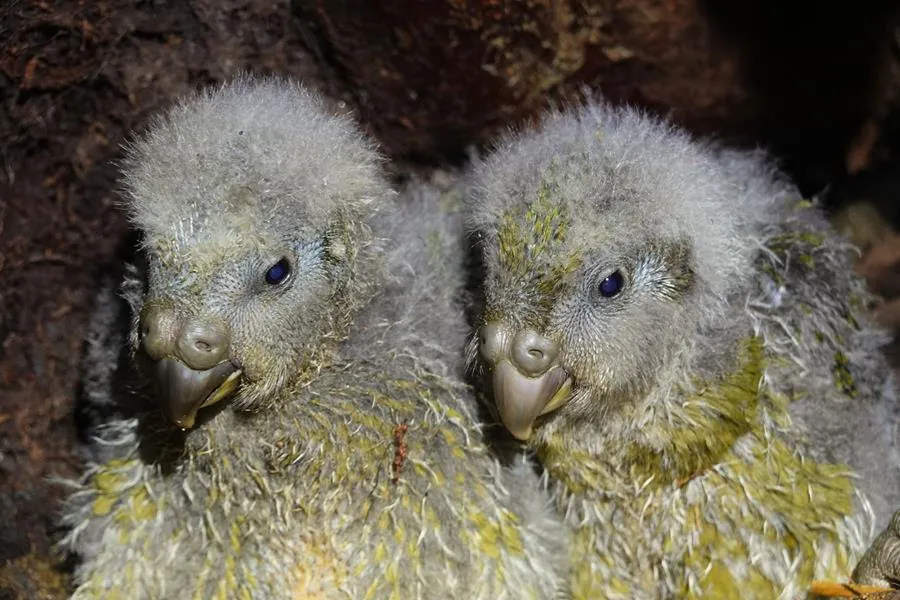
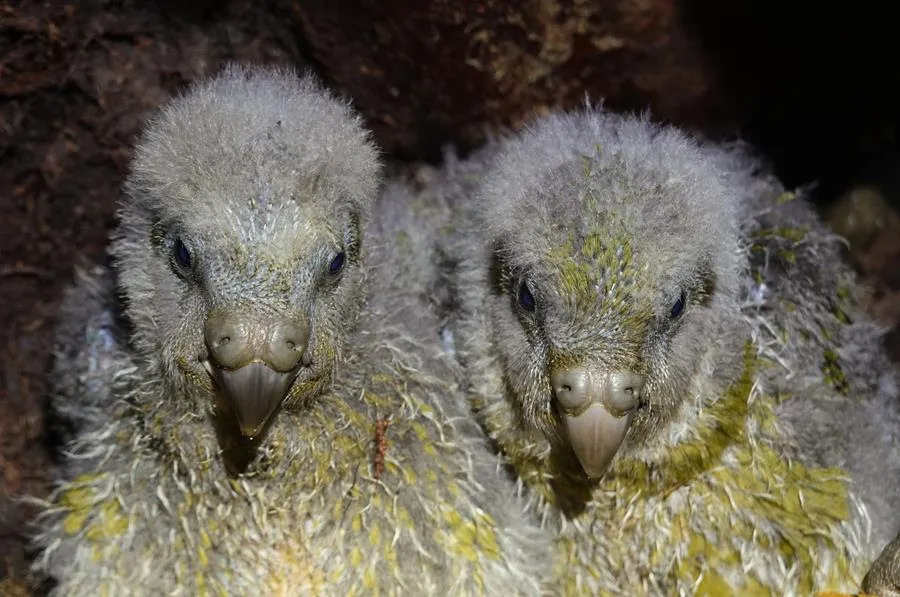
Start Your News DetoxThe photo shows kākāpō siblings Tīwhiri-A3 and Tīwhiri-A4 on Pukenui Anchor Island. This island is a predator-free sanctuary for the kākāpō in southern New Zealand. Sarah Manktelow, a ranger with the kākāpō recovery program, took the picture.
The chicks will be officially counted in the species' population once they reach 150 days old. At this point, they are considered fledglings. Not all chicks are expected to survive to this stage; ten have died so far, and three are currently receiving vet care.
The Department of Conservation tracks the progress closely. Each Friday, they share data on the eggs, often with a photo of the tally written on their refrigerator. This year, 80 nests produced at least 256 eggs. Of these, 148 were fertile, and 105 hatched. Infertility and low hatching success remain challenges for the program.