Imagine a tiny, ancient insect frozen in amber, perfectly preserved for 100 million years. Now imagine it had crab pincers for front legs. Because apparently, that's where we are now.
Scientists digging through 100-million-year-old amber from Myanmar just unearthed a true bug with chelae — those distinctive, crab-like claws. This isn't just a quirky find; it's only the fourth time such structures have ever been seen in insects. Let that satisfyingly rare number sink in.
A Tiny Predator, Frozen in Time
The amber itself is a window into a Cretaceous forest, offering a glimpse of dinosaur-era life, complete with never-before-seen creatures. Researchers at Ludwig Maximilian University of Munich (LMU) were the ones to spot this particular oddity, a true bug (Heteroptera) with front legs that look suspiciously like tiny lobster claws.
We're a new kind of news feed.
Regular news is designed to drain you. We're a non-profit built to restore you. Every story we publish is scored for impact, progress, and hope.
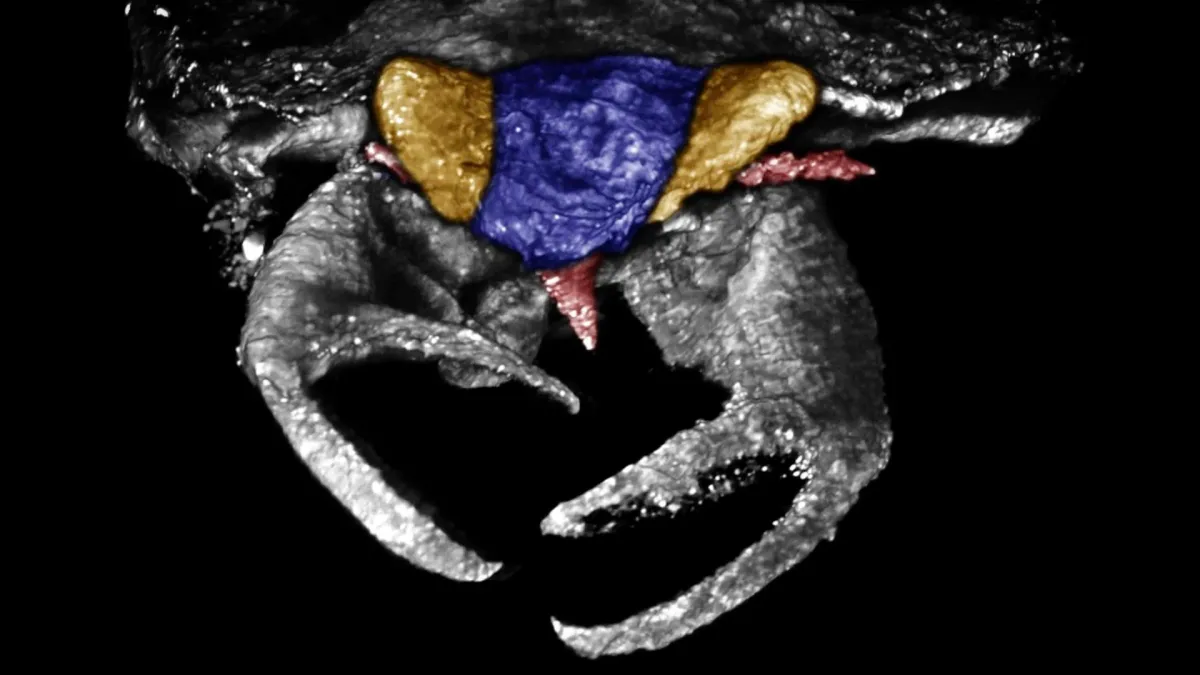
Start Your News DetoxThese chelae work like forceps, perfect for grabbing, and are incredibly rare in the insect world. Carolin Haug, a zoologist at LMU, explained that such claws were previously known in only three other insect groups. This fossil is the grand fourth, proving that evolution sometimes just really likes a good pincer.
Haug and her team, collaborating with researchers from the Universities of Rostock and Oulu, used micro-computed tomography to create detailed 3D images of the bug. Their findings, published in the journal Insects, confirmed that these claws weren't just unusual for an insect; they looked more like the grasping bits of distant arthropod relatives — think crabs, lobsters, shrimp, and tanaids.
Named After a K-Pop Sensation, Naturally
Given its utterly unique anatomy, the bug received a new genus name: Carcinonepa, a delightful mashup of the Greek word for "crab" (carcino-) and nepa, a nod to water bugs. But the species name? That's where it gets truly unexpected.
"The species name libererrantes is a Latin version of the K-pop group Stray Kids," Carolin Haug revealed. Apparently, the fossil's claws bore a striking resemblance to one of the group's signature poses. Because when you're naming an ancient, crab-clawed bug, why not honor your co-author Fenja Haug's favorite K-Pop band?
Carcinonepa libererrantes has been classified as a true water bug (Nepomorpha), part of the larger Heteroptera group. Aside from its impressive claws, it shares some traits with modern Gelastocoridae, or toad bugs, which are land-dwelling predators. Carolin Haug imagines C. libererrantes had a similar lifestyle, scuttling around a Cretaceous coastal forest, snatching up smaller insect snacks with its perfectly evolved, K-Pop-inspired pincers. Which, if you think about it, is both impressive and slightly terrifying.