

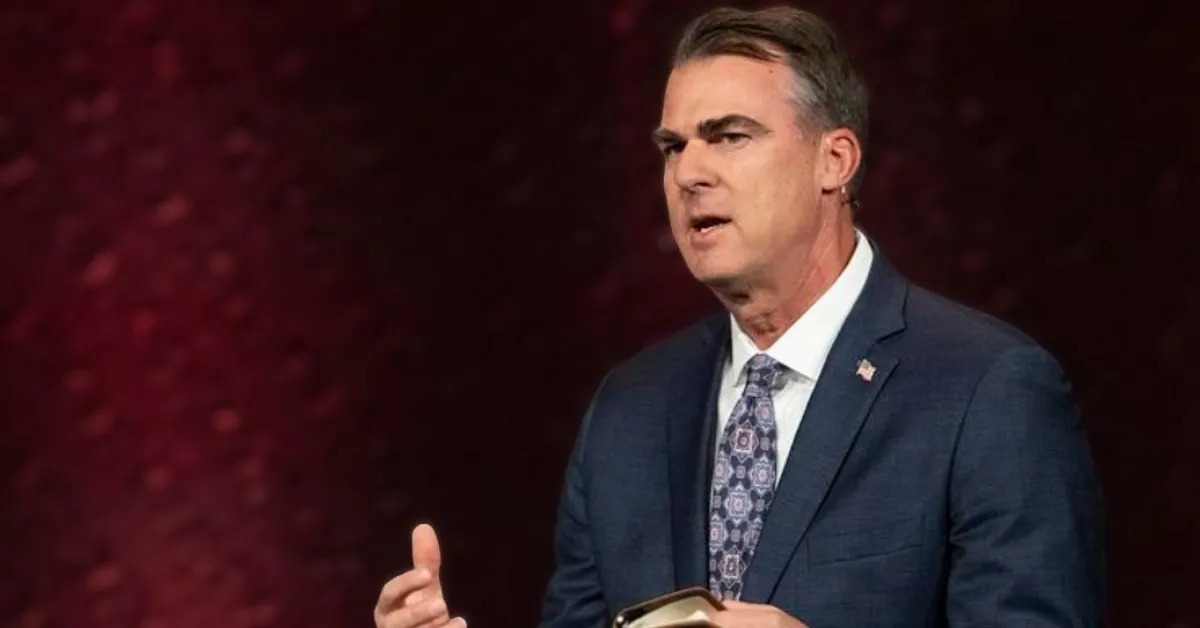
When the federal government shutdown hit its sixth week, millions of Americans stopped receiving food assistance. In Oklahoma, Governor J. Kevin Stitt faced a direct question: how do you help people when the safety net tears.
His answer wasn't to wait for Washington. Instead, he pointed people toward "Be a Neighbor," a website that connects Oklahomans in need to over 900 nonprofits, churches, tribal organizations, and community groups. It's a pragmatic response to a crisis — and it's working.
The Gap Between Crisis and Help
When SNAP payments froze for nearly 42 million Americans during the shutdown, the impact was immediate. Families skipped meals. Seniors chose between food and medicine. The disruption exposed something governors across the country were grappling with: federal programs can fail, and local networks need to be ready.
We're a new kind of news feed.
Regular news is designed to drain you. We're a non-profit built to restore you. Every story we publish is scored for impact, progress, and hope.
Start Your News DetoxStitt, speaking alongside Delaware's Democratic Governor Matt Meyer at a conference in Atlanta, acknowledged the severity directly. "I know governors, we've been on the phone, we've talked, 'How are you doing?' 'How are we going to meet the needs of the most vulnerable in our state?'" he said. What struck him wasn't a partisan divide — it was a shared problem that transcended politics.
But Stitt's solution reflects a deeper belief: government checks alone can't solve poverty. "It takes neighbors walking with neighbors," he said. "It takes churches and nonprofits."
How One Platform Changed a Life
Joseph Randall, a widower in Oklahoma City, discovered this firsthand. After his wife passed away, he found himself isolated and struggling — and he didn't know where to turn. When he returned to his neighborhood church for the first time in years, someone mentioned Be a Neighbor.
Through the platform, Randall connected with Ashley Goldsbury at The Good OKC, a nonprofit focused on dignified income. Within months, what began as a search for food assistance became something larger: a car repair, food stamps, Medicaid enrollment, and eventually assisted living. Randall went from facing homelessness to having housing, transportation, and a path forward.
"Reaching out for help is hard," said Mandi Mays, who coordinates community recruitment for Be a Neighbor. "This gives them the opportunity to take that into their own hands and actually look for the things that they need." The platform isn't about charity — it's about agency. People search for what they need, rather than waiting to be told what's available.
Be a Neighbor has operated since 2019, but the shutdown thrust it into focus as a model for how local infrastructure can absorb shocks that federal systems can't prevent. It's not a replacement for SNAP or other federal programs. It's what happens when those programs fail — and why having a robust web of community organizations matters.
As governors navigate the uncertainty ahead, the question isn't whether local networks can solve everything. They can't. The question is whether they're strong enough to catch people when they fall.





