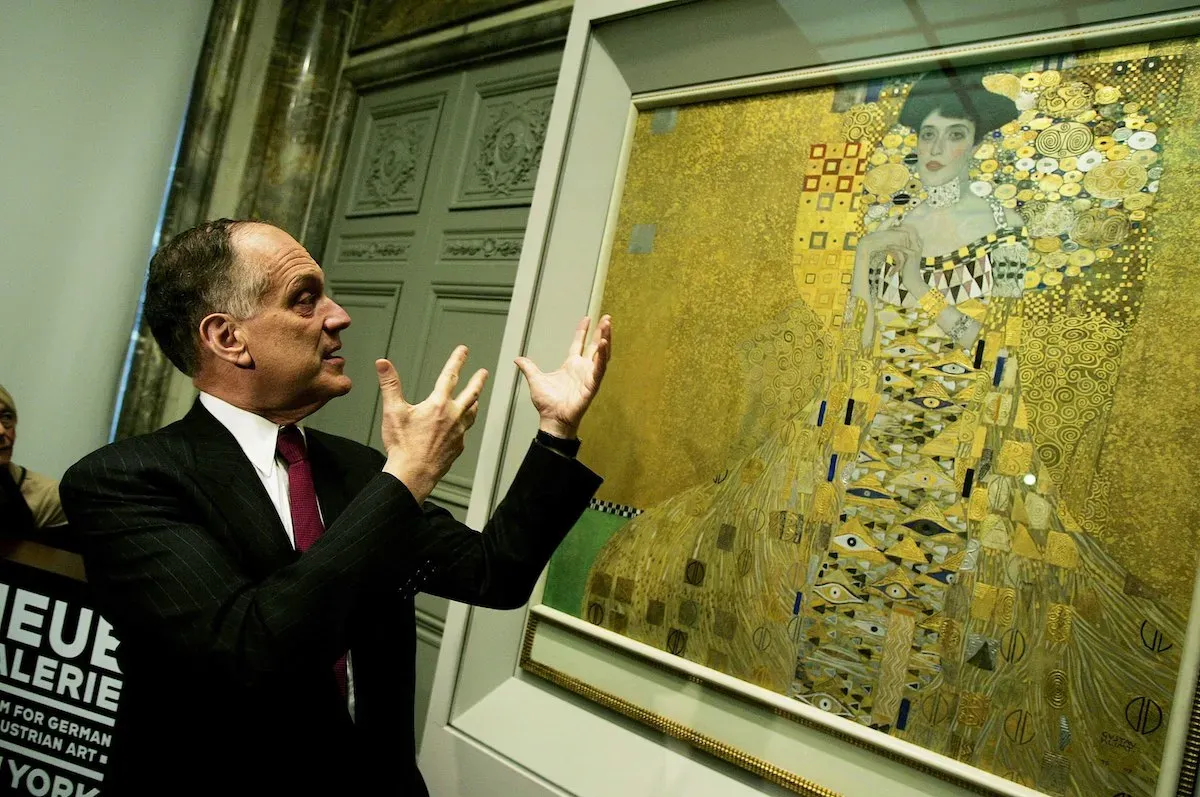
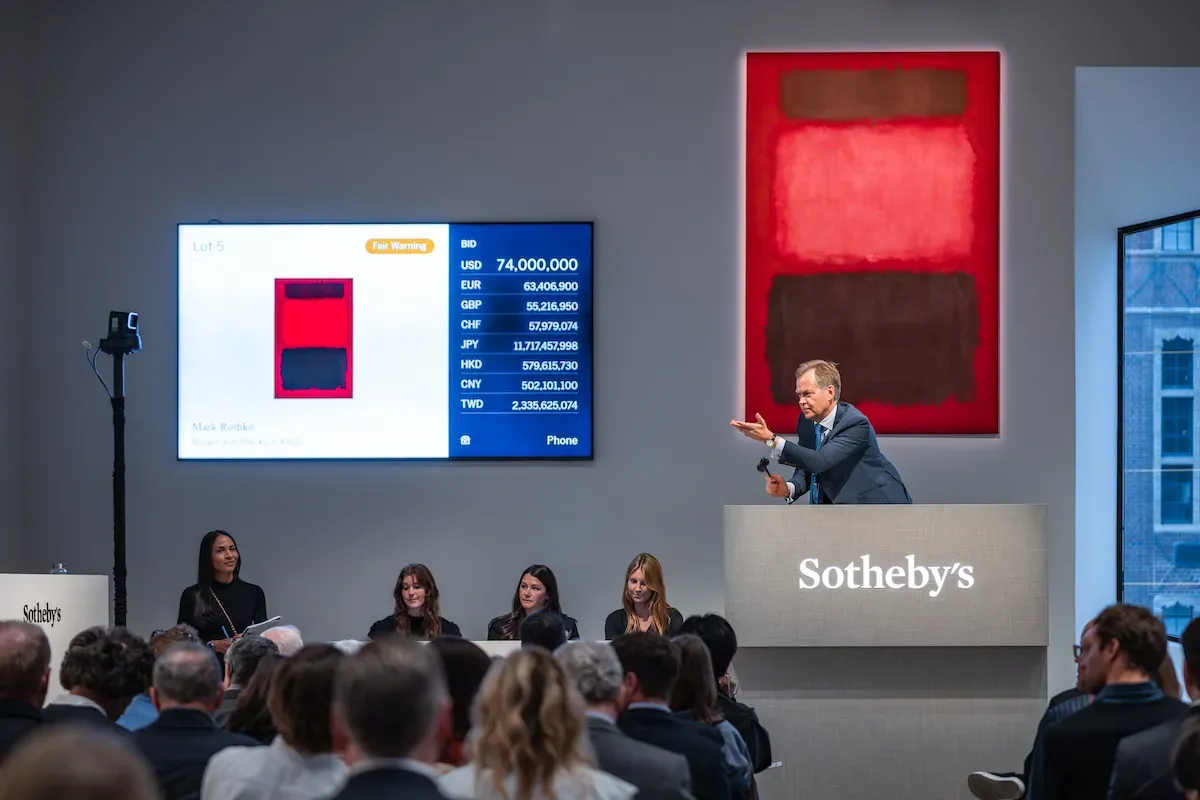
Sotheby's just kicked off its May auction season with the kind of numbers that make your eyes water. We're talking $433.1 million from its modern and contemporary art evening sales. Because apparently, that's what art goes for these days.
Leading the charge was a Mark Rothko painting, Brown and Blacks in Reds (1957), which fetched a cool $85.8 million. For context, the last time this particular Rothko changed hands in 2003, it went for $6.7 million. Someone's portfolio is looking rather healthy right now.
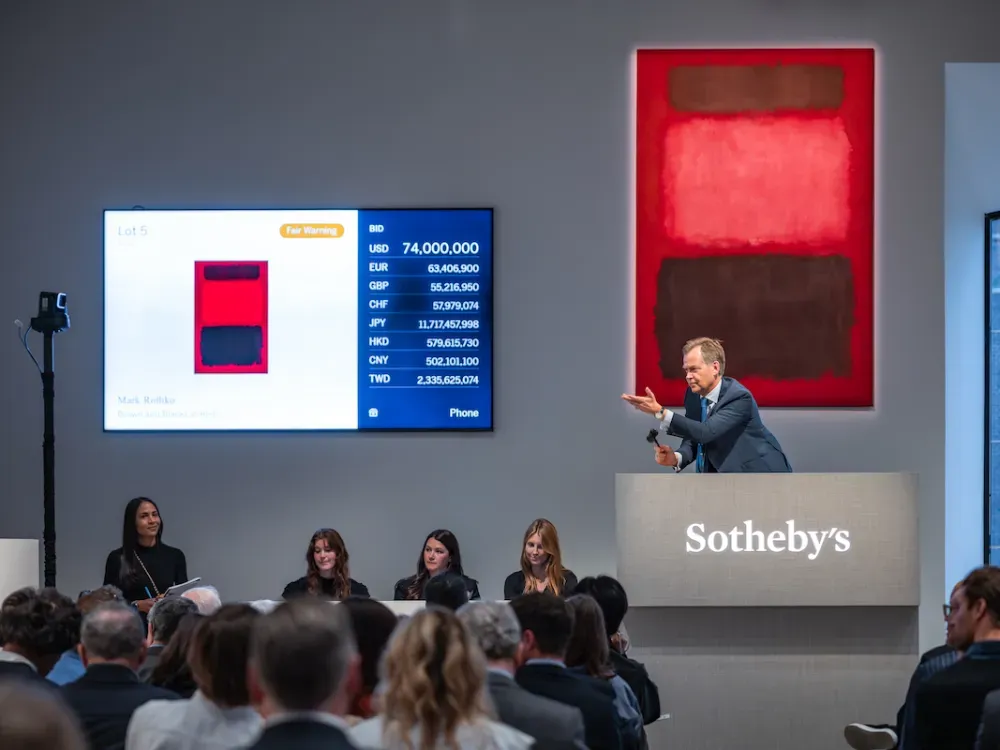
This sale nearly — nearly — matched Rothko's all-time auction record of $86.8 million, set back in 2012. Turns out, a good Rothko is still a good Rothko, even if it's not the Rothko.
We're a new kind of news feed.
Regular news is designed to drain you. We're a non-profit built to restore you. Every story we publish is scored for impact, progress, and hope.
Start Your News DetoxAncient Artifacts, Modern Politics, and a Whole Lot of Head-Scratching
Meanwhile, on the other side of the art world, the King’s Own Royal Regiment Museum Trust in the UK decided it was time to return some ancient artifacts to Ethiopia. These aren't just any artifacts; they were taken during the Anglo-Indian Expedition of 1868. Among the repatriated items are what's believed to be a lock of Emperor Tewodros II of Abyssinia's hair and cloth stained with his blood from his death in 1868. Which, if you think about it, is both impressive and slightly terrifying to have kept for over a century.
Across the globe, the Yindjibarndi Ngurra Aboriginal people in Australia are considering an appeal after a court ordered mining giant Fortescue to pay AUD 150 million ($107 million). This compensation is for damage to their cultural heritage sites, caused by mining on their land without permission. The Yindjibarndi Ngurra Aboriginal Corporation called the payout "unsatisfactory," arguing it doesn't cover the full cultural or financial losses from a mine that has generated an estimated AUD 80 billion ($57 billion) for Fortescue since 2012. They'd sought about AUD 1.8 billion. That's quite a difference.
And then there's the curious case of George Washington praying at Valley Forge. A 1976 painting by Arnold Friberg, depicting Washington in a moment of solemn prayer, is increasingly being used by the US government ahead of the country's 250th anniversary. The painting, with its golden light and white horse, is now showing up on Department of Defense sites and federal materials. Historians are noting this as a subtle, or not-so-subtle, shift towards using art for political messaging, specifically to push evangelical viewpoints that sidestep the separation of church and state. Because apparently that's where we are now: debating the religious leanings of Founding Fathers through 1970s paintings.
From record-breaking auctions to historical repatriations and political art, the art world continues to prove it's never dull. Just occasionally, a little unsettling.