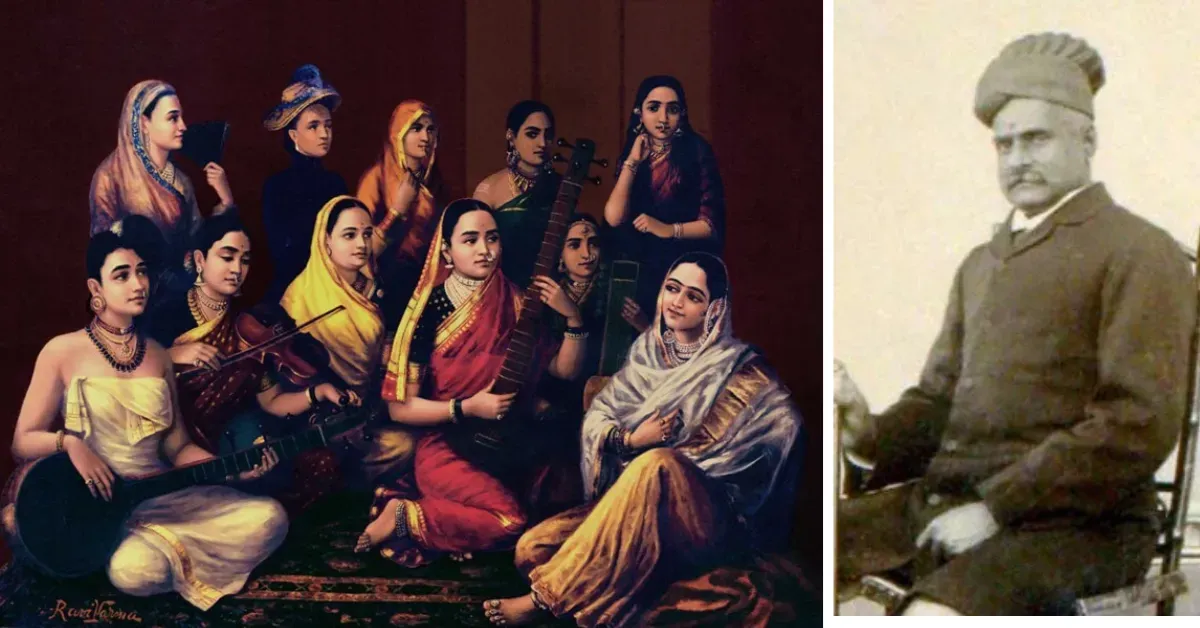
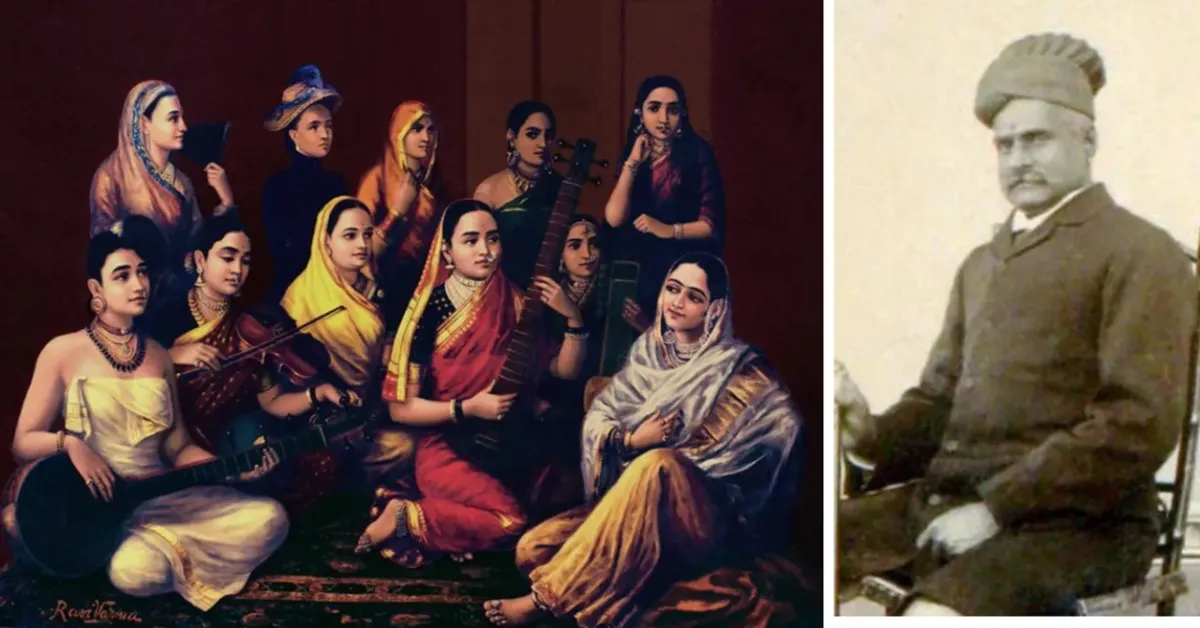
Back in 1889, when the concept of "unity in diversity" was still a twinkle in a political theorist's eye, a painter named Raja Ravi Varma decided to put the idea of India as a single entity on canvas. The result? "Galaxy of Musicians," a masterpiece that still makes waves more than a century later.
Imagine this: eleven women, each from a different corner of the subcontinent, gathered together. They're playing instruments, dressed in distinct clothing, dripping in unique jewelry. This wasn't some fever dream. Varma traveled extensively, sketching real women and soaking in local traditions before he ever put brush to canvas. It was one of the very first visual attempts to stitch together a shared cultural space for India.
The Canvas That Spoke Volumes
At first glance, you see a relaxed musical group. No dramatic action, just women sitting, standing, listening. But beneath that calm surface, this painting hummed with political undertones.
We're a new kind of news feed.
Regular news is designed to drain you. We're a non-profit built to restore you. Every story we publish is scored for impact, progress, and hope.
Start Your News DetoxIn the late 1800s, India was under British rule, fractured by caste, language, religion, and region. The idea of a unified nation was barely a whisper. Varma's painting dared to show India's rich tapestry of differences without trying to erase a single thread. It was a bold move.
Each figure is a walking, talking (or, rather, playing) identifier. There's a Nair woman from Kerala with her veena on the left, a Maharashtrian bride-to-be in her green glass bangles and Marathi-style saree in the center. To the right, a Muslim woman, and in the back, someone sporting a saree with Parsi embroidery. Then, because why not, there's a woman in what looks like British or Indo-European fashion, complete with a feathered hat. Because apparently that's where we were then.
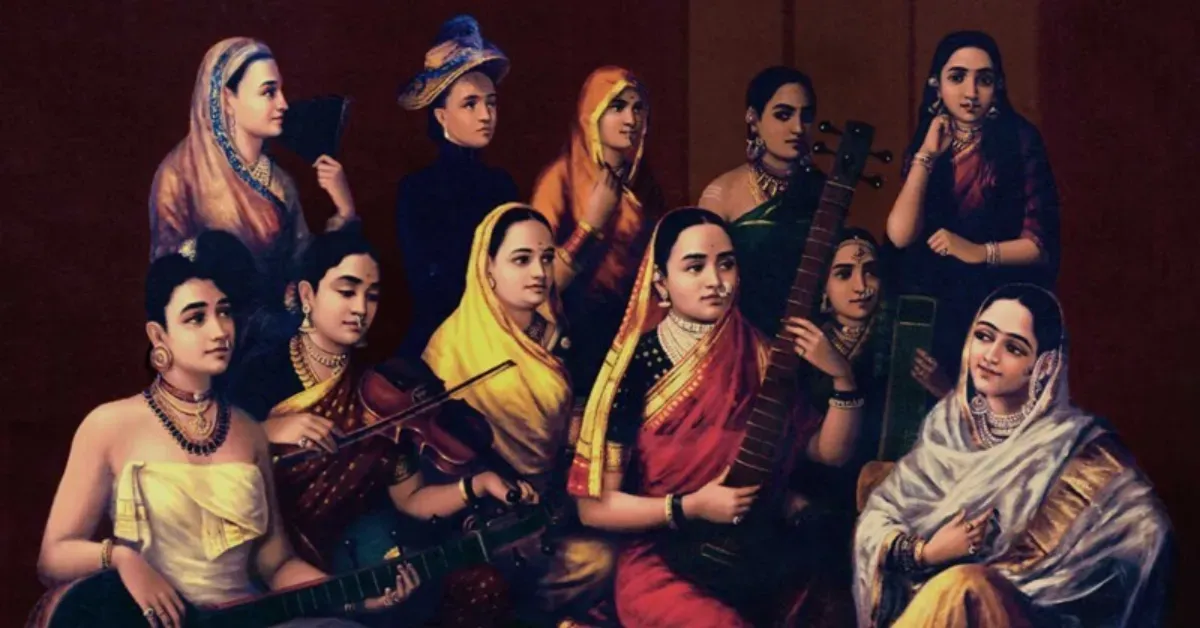
Even the sarees themselves were storytellers. How they were draped, the fabric, the embroidery, the borders, the jewelry — every detail screamed regional identity. Varma was meticulous, capturing the sheen of ornaments and the texture of instruments with a realism that turned the canvas into a historical document. Unlike colonial paintings that reduced Indians to generic "types," Varma's women were individuals, participating in a shared cultural symphony, not just ethnographic samples.
Oil Paint, Realism, and a New Language of Art
Varma broke from tradition. While many Indian artists were creating "Company School" paintings — essentially visual catalogs for East India Company officials — Varma used music as the great unifier. He was commissioned by the Maharaja of Mysore, but he spun it into something far grander: an idea of India itself.
What made his work truly stand out was his embrace of oil paint and European realist techniques. Oil painting wasn't native to Indian art; it arrived with European artists and colonial art schools. Varma picked up these methods after meeting Anglo-Dutch painter Theodore Jensen in 1868. Watching Jensen work with oils was, apparently, quite the revelation.
With oils, Varma could capture the sparkle of jewelry, the softness of fabric, and the polished wood of instruments with startling lifelike detail. Light and shadow gave his figures a depth that made them feel like they could step right out of the frame. Though he also blended in elements from Tanjore painting traditions, creating what art historians later dubbed "Indian realism." Which, if you think about it, is both impressive and slightly terrifying for anyone trying to categorize art.
By the late 1800s, anti-colonial sentiment was bubbling up across India. Artists, Varma included, started shaping national consciousness. His painting suggested that India could exist as a collective idea despite its differences, making the nation itself the unseen heart of the artwork. This idea, it turns out, was rather contagious.
In 1893, "Galaxy of Musicians" made its international debut at the World's Columbian Exposition in Chicago – the same event where Swami Vivekananda delivered his famous speech.
Fast forward to 2026, and Karan Johar's Met Gala outfit, designed by Manish Malhotra, was inspired by Varma's works, sparking online discussions and introducing a whole new generation to his legacy. This renewed interest proves why "Galaxy of Musicians" remains so relevant. In an era where identity is often a battleground, Varma's masterpiece still asks the crucial question: can our differences actually be the very foundation of our unity?