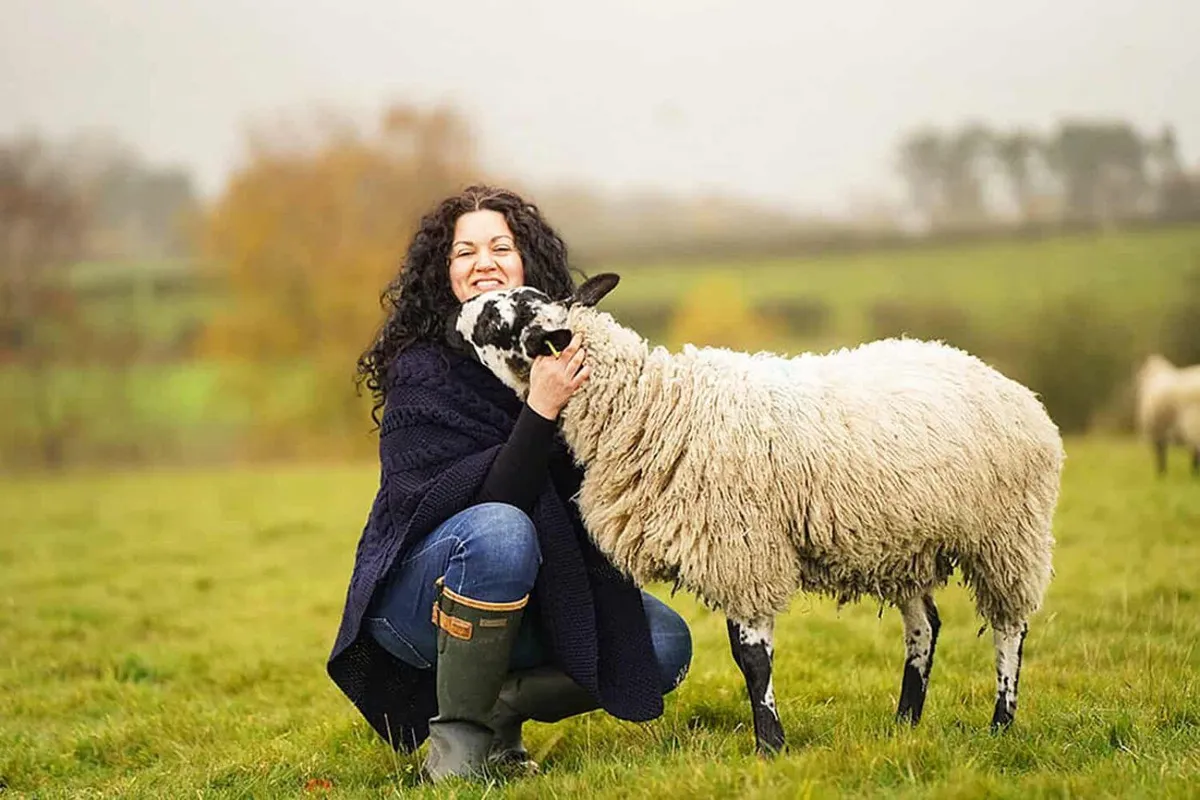
Grace Olson was trained in equine-assisted therapy—using horses and simple care tasks to help people heal emotionally. Then one of her sheep changed everything.
During a session with a grieving widow, Olson's Texel cross named Merlin did something unexpected. He pushed himself into the woman's knee. When she bent down to cuddle him, she laughed—the first time she'd smiled in a year.
"He's like a person in a sheep's body," Olson says now. "He knows when someone is distressed."
We're a new kind of news feed.
Regular news is designed to drain you. We're a non-profit built to restore you. Every story we publish is scored for impact, progress, and hope.
Start Your News DetoxWhat started as a accident of scheduling has become a deliberate practice. Olson, based in Leeds, West Yorkshire, has grown her therapeutic flock to five sheep. She's noticed a pattern: clients arrive tense, guarded. Within minutes of sitting with the animals, their shoulders drop. The sheep don't demand conversation or eye contact. They just exist—calm, present, unbothered by silence.
The work is specific. Olson focuses mainly on terminally ill patients dealing with cancer, people navigating the particular loneliness of knowing their time is limited. In that context, a sheep's indifference to mortality feels oddly liberating. There's no pity in a sheep's gaze. No awkward reassurance. Just warmth, and the simple fact of being held.
Olson is writing a book about the practice, and she's committed to using the proceeds to treat clients for free. It's a deliberate choice: grief and terminal illness don't discriminate by income, and neither should access to comfort.
What's happening in Olson's practice echoes what researchers have been documenting for years—that animal-assisted therapy works, particularly for people processing trauma or loss. The mechanism isn't mysterious: animals lower cortisol, the stress hormone. They create a non-judgmental space. They ask nothing and offer presence. But knowing the science doesn't quite capture what Olson witnessed that first time Merlin stepped in. Sometimes healing looks like a sheep pushing into your knee, and you finally, after a year, being able to laugh.