

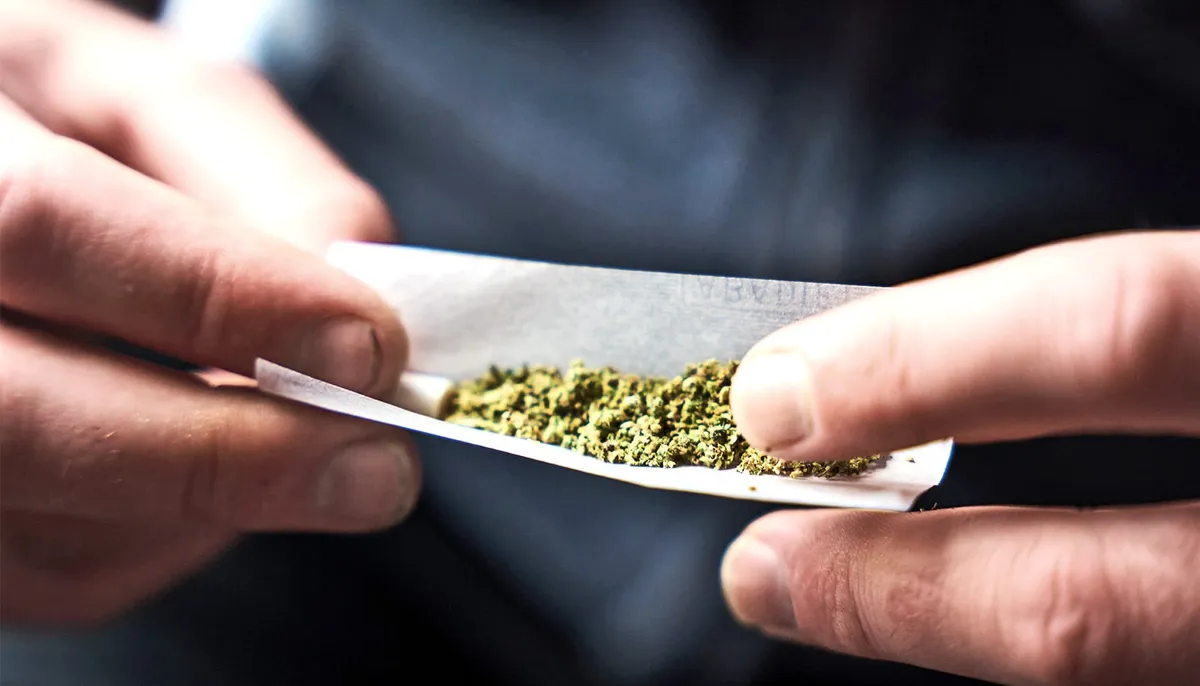
A randomized controlled trial from Brown University offers the first direct evidence that smoking cannabis can lower how much people drink — at least in the short term. The finding doesn't endorse cannabis as a treatment, but it does clarify something the "California sober" movement has been claiming: that swapping weed for alcohol might actually work, for a while.
The study, published in the American Journal of Psychiatry, tracked 157 adults aged 21 to 44 who drink heavily and use cannabis regularly. Over three lab visits, each participant smoked cannabis with varying THC levels (3.1%, 7.2%, or placebo) and then faced a choice: drink alcohol or decline and earn small cash payments instead. The pattern was clear. When participants smoked cannabis with active THC, they drank significantly less than when they smoked placebo — roughly 19% less with the lower dose, and 27% less with the higher dose.
"Instead of seeing cannabis increase craving and drinking, we saw the opposite," says Jane Metrik, the Brown University professor who led the research. "Cannabis reduced the urge for alcohol in the moment, lowered how much alcohol people consumed over a two-hour period, and even delayed when they started drinking once the alcohol was available."
We're a new kind of news feed.
Regular news is designed to drain you. We're a non-profit built to restore you. Every story we publish is scored for impact, progress, and hope.
Start Your News DetoxWhat makes this study different from previous research is the controlled setting. Earlier work relied on surveys and self-reported associations — people telling researchers what they thought they did. This trial measured actual behavior under laboratory conditions, isolating the causal effect of cannabis on alcohol consumption.
The catch
Before interpreting this as permission to trade one substance for another, the researchers are clear: this isn't a therapeutic recommendation. Cannabis carries its own risks. It can be addictive. Heavy use can lead to problematic patterns, just as alcohol can. The study shows a temporary reduction in drinking during the hours after smoking — not a long-term solution or a reason to substitute one dependency for another.
"Our job as researchers is to continue to answer these questions," Metrik says. "We can't tell anyone yet, you should use cannabis as a substitute for problematic or heavy drinking."
What the research does offer is a clearer picture of what's actually happening when people make this swap. The "substitution effect" — using one substance instead of another — appears to be real, at least acutely. Whether that translates to meaningful health benefits over months or years, or whether it simply shifts the problem rather than solving it, remains an open question.





