Spiro, the company operating electric motorcycles across six African countries, just secured $50 million in financing to expand its battery-swapping stations. The money comes from the African Export-Import Bank, a U.S. climate fintech platform called Nithio, and the Africa Go Green Fund — a signal that major institutions are betting on battery swapping as the practical answer to Africa's transport problem.
This isn't happening in isolation. In the same window, the International Finance Corporation committed $5 million to Arc Ride, another e-mobility company, while a Ugandan e-bike startup called Gogo Electric raised $1 million from an EU-backed electrification fund. What these deals have in common: they're all betting that Africa's transport future doesn't look like Europe's or America's. It looks different because the infrastructure is different, the grid is different, and the needs are different.
Why Battery Swapping Works Here
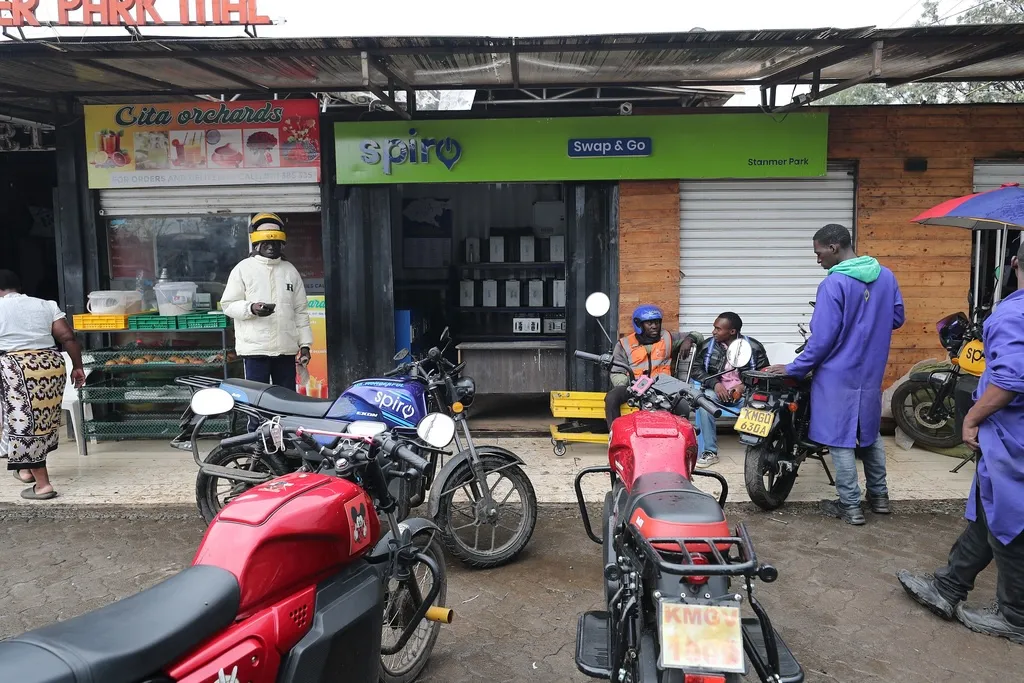
Spiro's model is straightforward. Instead of waiting hours for a battery to charge, riders pull up to one of the company's 2,500 stations, swap their depleted battery for a charged one, and ride on. It takes minutes. The company handles charging and maintenance centrally, which means riders don't need expensive home charging setups — a huge advantage in cities where reliable electricity and private parking are luxuries.
We're a new kind of news feed.
Regular news is designed to drain you. We're a non-profit built to restore you. Every story we publish is scored for impact, progress, and hope.
Start Your News DetoxThe numbers reflect real adoption. Spiro has deployed more than 80,000 electric motorcycles across Kenya, Uganda, Rwanda, Nigeria, Benin, and Togo. Those bikes have completed 30 million battery swaps. Riders have logged over 1 billion kilometers without burning fossil fuels. That's not a pilot program anymore. That's infrastructure that's working at scale.
The new funding will let Spiro do what comes next: automate the battery-swapping process itself, integrate renewable energy into charging stations, and expand into markets like Cameroon and Tanzania where trials are already underway. The company is also building what it calls a "robust, scalable energy network tailored for Africa by Africans" — a phrase that matters because it means the technology isn't being imposed from outside but developed for the specific constraints and opportunities of the region.
What makes this moment significant isn't just the money. It's that major development finance institutions — Afreximbank, the IFC, the EU — are moving beyond "electric vehicles are good" to "here's the infrastructure model that actually works in African cities, and we're funding it." That's institutional confidence translating into capital. And capital, in turn, translates into more stations, more bikes, and more people choosing electric over petrol because it's cheaper and faster, not because they're saving the world.
Spiro's next phase will test whether battery swapping can scale beyond motorcycles and into light commercial vehicles — the three-wheelers and small trucks that move goods and people across African cities. If that works, the impact compounds.