For decades, American and Chinese foreign aid operated on opposite tracks. The U.S. funded long-term development through international organizations and NGOs, often attaching conditions around human rights and democracy. China preferred direct government deals—big infrastructure projects financed through loans, no strings attached.
That's changing. The Trump administration is dismantling traditional U.S. aid systems and moving toward bilateral deals focused on American economic interests. Meanwhile, China is stepping back from massive infrastructure loans and pivoting toward smaller, visible projects in global health and development. The two powers are essentially swapping playbooks.
How China Got Here
China's aid strategy has evolved in three distinct phases. In the 1950s, it was rooted in anti-imperialism solidarity—supporting emerging communist states like North Korea and Vietnam. By the 1990s, China reframed aid as mutually beneficial, using it to boost its own development and expand trade. Then came Xi Jinping's era in the 2010s: aid became a tool for global leadership and great power competition.
We're a new kind of news feed.
Regular news is designed to drain you. We're a non-profit built to restore you. Every story we publish is scored for impact, progress, and hope.
Start Your News DetoxThis third phase meant massive bilateral loans for infrastructure—ports, railways, power plants. The Belt and Road Initiative epitomized the approach: government-to-government deals with minimal oversight or local input.
But the strategy had a fatal flaw. Research by Carrie Dolan at the College of William and Mary found that while recipient countries appreciated Chinese investment, they were often frustrated with the results. China would install an MRI machine in a Kenyan hospital, then disappear. When equipment broke down, there was no system to fix it. Dolan visited what had been a state-of-the-art Chinese-financed facility where weeds were growing through the floor.
The loans also felt predatory. Countries worried they were trading long-term economic vulnerability for short-term infrastructure. Trust eroded. Soft power—the whole point of aid—collapsed.
The Pivot
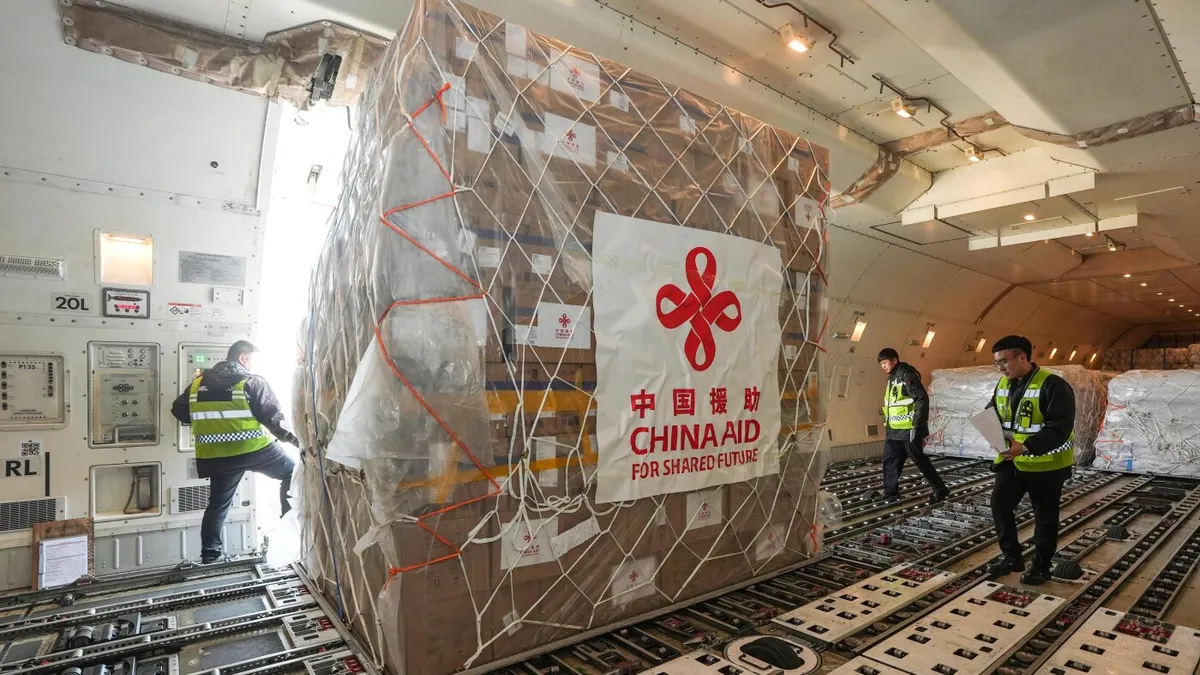
Over the past five years, China has quietly shifted course. It's scaling back massive bilateral deals and embracing what it calls "small and beautiful" projects: refurbishing a maternity ward in Zimbabwe, sending medical equipment to Panama, hiring locals to build a bridge in Kiribati. It's also increasing contributions to global institutions like the United Nations and the World Health Organization.
In May 2025, China announced a $500 million donation to WHO. In March, when an earthquake hit Myanmar, China pledged $137 million in aid—compared to $9 million from the U.S. These moves position China as the responsible global actor, especially as American presence appears to wane.
But here's the catch: China is still spending roughly the same total amount on aid as before. It's rebranding and repositioning, not dramatically expanding. As Nadege Rolland at the National Bureau of Asian Research notes, China is "showing the face of a benevolent power." The strategy is calculated. Experts like Bryan Burgess at the College of William and Mary suggest China is "advancing very prudently"—testing the waters without fully committing to the role of global health provider.
America's New Direction
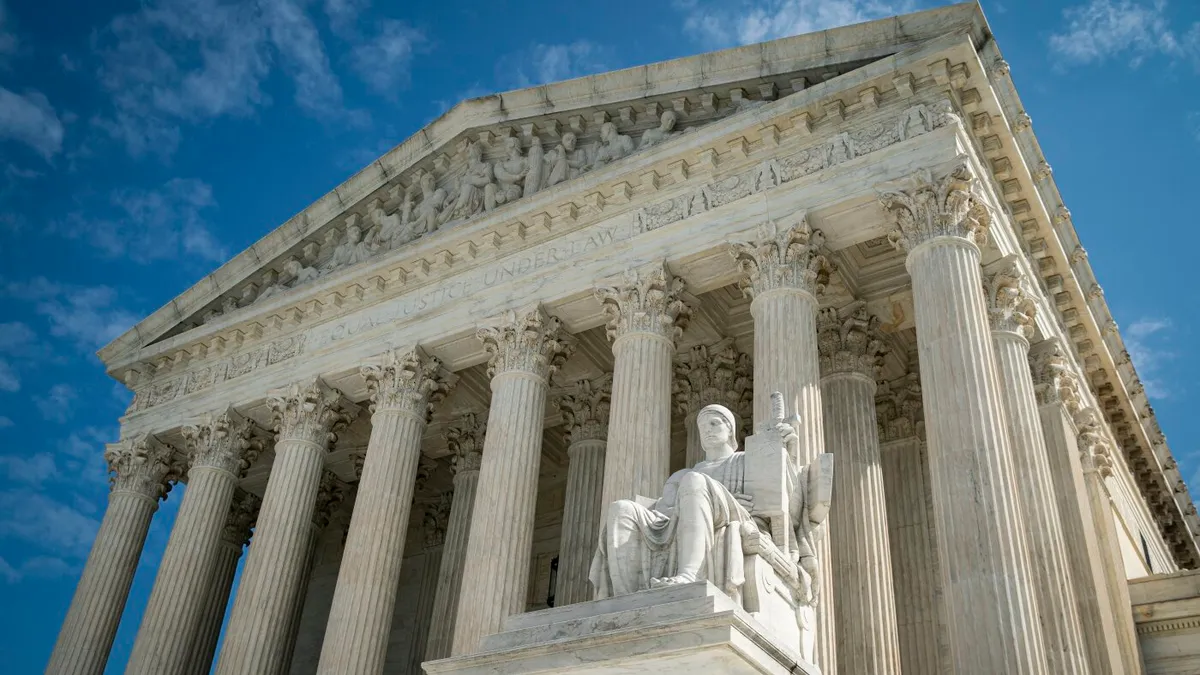
Meanwhile, the U.S. is moving in the opposite direction. Secretary of State Marco Rubio unveiled the "America First Global Health Strategy," arguing that traditional foreign aid wasted taxpayer money and didn't serve American interests. The administration has signed bilateral agreements with low-income countries, explicitly targeting access to resources like African minerals and opportunities for American businesses.
The irony isn't lost on experts. "The U.S. seems to be converging toward the Chinese preexisting model, at the time when China seems to be moving away from its preexisting approach," says Yanzhong Huang, a global health expert at the Council on Foreign Relations.
Dolan warns that the U.S. could inherit China's old problems. "I think that the United States should focus on actual health and resist trying to over-commercialize," she says. "Because this commerce first approach, it only compromises health outcomes."
What's emerging is a world where both superpowers are recalibrating their aid strategies—but for different reasons. China is learning that infrastructure without trust is just expensive infrastructure. The U.S. is discovering that aid can be a tool for commercial gain. The gap between them is narrowing, even as their motivations remain fundamentally different.