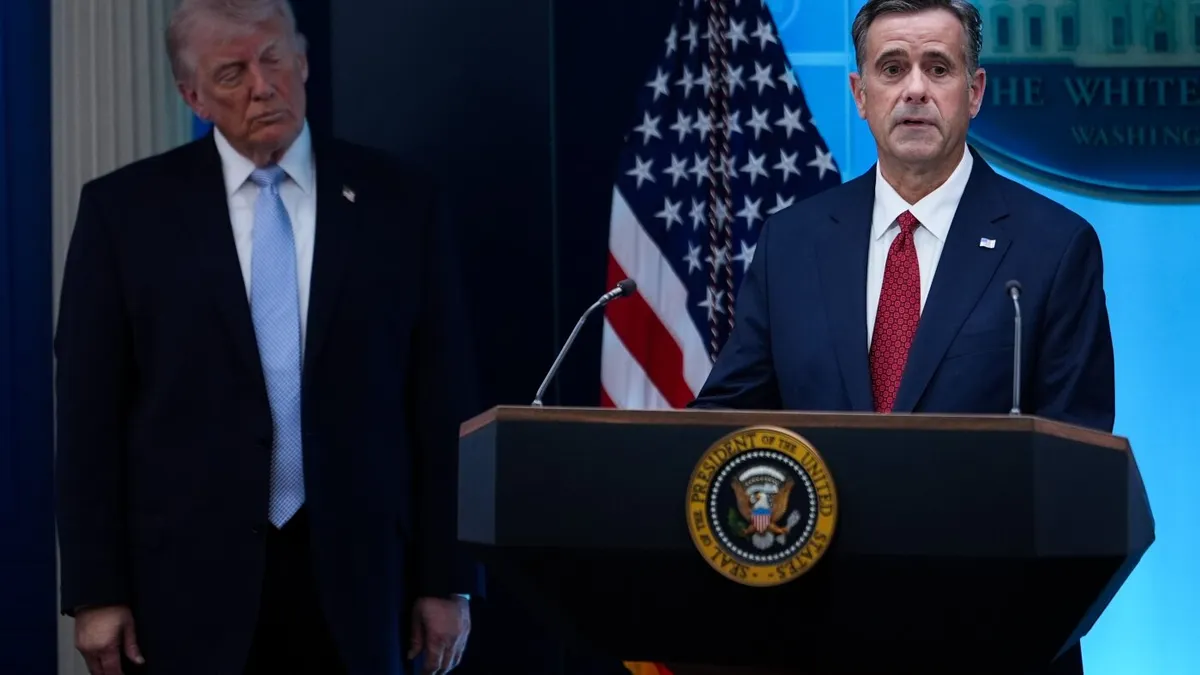
In a move that probably made more than a few old-school spies choke on their mojitos, the director of the CIA, John Ratcliffe, just had a sit-down with Cuban officials in Havana. Among them? None other than Raúl Guillermo Rodríguez Castro, grandson of the one and only Raúl Castro. Because apparently, that's where we are now.
The high-level pow-wow also included Interior Minister Lázaro Álvarez Casas and the head of Cuban intelligence services. The topics on the table were about what you'd expect when two historically frosty nations decide to talk: intelligence cooperation, economic stability, and security issues. A CIA official confirmed the meetings, likely while still blinking in disbelief.
The Message and the Murmurings
According to the CIA, Ratcliffe was there to deliver a message straight from President Donald Trump: the U.S. is ready to get serious about economic and security matters. The catch? Cuba needs to make "fundamental changes." Because, of course, there's always a catch.
We're a new kind of news feed.
Regular news is designed to drain you. We're a non-profit built to restore you. Every story we publish is scored for impact, progress, and hope.
Start Your News DetoxCuba's government, ever the master of understatement, released a statement acknowledging the meeting occurred "against a backdrop of complex bilateral relations." The U.S., meanwhile, made it clear Cuba shouldn't be a "safe haven for adversaries in the Western Hemisphere." Cuban officials, in turn, insisted the island poses no threat and expressed their displeasure at remaining on the U.S. list of state sponsors of terrorism. It's a diplomatic dance as old as time.
This wasn't Rodríguez Castro's first secret handshake with U.S. brass. He reportedly met with U.S. Secretary of State Marco Rubio back in February during a Caribbean Community summit. The man who once served as his grandfather's bodyguard and later led Cuba's version of the Secret Service certainly gets around.
These ongoing meetings represent the first U.S. government flights to land in Cuba, outside of Guantanamo Bay, since 2016. All this while tensions remain high, Cuba's economy struggles under a U.S. energy blockade (leading to power outages and spoiled food, because nothing says "good relations" like a collapsed power grid), and the U.S. dangles $100 million in conditional humanitarian aid and satellite internet. It's a delicate balance, to say the least, between veiled threats and conditional olive branches. No one's expecting military action, but the fact that it's even part of the conversation tells you everything you need to know about the current geopolitical temperature.