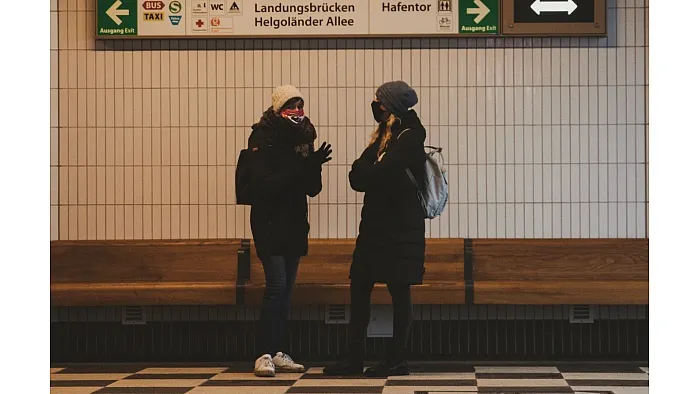
There's a moment that happens in most people's days without much fanfare. You order coffee from someone you've never met. You ask a stranger for directions. You make a joke to the person next to you in line. These micro-interactions feel small enough to forget by afternoon.
But research from the University of North Carolina at Chapel Hill's Positive Emotions and Psychophysiology Lab suggests they're doing something quietly significant. When you engage with a stranger — even for 30 seconds — it doesn't just lift your mood in the moment. It shifts something deeper: your sense of belonging, your openness to different kinds of people, your baseline belief that humans are fundamentally kind.
The research is clear on this. "These easily overlooked moments matter for well-being and provide a sense of belonging," the lab found. What happens in those brief exchanges is neurological and social at once. When you sync with someone, even briefly, it fosters cooperation within the wider community. You're not just having a nice interaction — you're reinforcing the social fabric that holds neighborhoods together.
We're a new kind of news feed.
Regular news is designed to drain you. We're a non-profit built to restore you. Every story we publish is scored for impact, progress, and hope.
Start Your News DetoxNelson Mandela understood this. "When I came to Johannesburg from the countryside, I knew nobody, but many strangers were very kind to me," he once reflected. He was describing what researchers now measure: the cumulative effect of small kindnesses from people with no obligation to help. Those moments shaped his sense of what was possible in a society.
The practical side is straightforward. A conversation with your barista. A genuine question to your Uber driver. A comment to someone waiting in line. These aren't performances or networking moves. They're just the choice to treat someone you don't know as someone worth a moment of attention.
What makes this research land differently is that it doesn't require grand gestures. You're not organizing a community event or volunteering your weekends. You're just slightly more present in interactions that already exist. And the return — increased openness, stronger sense of belonging, renewed faith in human kindness — compounds quietly over time.