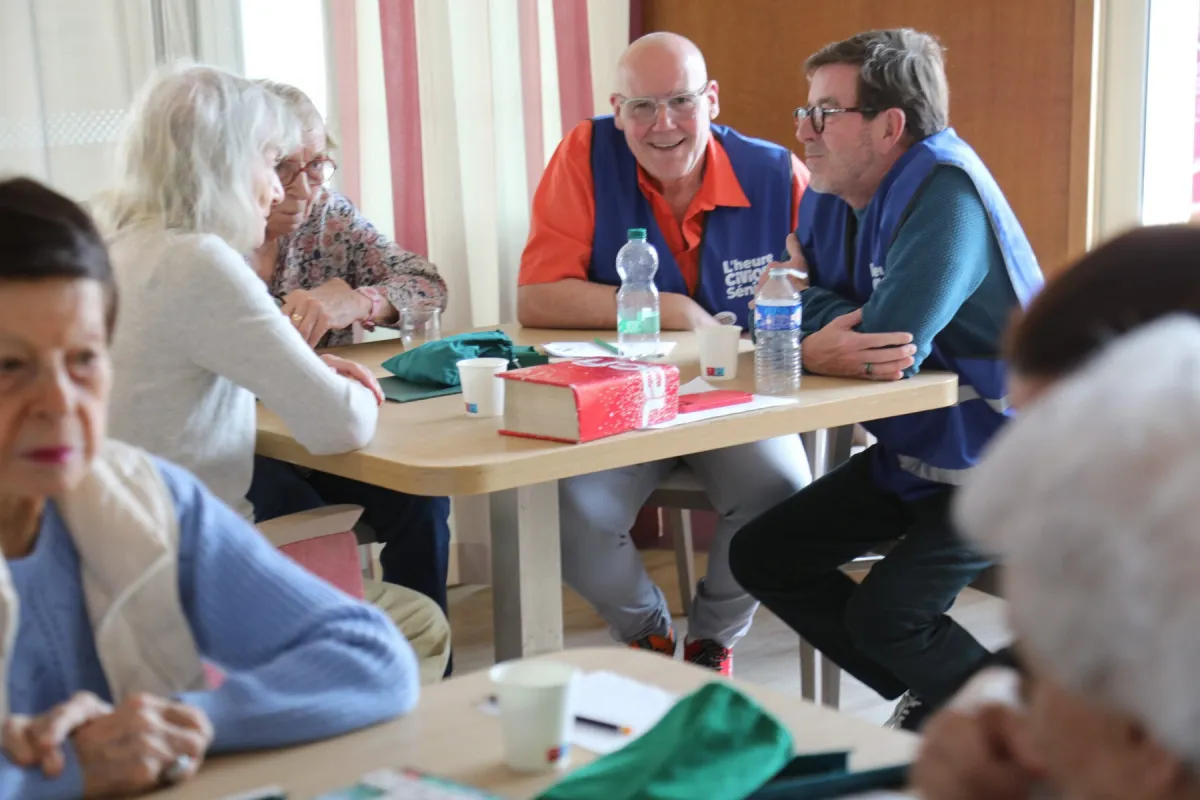
Nicole Riberolles, a 104-year-old at a Paris nursing home, was frustrated during a Scrabble game. She only had consonants. But she soon played "EWE," earning many points and moving into second place.
"It's good to work the brain," she said, happy with her play.
Across the room, similar scenes unfolded. People played board games, laughing and making playful accusations. If not for the walking sticks and wheelchairs, it would be hard to tell it was a care home.
The Civic Hour's Flexible Approach
A few years ago, volunteers from the neighborhood joined these weekly board game meet-ups. This is part of a French initiative called l'Heure Civique, or Civic Hour. It's changing how people volunteer, making it easier for those who feel they don't have much time. It also helps build community connections.
We're a new kind of news feed.
Regular news is designed to drain you. We're a non-profit built to restore you. Every story we publish is scored for impact, progress, and hope.
Start Your News DetoxAtanase Périfan, founder of l'Heure Civique, explained that traditional volunteering is struggling. People want to help and feel useful, but they don't want to be tied down. They have less free time and can't commit to regular, intensive roles.

In 2025, about 13 million French people volunteered for charities. This is down from 15 million in 2016. A report by France Bénévolat found that people now prefer more flexible ways to help. Younger generations especially like direct, occasional involvement in specific projects.
This trend isn't just in France. In the U.S., formal volunteering dropped to its lowest level in nearly two decades in 2021. However, informal helping remained steady. This suggests people are still generous but are changing how they engage.
L'Heure Civique offers a no-strings-attached way to volunteer. It asks people to give at least one hour each month to their communities. This could be gardening, delivering groceries, taking someone to the doctor, or helping kids with homework. Some months people might do more, others less, and that's fine. Their combined efforts make a big difference.
"It's a new form of commitment, everyone does what they can," said Périfan, who is also a deputy mayor in Paris. "There are 65 million people in France. If each person contributes just one hour — and who doesn't have an hour? — the potential is massive."

Building Connections and Community
Périfan started l'Heure Civique after reading about an elderly woman who died alone in her Paris apartment and wasn't found for four months. He felt it was terrible for someone to be so isolated. He wanted to create ways for people to connect more.
His approach, where every little bit helps, has grown significantly. Today, about 250 French towns participate in l'Heure Civique, with over 24,000 volunteers.
Gilles Grindard, a former civil servant, joined his first board game session at the care home. He had been nervous about visiting due to his own fear of aging. But by the end, he loved it. "It was wonderful," Grindard said. "They were very friendly and chatty. I enjoyed it. I had no reason to be afraid. It's a win-win for everyone involved."

Another volunteer, Pascal Guy, first benefited from the program by receiving free meals. Now he volunteers several hours a month. He appreciates that there's no pressure to participate. He often gets a call the morning of an event asking if he's available.
"Sometimes I'm just not in the right mood," he explained. "That won't be useful to anyone if I show up. But most of the time, it does me good to come here, to feel a bit useful."
Nathan Dietz, a research director at the University of Maryland’s Do Good Institute, believes flexible systems like l'Heure Civique are the future of volunteering. He noted that many good habits were broken during the pandemic lockdowns. Making volunteering easier and reducing barriers will attract more people.
Dietz's research also shows that volunteering has wider benefits. People who volunteered in the past year were more likely to donate in the current year. And those who donated were more likely to volunteer. Volunteering and giving also seem to increase the likelihood of voting in national elections. "Getting people to realize they have a stake in their communities, getting them to volunteer, it really strengthens society and democracy," he added.
Périfan and others argue that community volunteering is vital, especially with government budget cuts.

Mathilde Monnier, who manages l'Heure Civique's senior citizen projects, highlighted the need for activities for France's aging population. "Health workers, they don't have the time to talk and discuss. But our volunteers do," she said.
Despite its national reach and thousands of volunteers, l'Heure Civique has only about a dozen paid staff. It relies on funding from retirement and national funds, and asks municipalities to advertise sessions. The no-commitment model means volunteers come and go, making organization challenging. "It's much more difficult to organize, but we had to create this model," Périfan noted.
Currently, 80% of volunteers are retired, mostly women. Attracting younger participants remains a goal.
In an increasingly individualistic world, l'Heure Civique is betting on collective power to help communities thrive. It aims to grow its volunteer base in France to over a million and expand to five continents in the coming years.
"Generosity is a renewable energy," Périfan said. "People want to feel useful. And that citizen generosity cultivates political action."