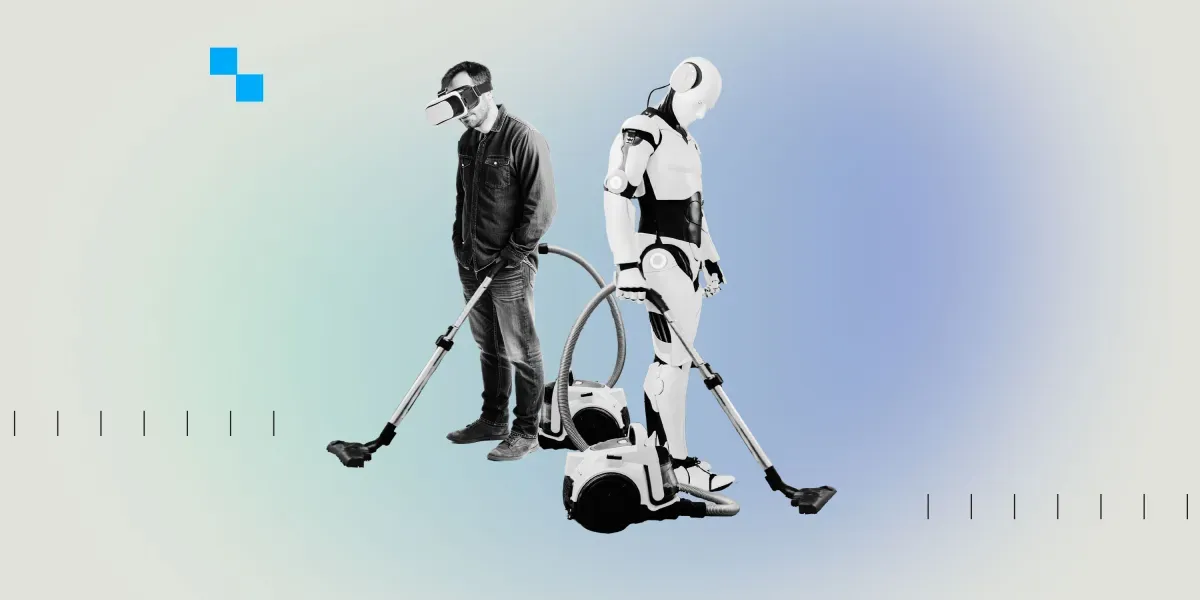
Ever wonder how those new humanoid robots learn to, you know, human? Turns out, it's less sci-fi lab and more... a medical student in Nigeria with an iPhone strapped to his forehead.
Meet Zeus. After pulling shifts at the hospital, he records himself doing everyday chores, phone-cam style. He's a data recorder for Micro1, a company that sells these highly specific home videos to robotics firms. Because apparently, that's where we are now: the gig economy has expanded to include teaching AI how to load a dishwasher.
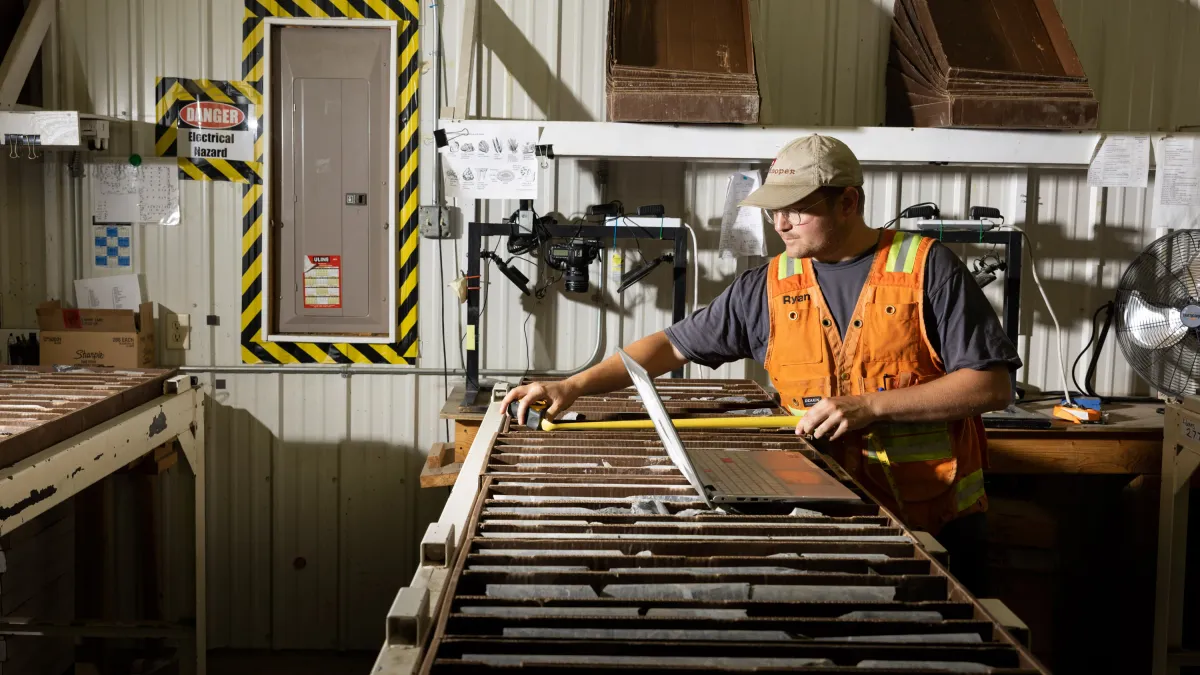
Micro1 has thousands of these data recorders in over 50 countries. The pay is good locally, which is nice, but it does raise a few eyebrows about privacy, consent, and the general weirdness of filming yourself doing mundane tasks for future robot overlords.
We're a new kind of news feed.
Regular news is designed to drain you. We're a non-profit built to restore you. Every story we publish is scored for impact, progress, and hope.
Start Your News DetoxAI Needs Better Benchmarks (And Maybe Therapy)
For years, we've judged AI by how well it beats humans at specific tasks. The problem? AI rarely operates in a vacuum. It's usually elbow-deep in complex, real-world situations, interacting with actual humans over time. This gap means we're probably underestimating its true capabilities, overestimating its risks, or both.
What's needed are new benchmarks that test AI's long-term performance within human teams and workflows. Think of it as a group project, but with an AI trying to pull its weight. One idea is called Human–AI, Context-Specific Evaluation. Because if AI is going to work with us, it should probably be graded on more than just a pop quiz.
Quantum Computers: Healthcare's New Heavyweight Contender
In a lab near Oxford, a quantum computer, built from atoms and light, is flexing its tiny but mighty muscles. Its owner, Infleqtion, has its sights set on a $5 million prize. The challenge? Solve healthcare problems that even our beefiest "classical" computers can't crack.
There can only be one winner, if any at all. Which, if you think about it, is both impressive and slightly terrifying. Imagine a computer so smart, it leaves every other machine in the dust. And it’s doing it for healthcare. We'll take it.
Quick Hits from the Digital Front Lines:
- OpenAI just pulled off the largest funding round in Silicon Valley history ($122 billion before its expected IPO). They're also planning to "rethink the social contract." Meanwhile, some campaigners are urging people to ditch ChatGPT. Busy times.
- Iran is reportedly threatening 18 US tech companies, including Nvidia, Apple, Microsoft, and Google, after allegedly striking AWS data centers earlier this month. The stakes, as they say, are rather high.
- Artemis II is gearing up to send humans back to the Moon. You can watch the launch attempt today. Get ready for some lunar selfies.
- Putin is tightening his grip on Russia's internet, leading to more outages and blockages. The country is slowly but surely cutting itself off from the digital world.
- A robotaxi outage in China left passengers stranded on highways in Wuhan. Baidu vehicles just froze. Police are blaming a "system failure," which is a polite way of saying the robots threw a digital tantrum.
- US government requests for social media user data have jumped 770% in the last decade. Let that satisfying number sink in.
- Tesla admitted that humans sometimes take the wheel of its robotaxis. Turns out, even autonomous vehicles need a little human intervention now and then.
- A data visualization shows the truly terrifying possibility of a chain reaction of satellite collisions in space. Because apparently, space junk is about to get even junkier.
- Meta's smartglasses make users seem "creepy," according to one journalist who wore them for a month. Perhaps not the vibe they were going for.
- A Claude Code leak hints at a virtual pet in the works. Get ready for the GenAI Tamagotchi.
Quote of the Day:
"From now on, for every assassination, an American company will be destroyed." —Iran’s Islamic Revolutionary Guard Corps (IRGC) threatens US tech firms.
One Mine, Billions in EV Subsidies
North of Tamarack, Minnesota, on a unassuming pine farm, Talon Metals found one of America's densest nickel deposits. Now, they want to mine it. Why does this matter? Because products made from this nickel could unlock over $26 billion in subsidies from the Inflation Reduction Act.
The IRA is quietly reshaping the US economy, and a single mine could become a very large, very lucrative piece of that puzzle. Suddenly, pine farms are looking a lot more interesting.
Still Having Nice Things
Someone tried to taste-test every potato chip in the world. We salute their dedication.
Good news: global terrorism has hit a 15-year low. And you can get lost in endless new views through some truly epic windows around the world. The world might be a bit wild, but there's still plenty to appreciate.