

In 1960, photographer Julius Shulman captured two women sitting in a glass-walled living room, the glittering sprawl of Los Angeles behind them. That single image—taken inside the Stahl House in the Hollywood Hills—became the photograph that made people believe architecture could be optimistic. Sixty-five years later, the house itself is on the market for the first time, listed at $25 million.
The story of how this house came to exist is almost as striking as the photograph. In the early 1950s, Buck and Carlotta Stahl were renting in Los Angeles when they spotted a lot in the Hollywood Hills. Most architects turned them down. The location was too difficult, they said. The hillside too steep. But Pierre Koenig saw something else.
Koenig was working with the Case Study program, an initiative by Arts & Architecture magazine to sponsor modernist homes that pushed what was possible. With that backing, he designed the Stahl House as a cantilever—an L-shaped steel frame that seemed to float off the hillside, its entire south face made of glass. The steel skeleton went up in a single day. A year later, the Stahls moved in.
We're a new kind of news feed.
Regular news is designed to drain you. We're a non-profit built to restore you. Every story we publish is scored for impact, progress, and hope.
Start Your News Detox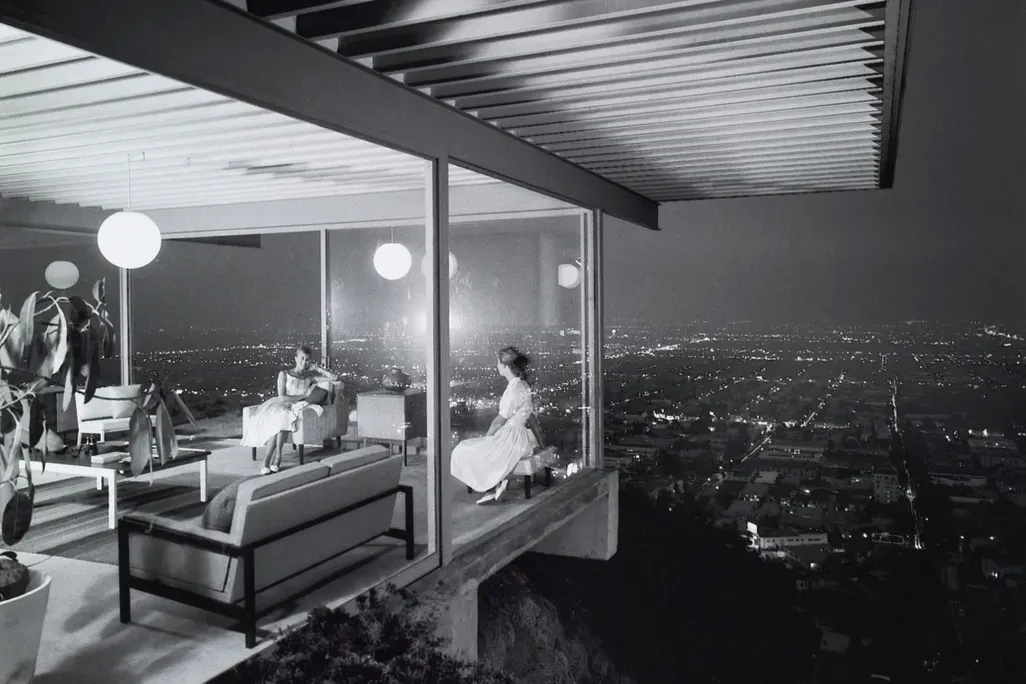
When Shulman's photographs emerged, they didn't just document a house. They showed something deeper: the possibility that design could transform how you lived, that a view and natural light and open space weren't luxuries but part of what it meant to be modern. Architect Tom Kundig later called it the rare photograph that captures "the potential of architecture, the optimism of it" in a single frame.
The house stayed in the Stahl family for decades. In 2013, it was added to the National Register of Historic Places. More significantly, seventeen years ago, the Stahls' children opened the house for public tours—a way to maintain the property and keep the story alive. Thousands of people have walked through those glass walls, stood where Shulman's subjects sat, and looked out at the city below.
Now someone else will have that view. The current owners are explicit about what they're looking for: a buyer who understands the weight of what they're purchasing, who sees themselves as custodians of both the architecture and its history. The Stahl House was never just a home. It was proof that a difficult site and an ambitious idea could become something that changes how people see the future.