On September 5, 2001, a concert began inside a medieval church in Halberstadt, Germany. Twenty-three years later, it's still playing. If nothing interrupts it, the performance won't end until 2640—639 years from its start.
The piece is John Cage's "ORGAN²/ASLSP," which stands for "As Slow As Possible." Nine chords into it. The current one started in February 2024. The next arrives in August 2026, and when it does, an A4 chord will sustain for 911 consecutive days.
Cage died in 1992, but his philosophy lives in this experiment. He built his art around paradox: his most famous work, "4'33"," is four minutes and 33 seconds of silence. "ORGAN²/ASLSP" is the inverse—melodies stretched so thin they become something else entirely, something that asks what music even is when time stops mattering.
We're a new kind of news feed.
Regular news is designed to drain you. We're a non-profit built to restore you. Every story we publish is scored for impact, progress, and hope.
Start Your News DetoxThe machine that plays itself
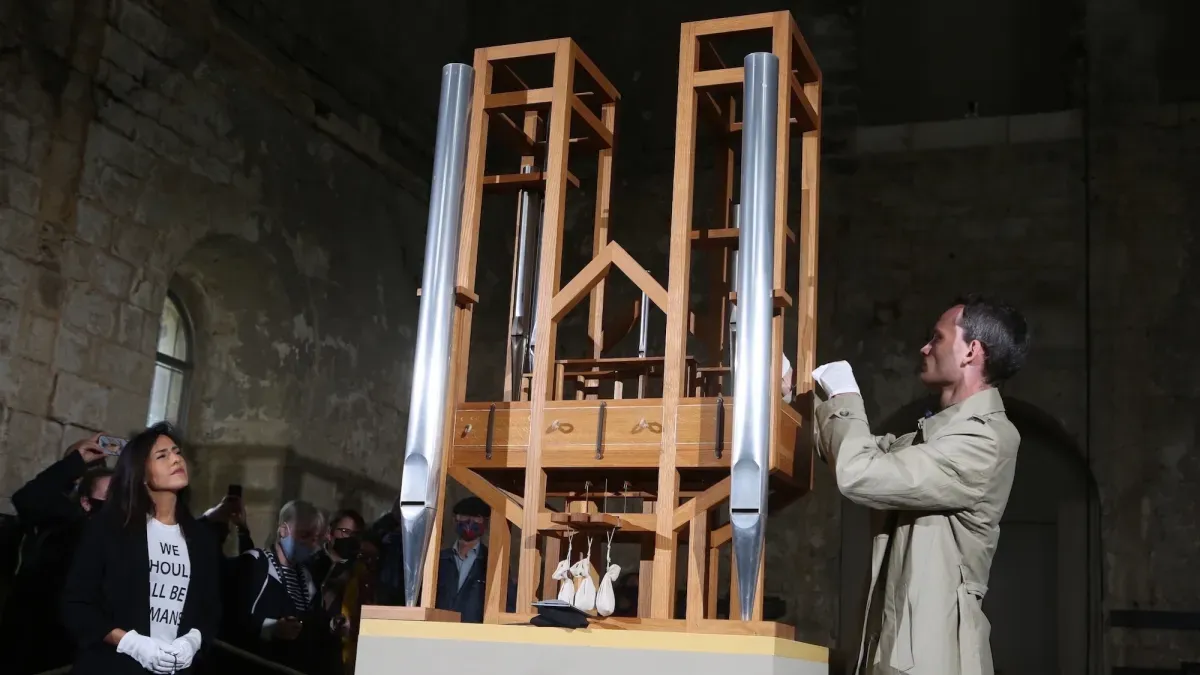
The organ isn't a traditional instrument. It can't be, because human hands would exhaust before the piece did. Instead, sandbags depress the wooden keys. Electrically powered bellows—backed by a generator—push air through the pipes continuously. When it's time to change chords, a human arrives, swaps the necessary pipes, and leaves. The machine does the rest.
The organizers chose their numbers deliberately. The 639-year span mirrors the gap between 1361 (when the world's first 12-tone Gothic organ debuted) and 2000. The performance started on Cage's birthday. Even the timeline is part of the composition.
By 2011, noise complaints had grown loud enough that the organ was enclosed in an acrylic case. Few people visit anymore. When the final chord sounds in 2640, there's no guarantee anyone will be there to hear it—or that anyone will remember why it mattered.
But that's almost the point. Cage spent his life asking uncomfortable questions about intention, time, and what we choose to pay attention to. This organ, humming away in a German church while centuries pass, is perhaps his most patient answer.