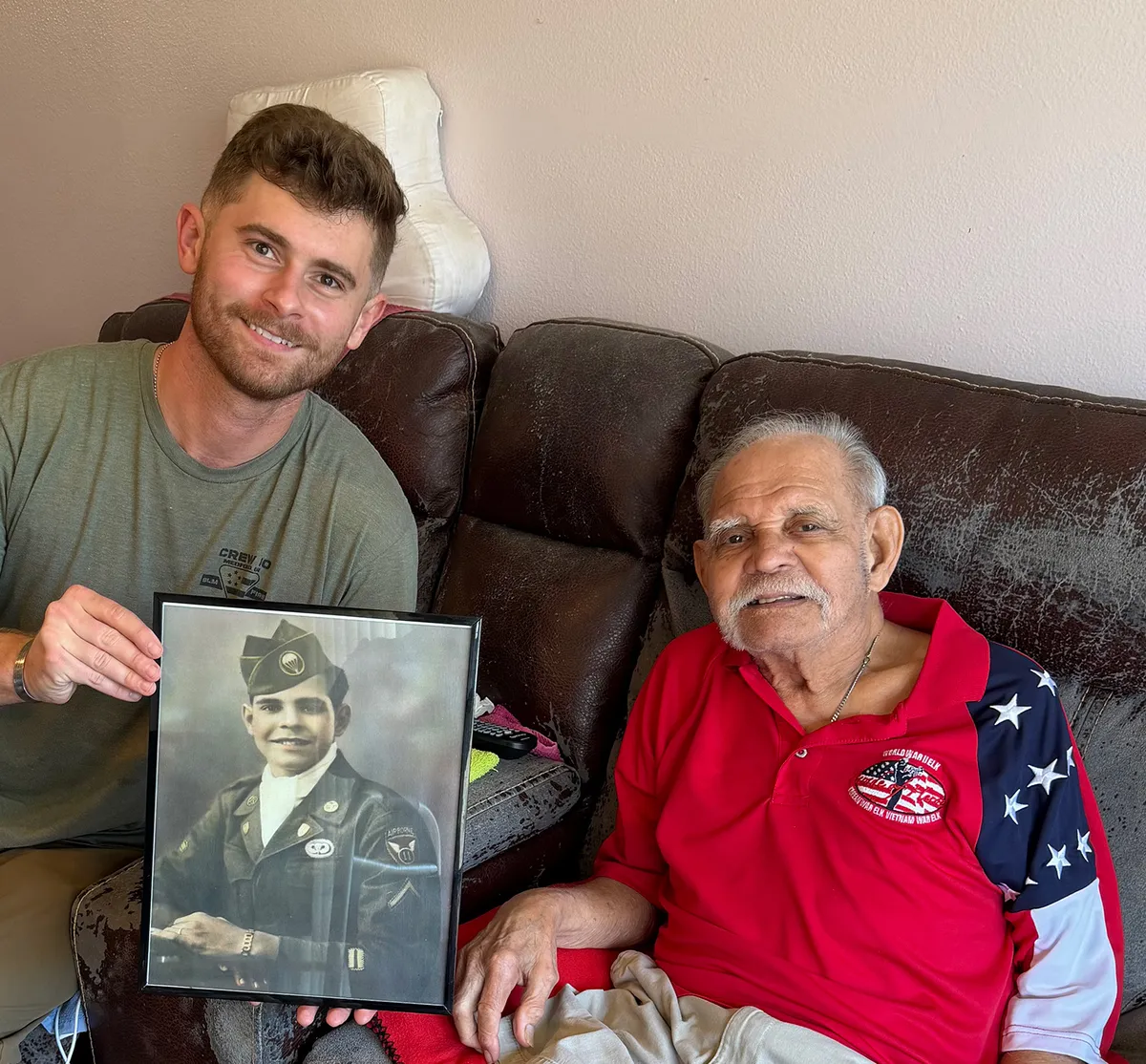
Neil Gallagher was a middle schooler when he realized something was slipping away. His grandfathers had served in World War II, but like many of their generation, they rarely spoke about it. When they died, their stories went with them. So at 13, Gallagher started asking veterans in his community if they'd talk — if they'd let him preserve what they'd lived through.
That impulse became Preserving the Stories, now a registered nonprofit that has just completed its 200th interview. Some of those recordings are heading to the Library of Congress Veterans History Project, where they'll sit alongside thousands of other veteran accounts. For Gallagher, now a second-year law student at UC Berkeley, it's a validation of something he learned early on: these conversations matter in ways that go beyond history.
What the interviews revealed
When Gallagher started expanding beyond World War II to interview Korean and Vietnam War veterans, he noticed something shift in the conversations. Yes, he was collecting military history. But he was also capturing something messier and more human — the fear, the pride, the moral weight of what they'd witnessed, the resilience required to carry it. Veterans began sharing memories they'd never told their own families. "This trust carries an immense weight," Gallagher says, and you can feel the responsibility in those words.
We're a new kind of news feed.
Regular news is designed to drain you. We're a non-profit built to restore you. Every story we publish is scored for impact, progress, and hope.
Start Your News DetoxHis own service in the U.S. Marine Corps gave him access these conversations might not otherwise have. Veterans talk differently to someone who's worn the uniform. But Gallagher also started bringing other veterans along for interviews — peers who could ask questions differently, who could sit with the silence when it came.

Law school opened another angle. Through pro bono work and summer placements, Gallagher began interviewing Berkeley Law alumni and classmates' family members. More importantly, he started seeing the legal side of what veterans face coming home — the bureaucratic obstacles, the gaps in support, the way the system can fail people who've already given so much. He's now developing a Books for Vets program that sends military history texts to incarcerated veterans, recognizing that re-entry is its own kind of battle.
What started as one teenager's attempt to understand his grandfathers has become something larger: a practical argument that these stories deserve preservation, that future generations of veterans shouldn't have to navigate their own re-entry alone, and that sometimes the most important historical work happens in quiet conversations, one interview at a time.