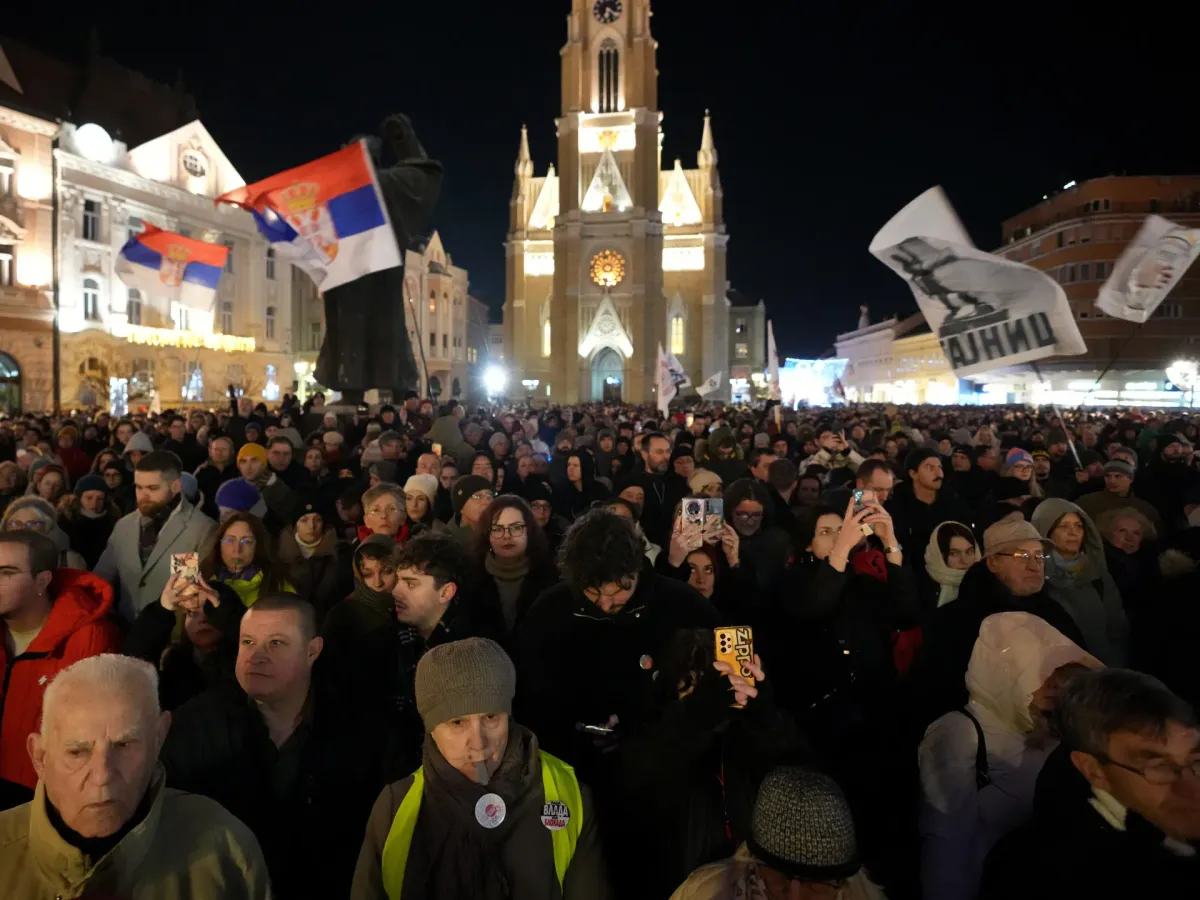
Thousands gathered in Novi Sad this week to stand behind university students who've spent over a year pushing back against what they see as systematic corruption at the heart of Serbian politics. The students have moved beyond protest—they're drafting an actual plan to reshape how their government works.
It started with a tragedy. In November 2024, a train station canopy collapsed in Novi Sad, killing 16 people. The incident became a breaking point for many Serbs, a visible symbol of what happens when institutions fail. Thirteen people, including a former minister, were charged in connection with the disaster. The charges against the ex-minister were later dropped, but the momentum didn't stop.
What began as outrage has evolved into something more organized. Students have collected roughly 400,000 signatures backing their vision for change. Their proposals are concrete: ban corrupt officials from future politics, investigate their wealth, and rebuild rule of law from the ground up. "What victory will mean," they called their latest rally—a framing that suggests they're thinking not just about opposition, but about what comes next.
We're a new kind of news feed.
Regular news is designed to drain you. We're a non-profit built to restore you. Every story we publish is scored for impact, progress, and hope.
Start Your News DetoxPresident Aleksandar Vucic has dismissed the movement as foreign-funded agitation and refused to call early elections. Protesters have faced real consequences—detention, job loss, pressure from authorities. Yet the movement has kept growing, drawing support from people across Serbia who've grown weary of mainstream politics.
The disconnect is stark. While Vucic promised to lead Serbia toward EU membership, his government has deepened ties with Russia and China while facing sustained accusations of weakening democratic institutions. For a growing number of Serbs, the gap between those promises and reality has become impossible to ignore.
The next major gathering is planned for January 27 in Belgrade. What's notable isn't just the size of the crowds, but the specificity of what they're asking for. This isn't anger without direction—it's a generation saying: here's what we think needs to change, and here's how many of us agree.