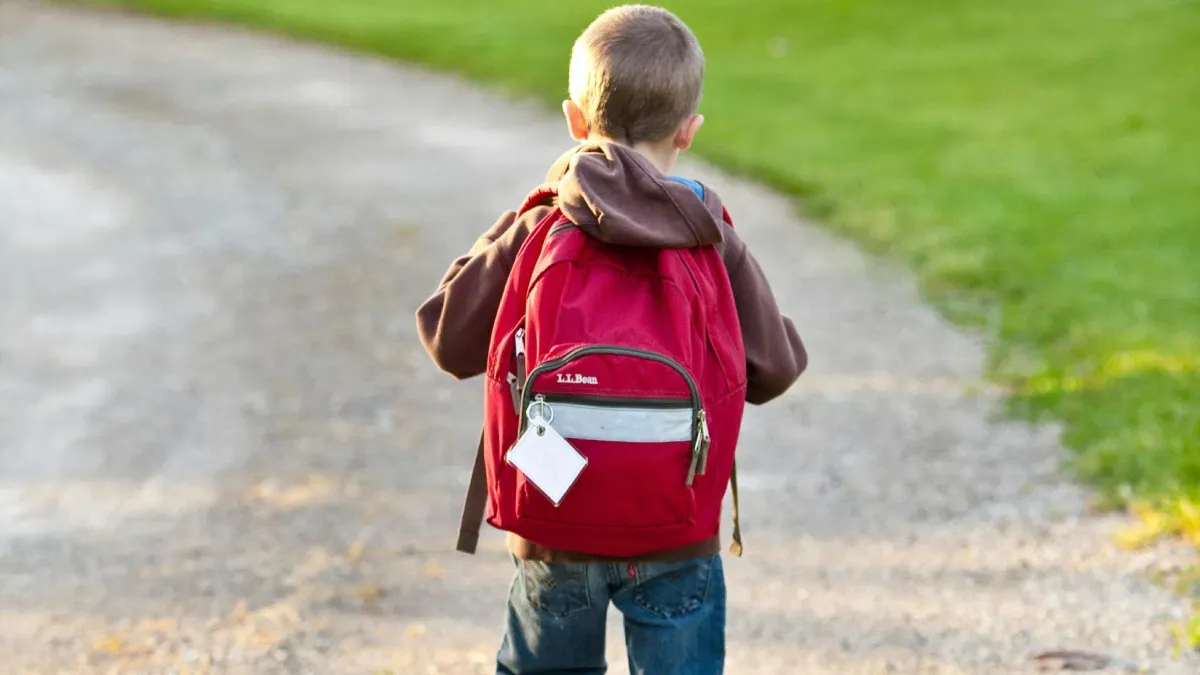
For six years, Xu Bingyang carried his best friend Zhang Ze on his back to school every morning. Not occasionally. Every day. The two met in first grade, and when Zhang was diagnosed with myasthenia gravis—a muscle disorder that paralyzed his legs—Xu didn't pause to think about the burden. He just started carrying him.
Zhang couldn't walk. Xu was bigger. The logic was simple to an eight-year-old: "If I didn't help him, nobody else would."
What makes this story worth paying attention to isn't the sentiment—it's the consistency. Xu didn't help for a week or a semester. He showed up every single morning for six years. During the school day, he assisted Zhang to the bathroom, carried his lunch tray, turned in his assignments. He was present in the way that actual support requires: unglamorous, repetitive, sometimes exhausting.
We're a new kind of news feed.
Regular news is designed to drain you. We're a non-profit built to restore you. Every story we publish is scored for impact, progress, and hope.
Start Your News DetoxThis matters because we live in a culture that celebrates grand gestures—the viral moment, the tearful reunion, the one-time donation. What we don't often see celebrated is the quiet, daily choice to show up. Xu's friendship wasn't documented for social media initially. It was just what he did.
The story eventually did circulate online, and the response was predictable: people called him a "beautiful human being," noted that "the world needs more people like Xu." And those reactions aren't wrong. But there's something worth examining beneath the praise. Xu didn't perform kindness for an audience. He performed it because his friend needed to get to school, and he was the person in a position to help.
That's the part that's actually instructive. Not the exceptional nature of what he did, but the ordinariness of his reasoning. He didn't see himself as a hero. He saw a problem and a solution. He was strong enough to carry his friend, so he did.
Zhang Ze got to attend school like his peers. He got to participate in class, to have a friend sit next to him at lunch, to experience the ordinary rhythm of childhood despite a condition that could have isolated him completely. That's not a feel-good story—that's what inclusion looks like when someone decides it matters enough to be inconvenient.
Xu has said he wants to continue helping people throughout his life. At the age when most kids are thinking about grades and social status, he was already thinking about what it means to show up for someone else. That's the real story here: not that one boy was exceptionally kind, but that kindness—actual, sustained, daily kindness—is something a child understood as simply necessary.