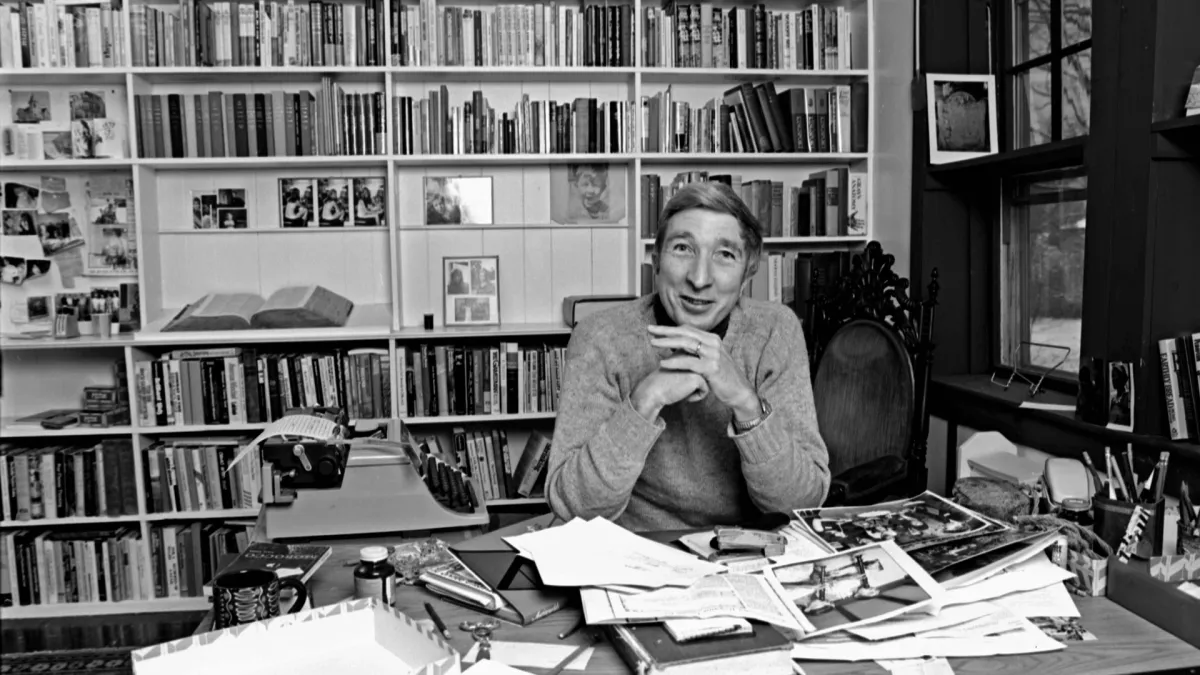
From a teenage farm boy sending fan mail to cartoonists to a two-time Pulitzer Prize winner, John Updike never stopped writing letters. Over 60 years, he composed more than 25,000 of them—a volume that James Schiff, a professor of English at the University of Cincinnati, has now distilled into "Selected Letters of John Updike."
These letters matter because they show how a writer actually thinks. Updike began as a teenager in Plowville, Pennsylvania, scribbling notes to the artists and cartoonists he admired, inspired by his mother's own writing ambitions. By the time he arrived at Harvard in 1950, he was already prolific. During his four years on campus, he wrote roughly 150 letters to his parents—casual dispatches about courses, roommates, and the disorienting thrill of being surrounded by brilliant people. "Harvard is a difficult place in which to write a letter," he confessed in one 1950 note. "I'm rather frightened by the immensity of intelligence and variety of talents displayed here."
Those early letters capture something his published work alone doesn't: the unguarded voice of a young man figuring out who he was. They document his cartoons for the Harvard Lampoon, his role as the magazine's editor and president, and the moment he fell in love with a Radcliffe student who would become his first wife. The letters are intimate without being self-conscious.
We're a new kind of news feed.
Regular news is designed to drain you. We're a non-profit built to restore you. Every story we publish is scored for impact, progress, and hope.
Start Your News DetoxWhat strikes Schiff most is how generous Updike was with his words. "For somebody who was an artist of such a high stature, he was remarkably open and generous to others," Schiff observes. Perhaps because cartoonists had answered his own fan mail when he was young—showing him that established artists could be kind—Updike felt obligated to respond to the people who wrote to him. The letters showcase the same "intellectual finesse, wit, and eloquence" that made his fiction and essays distinctive, but they're rarely boring or dutiful. They're a writer thinking out loud.
The John Updike Archive at Harvard, which houses manuscripts, drawings, and personal correspondence, proved essential to Schiff's work. These materials offer a rare glimpse into how prolific writers actually operate: not just through the books they publish, but through the thousands of small conversations they sustain. Updike's letters reveal a man who understood that writing—in all its forms—was how you stayed connected to the world.