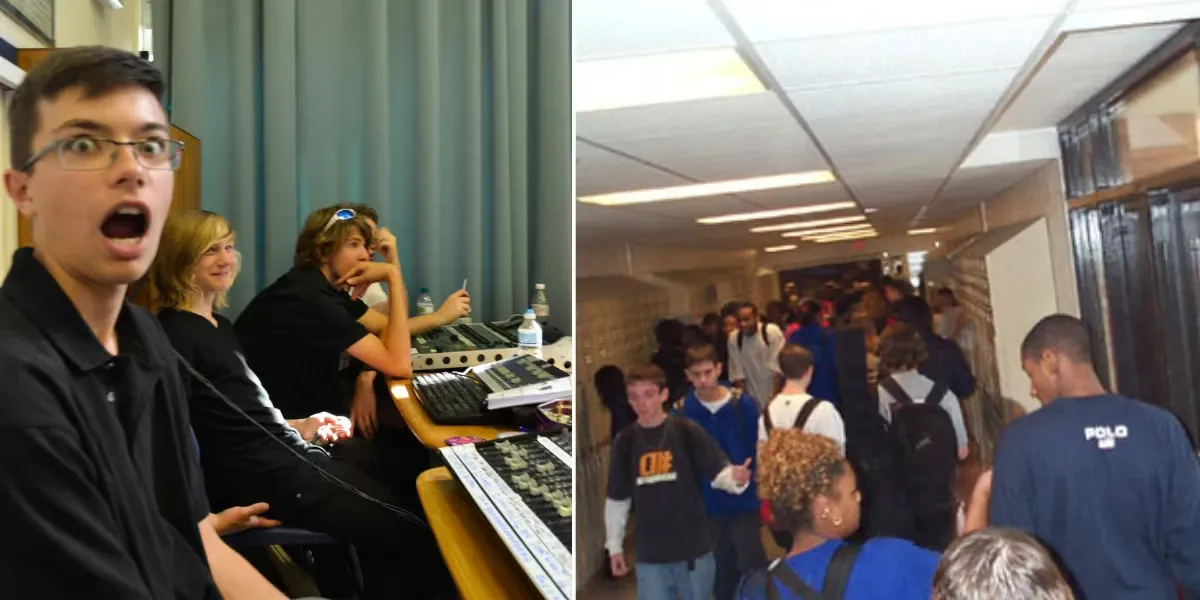
A grainy clip of the last day of high school in 2001 has racked up over 3 million YouTube views, and the comments section reads like a collective exhale from an entire generation. In 48 seconds, a student captures his classmates saying goodbye—genuine, unguarded, mostly camera-shy—and something about it has struck a nerve.
The video is a snapshot of a specific moment: June 2001, just months before September 11 would reshape the country. But what's drawing millennials back isn't just the date on the calendar. It's what they see in the footage itself.
What the video actually shows
The teenagers in the clip dress casually—tank tops, jeans, t-shirts. A few sport the fashion choices that defined the era (yes, sideways Adidas visors). What strikes viewers most is how normal it all feels. No one is performing for the camera. Several students actively avoid being filmed. There are awkward waves, genuine smiles, the kind of unpolished moments that feel almost extinct now.
We're a new kind of news feed.
Regular news is designed to drain you. We're a non-profit built to restore you. Every story we publish is scored for impact, progress, and hope.
Start Your News DetoxOne commenter noted the shift plainly: "We used to dodge cameras, remember?" Another observed that "it seems like everyone these days must be the main character, especially with a camera or phone around."
There's something in the discomfort—the shyness, the lack of a practiced pose—that reads as authentic to people scrolling through years of carefully curated content.
But the comments go deeper than fashion or camera habits. Viewers noticed the happiness. "Look at how happy and interactive everyone was," one wrote. "Everyone looked so happy, healthy, and very 'in the moment.'" The data backs up the feeling: teenage depression and anxiety have risen measurably since the early 2000s, when happiness among 13- to 18-year-olds actually peaked.
There's also the weight of what comes next. Every person in that video is living in a world that, in their minds, still makes sense. The anxieties that would define the next two decades—the wars, the economic collapse, the gradual erosion of shared reality—haven't arrived yet. The clip captures what feels like the last breath before a long, complicated exhale.
Why this matters
Nostalgia isn't just about wanting the past back. It's often a signal that something real has shifted. Market research shows 14% of millennials actively prefer thinking about the past rather than the future—a measurable retreat into memory. And it's not hard to understand why. The early 2000s, despite their own problems (the bullying, the racism, the cruelty that existed then too), felt simpler in a way that's hard to articulate without sounding naive.
What people seem to be missing isn't actually the era itself. It's the feeling of being in the moment without documenting it, of being happy without needing to perform it, of not knowing yet how complicated things would become.
The video will likely fade from the algorithm soon. But the comments—the ones where people admit they'd do almost anything to go back, where they quote Andy Bernard from The Office about wishing you knew you were in the good old days while you were still living them—those will probably stick around. Because they're not really about 2001. They're about recognizing, decades later, what you had when you had it.