

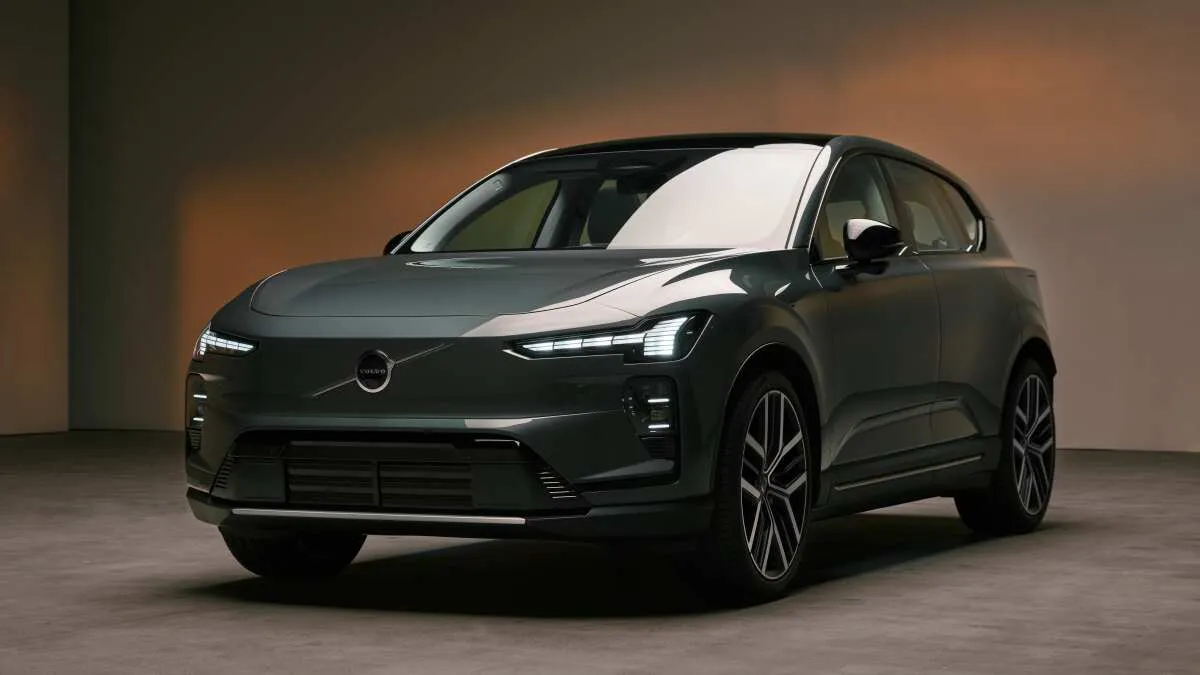
Volvo has just announced the EX60, a mid-size electric SUV that addresses one of the last real hesitations people have about going electric: range anxiety.
The top-end model travels over 500 miles on a single charge—roughly the distance from London to Rome without stopping. That puts it alongside the latest BMW i3 and Chinese competitors like Nio and Zeekr. Even more useful for everyday life: the EX60 can add 200 miles of range in 10 minutes using a 400-kW fast charger, which means a quick coffee stop could get you most of the way across a country.
How they got there
Volvo didn't stumble into this efficiency. The company integrated the battery directly into the car's structure, cutting weight. They developed their own electric motors instead of buying them off the shelf. They used "mega casting" technology—a technique that replaces hundreds of small metal parts with single high-precision castings, reducing complexity and weight further. And they licensed smart battery management algorithms from Breathe Battery Technologies, which optimizes how the battery delivers power throughout a drive.
We're a new kind of news feed.
Regular news is designed to drain you. We're a non-profit built to restore you. Every story we publish is scored for impact, progress, and hope.
Start Your News DetoxIt's the kind of engineering detail that doesn't make headlines but makes the difference between a car that feels like a compromise and one that just works.
There's a catch, though. That 500-mile range only comes on the most expensive model with a 117-kWh battery pack—roughly 50% more than the base price. The mid-range version still offers 385 miles, which is more than enough for most people's daily needs and a long weekend road trip. The EX60 starts just under £57,000 in the UK (about $77,800).
Beyond range, Volvo has packed the EX60 with features that feel like they're thinking about actual life. Interior radar can detect something as subtle as a baby's breathing. Google Gemini AI handles voice commands that sound more like talking to a person than barking at a computer. The signature safety feature—the seat belt—has been redesigned as a "multi-adaptive" system that uses sensors to adjust restraint in a crash based on who's sitting in the seat. Software updates roll out continuously, meaning the car gets better over time rather than becoming obsolete the moment you drive off the lot.
The 2027 EX60 is available to configure now in the UK, with wider global availability coming soon. What matters here isn't that Volvo has made a good electric car—plenty of manufacturers have done that. It's that they've made one where the practical friction points—how far you can go, how quickly you can charge, what happens in a crash—are no longer reasons to hesitate.



