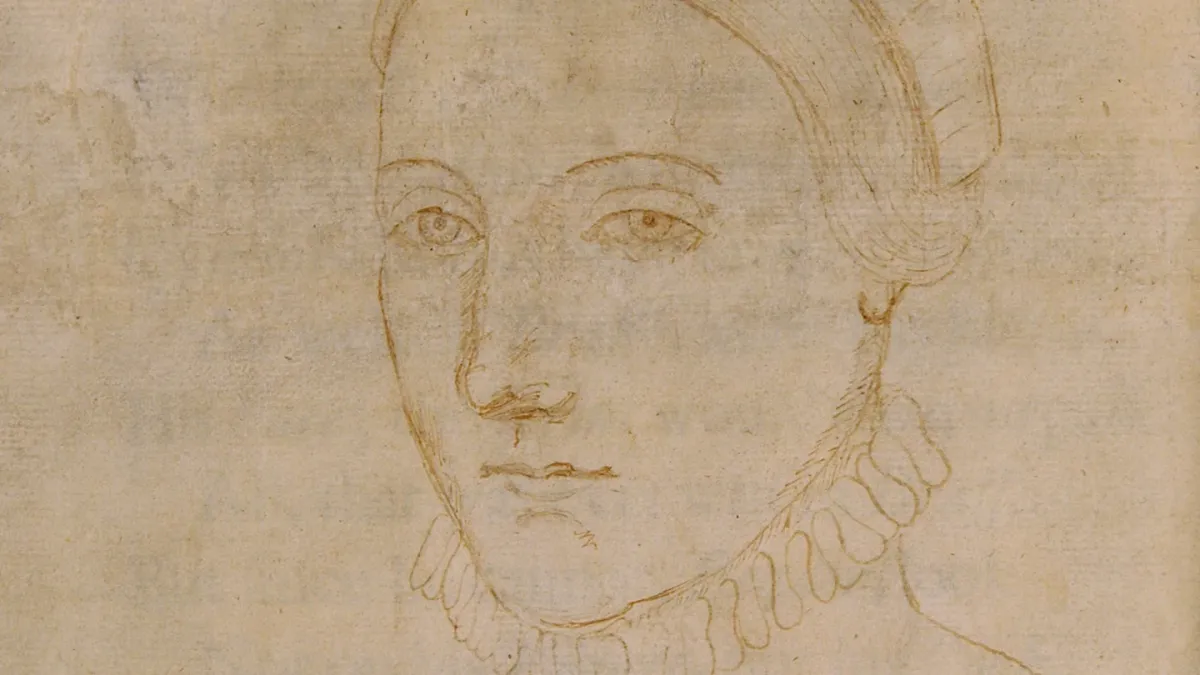
For centuries, Anne Hathaway has been the woman we know almost nothing about. Shakespeare's wife appears in the historical record as a pregnant 26-year-old in 1582, then largely vanishes—a name in a will, a mystery, a gap where a person should be.
But in 2025, scholars uncovered fragments of letters that rewrite that story.
The Marriage We Thought We Knew
Shakespeare was 18 when he married Hathaway in 1582. She was already three months pregnant with their daughter Susanna. The couple obtained a marriage license from the Bishop's Court in Worcester—a faster route that suggests they wanted to marry quietly, away from their home parish. Whether Shakespeare felt trapped or whether this was mutual, we don't know. What we do know: they stayed together until his death, had twins named Judith and Hamnet three years later, and built a life across two towns.
Hamnet died at 11. Four years later, Shakespeare wrote Hamlet. The film Hamnet theorizes a connection; historians remain carefully skeptical.
We're a new kind of news feed.
Regular news is designed to drain you. We're a non-profit built to restore you. Every story we publish is scored for impact, progress, and hope.
Start Your News DetoxMeanwhile, Anne spent most of her life in Stratford-upon-Avon, in a substantial house her father had left her—a woman with property, with roots, with resources. Shakespeare moved to London. Whether he brought his family with him sometime between 1600 and 1610 remains unclear. The distance between them, literal and emotional, seemed to swallow any real sense of who she was.
What the Letters Changed
Then came the letter fragments. One, addressed to "Mrs Shakspaire," is a request for money to help a poor child—apparently something Shakespeare had promised. The response, discovered alongside it, appears to come from Anne herself.
Matthew Steggle, the scholar who rediscovered the fragments, described her reply as "organized, businesslike and rather sarcastic." Not the voice of a passive wife waiting at home. The voice of someone managing affairs, making decisions, pushing back.
These two short pieces of paper suggest something historians have mostly missed: Anne and William may have been partners. Not in the romantic sense necessarily—the sonnets, the passion, the "dark lady" he wrote about remain a mystery, possibly inspired by Anne, possibly not. But partners in correspondence, in business, in the practical machinery of keeping a life running across distance.
It's a small thing, a few sentences in old handwriting. But it matters because it pulls Anne Hathaway out of the shadows where we've left her—no longer just the woman Shakespeare married because he had to, but a woman with her own voice, her own will, her own role in the story.
We may never know what their marriage felt like from the inside. But we're finally beginning to see that there was more inside it than centuries of silence suggested.