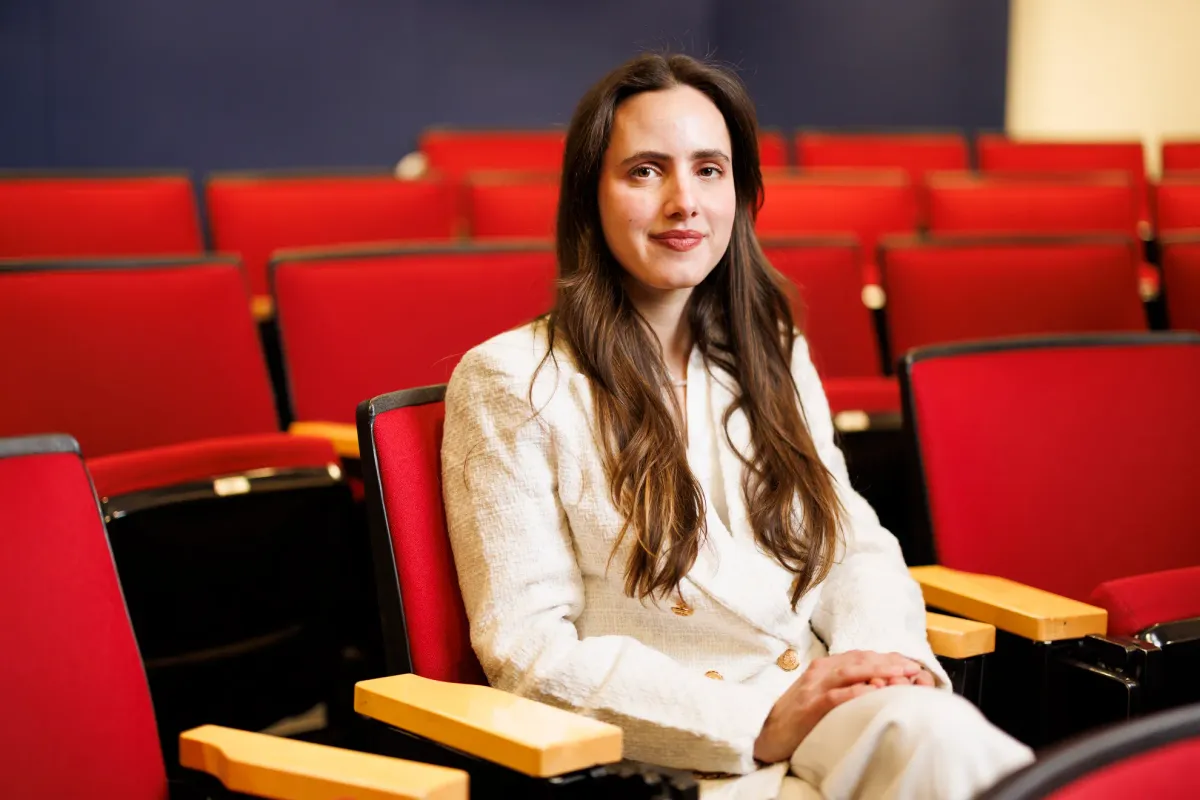
Luiza Lima Vieira grew up in Brazil, where the stark reality of kids her age living on the streets of Sao Paulo, hungry, while she wasn't, hit hard. It was a question that burrowed deep and refused to leave: Why them, and not me?
That question, sharp and persistent, eventually led her to a master's in public health in nutrition at the Harvard T.H. Chan School. Because apparently, some injustices just won't let you sleep.

"Injustice always shaped my path," Lima Vieira said, "and I wanted to do something about it."
We're a new kind of news feed.
Regular news is designed to drain you. We're a non-profit built to restore you. Every story we publish is scored for impact, progress, and hope.
Start Your News DetoxFrom Curiosity to Calling
When she was 16, her family moved to Ithaca, New York, following her mother's medical studies. Later, at Cornell, a symposium on public health lit a rather important lightbulb over her head. Students from wildly different backgrounds were all talking about the same thing: nutrition. It just clicked.
But life, as it often does, threw in a plot twist. During her time at Cornell, Lima Vieira developed myasthenia gravis, an autoimmune condition that essentially makes your muscles forget how to muscle. It took months to diagnose, involved surgery, and a whole lot of medication. She'd pushed herself to the brink.

"I wanted to be in the arts, I wanted to do medicine, I wanted to do nutrition, I wanted to do global health," she recalled. "I pushed myself to a point where my body gave up."
It was a harsh lesson in the limits of ambition, even when fueled by the best intentions.
The Big Picture
After graduating from Cornell in 2022, she worked with disadvantaged children, which sparked an interest in how large-scale programs and government policies could actually make a difference. Not just individual fixes, but systemic ones.

This realization truly solidified at Harvard. "I was never interested in politics, but at Harvard, I understood how important policy is," Lima Vieira noted. "Systemic change is the way to go."
Which, if you think about it, is a pretty profound journey from a childhood question about street kids to understanding the levers of global change. She even became a teaching fellow for a global mental health class, with professor Vikram Patel noting her infectious enthusiasm.
Today, Lima Vieira manages her myasthenia gravis with a carefully curated diet (limited ultra-processed foods, because of course), regular exercise as a certified classical Pilates instructor (because why not?), and plenty of rest. Six and a half years with an autoimmune condition taught her to slow down and prioritize her own well-being.
Now, post-Commencement, she's circling back to an older dream: medical school. She's studying for the MCAT in Ithaca, aiming for a fall 2027 start. Because, as she puts it, "We should not give up on pursuing our dreams even as challenges arise. Staying true to yourself while taking care of your body is the most important thing you can do."
It's a testament to turning deeply personal struggles into a driving force for a more just world. And perhaps, a reminder that sometimes, your body knows best when it's time to change course.