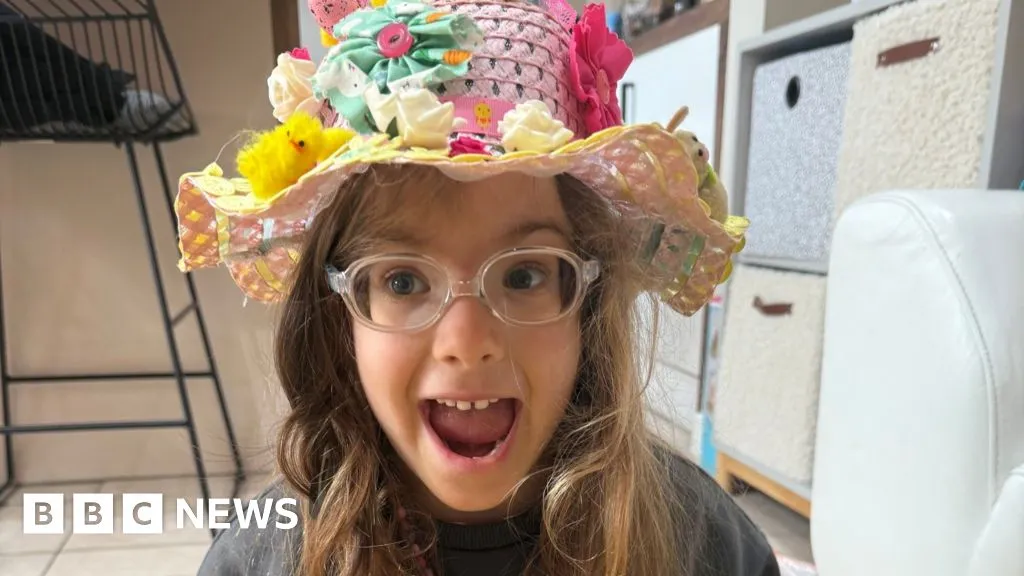
The mother of six-year-old Saffie Sandford says her daughter's life-changing eye gene therapy is "like someone waved a magic wand." Saffie, from Stevenage, has a rare condition called Leber's Congenital Amaurosis (LCA). This condition stops eye cells from making a protein needed for normal vision.
A New Hope for Vision
Saffie had tests at Moorfields Eye Hospital in London. Then, she received Luxturna therapy at Great Ormond Street Hospital (GOSH). Her mother, Lisa, said doctors told them Saffie would have been "blind by the age of 30" without this treatment.
GOSH explained that this treatment was the first of its kind for one of the genetic causes of LCA. Saffie had one eye treated in April 2025 and the other in September. The therapy involves injecting a healthy copy of the gene directly into each eye. This is a one-time procedure.
We're a new kind of news feed.
Regular news is designed to drain you. We're a non-profit built to restore you. Every story we publish is scored for impact, progress, and hope.
Start Your News DetoxSaffie started wearing glasses at age two for short-sightedness. At five, she was diagnosed with LCA when her parents noticed she struggled to see in the dark. Babies and children with LCA have poor vision in daylight and no vision in low light. They can lose their sight completely as adults.
 Image: Family handout
Lisa said Saffie's diagnosis was a "huge shock" because they had never heard of LCA. They also didn't know she and Saffie's dad, Tam, were carriers. She felt relieved and grateful when they learned a treatment was available on the NHS.
"Having the gene treatment has been life-changing," Lisa said. "She's thriving, and you wouldn't know she had the condition just by looking at her. The results have been incredible." Saffie's peripheral vision in daylight has also gotten better.
Understanding the Impact
Scientists at GOSH and University College London found that Luxturna can improve sight. It also strengthens visual pathways during a key stage of brain development. However, it is not a cure.
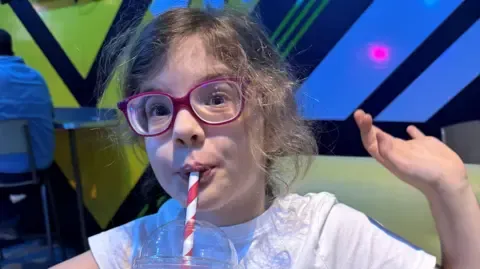 Image: Family handout
The team studied 15 children, aged 15 months to 12 years. They received the gene therapy at GOSH between 2020 and 2023. Older children showed limited improvements in seeing clearly. The youngest children showed more improvement because the treatment happened during a critical time for visual development.
The team also used a painless test called pattern visual evoked potentials. This test measures how well signals travel from the retina to the visual cortex.
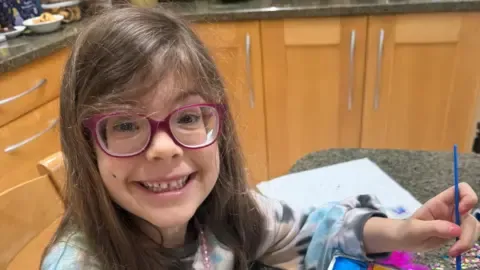 Image: Family handout
Rob Henderson, a consultant ophthalmologist at GOSH, noted that this research is the first to objectively show that gene therapy can strengthen visual pathways in young children with this rare eye condition. He added that even small improvements make a big difference for families. This research highlights the potential of gene therapy for inherited retinal diseases. It also shows the importance of developing ways to measure outcomes that fit different age groups.