

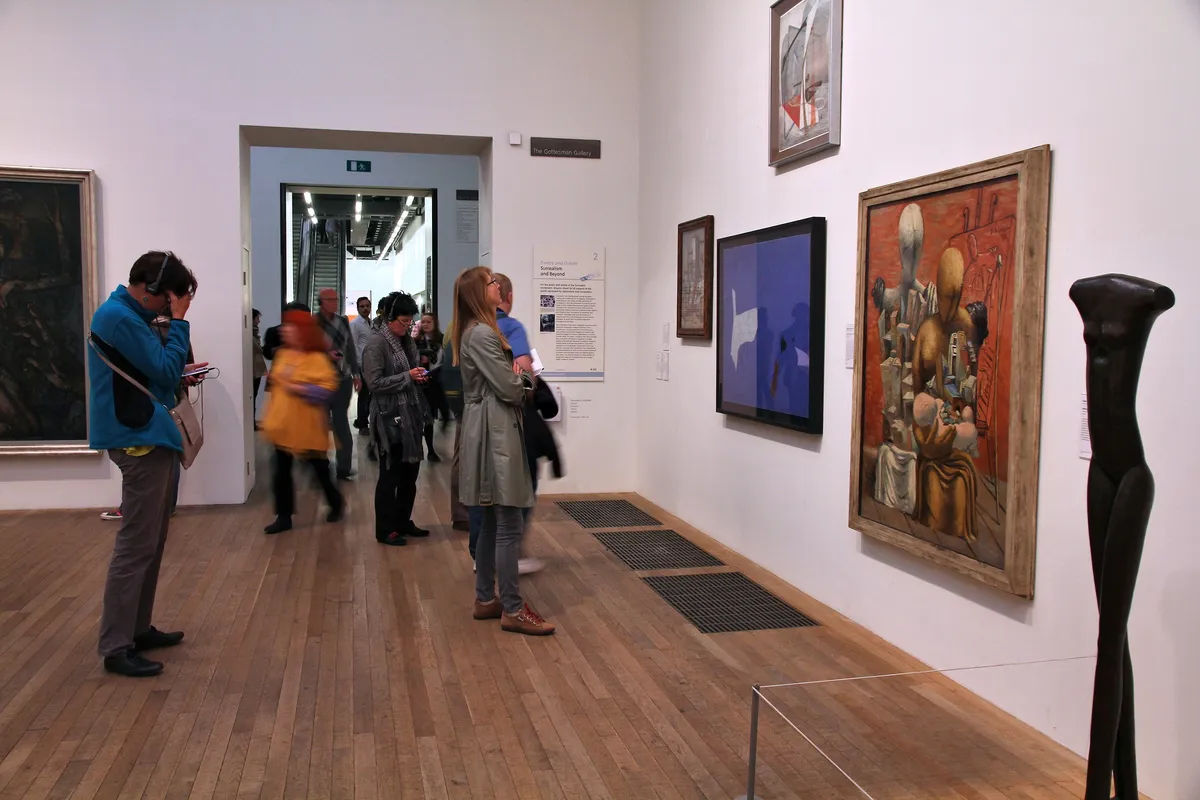
Standing in front of an original painting does something your body registers before your mind catches up. A new study from King's College London has measured exactly what happens: your stress hormones drop, inflammation decreases, and your nervous system shifts into a calmer state.
Fifty healthy adults between 18 and 40 participated in the experiment. Half visited The Courtauld Gallery in London to view originals by Van Gogh and Manet while wearing sensors that tracked heart rate, skin temperature, and other physiological markers. The other half viewed high-quality reproductions in a standard room. Researchers also collected saliva samples before and after to measure cortisol and inflammatory markers.
The difference was measurable. Cortisol — the body's primary stress hormone — fell by 22% in gallery visitors, compared to just 8% in the reproduction group. Pro-inflammatory cytokines, which are linked to chronic conditions like anxiety, heart disease, and diabetes, dropped 30% in the gallery group. Gallery visitors also showed distinctive patterns in heart rate variation and skin temperature, signs that their bodies were genuinely engaged.
We're a new kind of news feed.
Regular news is designed to drain you. We're a non-profit built to restore you. Every story we publish is scored for impact, progress, and hope.
Start Your News DetoxWhy the original matters
Here's what surprised researchers: even though both groups experienced some benefit, the gallery visit produced a noticeably stronger response. They think it's the immersive environment itself — the way original art occupies physical space, the scale of the canvas, the texture you can almost feel, the light in the room. These layers of sensory experience seem to deepen what your body actually does in response.
One detail matters: you don't need to know anything about art for this to work. The benefits appeared regardless of whether someone considered themselves an "art person" or had formal knowledge about the artists. Your body responds to the experience itself, not your credentials as an art appreciator.
What comes next
This isn't a replacement for clinical care, but it's a low-cost tool that actually shows up in your biology. Museums and galleries are already exploring how to integrate these findings into their programming, and some healthcare systems are beginning to consider art access as part of preventive wellness. The next time you linger in front of a painting, your body is doing something real — calming, restoring, and supporting your long-term health all at once.





