

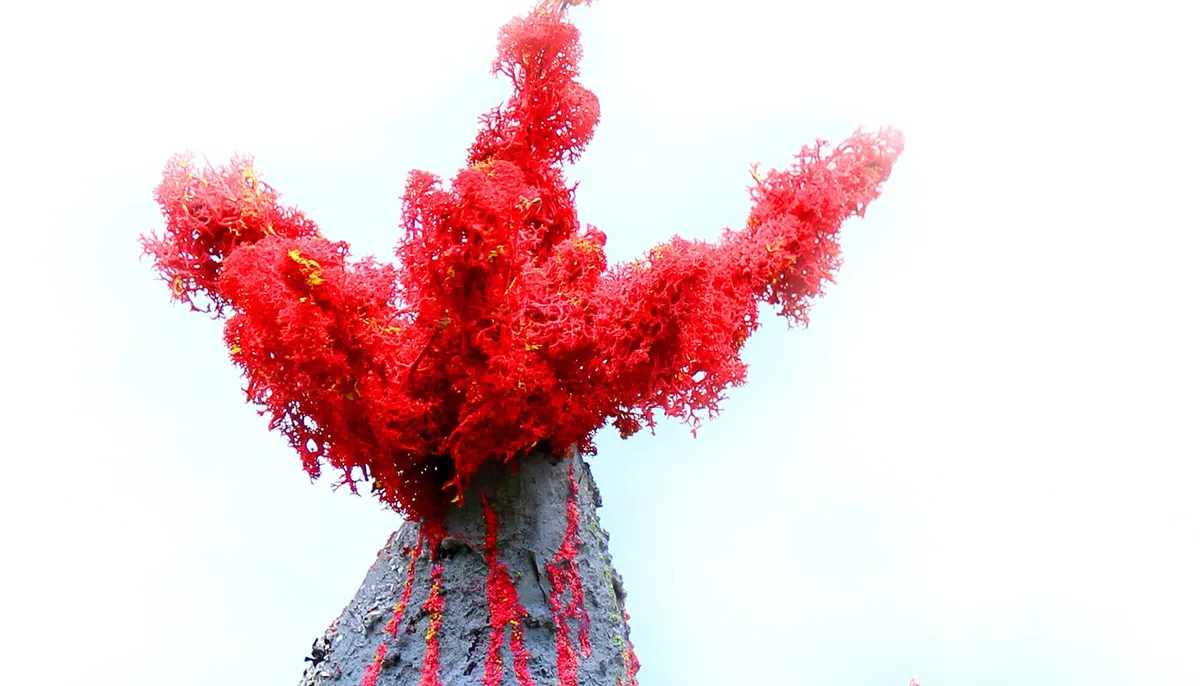
A volcano sits quietly despite containing magma that should detonate. Mount St. Helens in 1980 was one such puzzle: its magma was loaded with gas, yet it began with a slow lava flow rather than an immediate explosion. Scientists have now figured out why.
The key lies not in the magma itself, but in how the rock moves as it rises toward the surface. Researchers discovered that shear forces—the friction and stress created as molten rock flows through narrow volcanic conduits—can trigger gas bubbles to form and merge deep underground, creating pathways that let pressure escape early. The result: an eruption that flows rather than explodes.
How shear forces reshape eruptions
Previously, scientists assumed gas bubbles formed almost entirely when pressure dropped as magma rose. But this couldn't explain why some volcanoes with dangerously gas-rich magma behaved so calmly. The new research reveals a second mechanism at work.
We're a new kind of news feed.
Regular news is designed to drain you. We're a non-profit built to restore you. Every story we publish is scored for impact, progress, and hope.
Start Your News DetoxImagine stirring honey in a jar. The honey moves fastest where friction is lowest (the center) and slowest at the edges where it drags against the glass. This same "kneading" action happens to rising magma. As the molten rock is sheared by the walls of its conduit, gas bubbles form even without a pressure change. When these bubbles combine, they create channels—essentially pressure valves—that let gas escape gradually rather than building to an explosive climax.
The effect is strongest in magma already rich with gas. The more volatile the magma, the less shear force is needed to trigger bubble formation. Existing bubbles amplify the process, making it easier for new ones to grow and merge.
Mount St. Helens offers a real-world case study. In May 1980, the volcano's gas-rich magma rose through its conduit, but intense shear forces allowed gas to bleed off steadily. The initial eruption was a slow, creeping lava flow. Then a magnitude 5.1 earthquake triggered a massive landslide that suddenly opened the vent. With the pressure release valve suddenly removed, the remaining gas ignited in the catastrophic lateral blast that killed 57 people and flattened 80 million trees.
Understanding this mechanism matters for volcanic hazard prediction. Two volcanoes with chemically identical magma might erupt completely differently depending on the geometry of their conduits and the shear forces at play. By modeling these forces alongside pressure changes, volcanologists can better forecast whether a volcano will flow or explode—information that shapes evacuation planning and emergency response in the shadow of active volcanoes worldwide.



