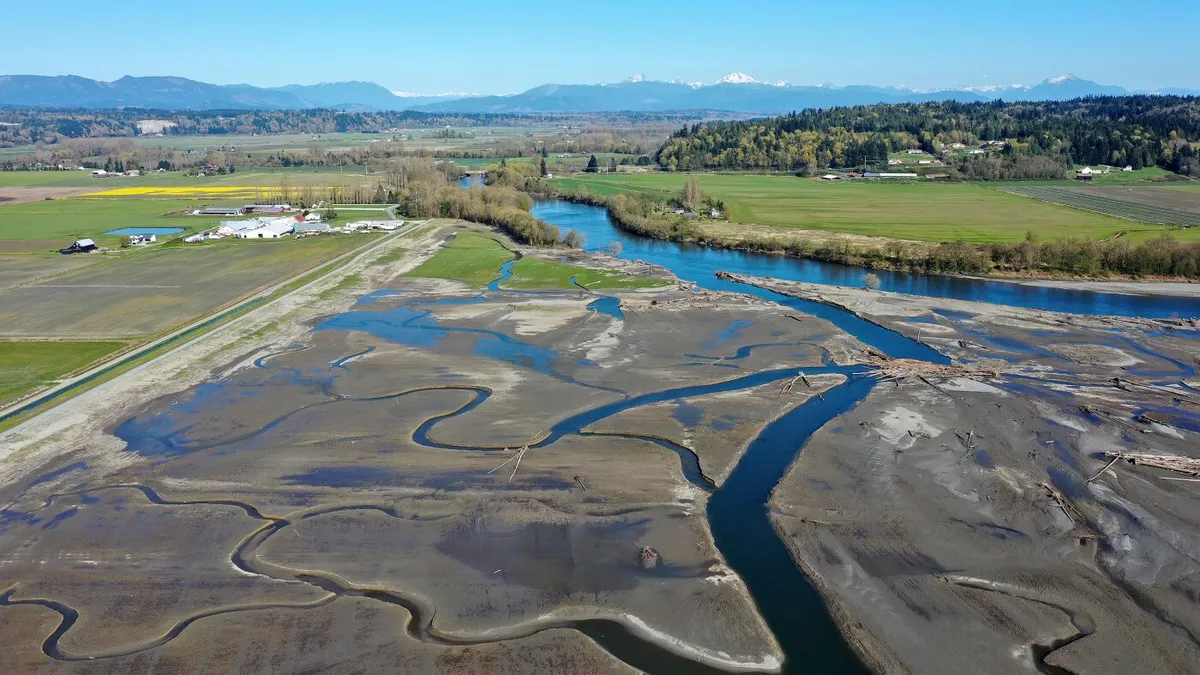
Scott Boyd walks through deep mud where the Stillaguamish River meets Puget Sound. This area, north of Seattle, changed a lot in October. The Stillaguamish Tribe removed two miles of an earthen levee. This levee used to keep the river and tides away from nearby farmland.
Once the levee was breached, tidewater flowed onto the land. This was the first time in over a century. Boyd, a Stillaguamish tribal member and fisheries manager, looked at the new 230-acre wetland. He noted it was once a dairy farm.
Restoring Salmon Habitat
Tidal marshes are vital nurseries for young Chinook salmon. These fish are close to extinction. The Stillaguamish Tribe is buying riverfront land in its traditional territory. They are removing levees to turn farmland into wetlands. Their goal is to help Chinook salmon recover.
We're a new kind of news feed.
Regular news is designed to drain you. We're a non-profit built to restore you. Every story we publish is scored for impact, progress, and hope.
Start Your News DetoxBoyd's tribe has about 400 members. They gained federal recognition in 1976. This was over a century after their leaders signed the Treaty of Point Elliott in 1855.
Boyd mentioned their official reservation is small, less than 100 acres. It was granted to them about 10 years ago. Over the past 15 years, the tribe has bought 2,000 acres for fish and wildlife.
Under the 1855 treaty, the Stillaguamish and other Puget Sound tribes gave up most of their land. But they kept their rights to fish and hunt. Boyd said buying back the land is difficult. However, it is necessary to restore the salmon.
A Marsh Reborn
Many West Coast salmon runs are endangered due to environmental damage. Chinook salmon in Puget Sound are a federally threatened species. In 2025, so few Chinook returned to the Stillaguamish River that the tribe could only catch 26 fish.
Boyd emphasized the importance of salmon to their people and way of life. He believes these habitat projects are the most effective solution right now.
Navigating the new wetland can require a small boat or tall boots, depending on the tide. Narrow water channels wind through the mudflats. Uprooted trees from recent floods lie in the mud.
A flock of shorebirds, called dunlins, flew over the area. They moved in a tight formation. Stillaguamish Tribe biologist Jason Griffith called it a "visual symphony."
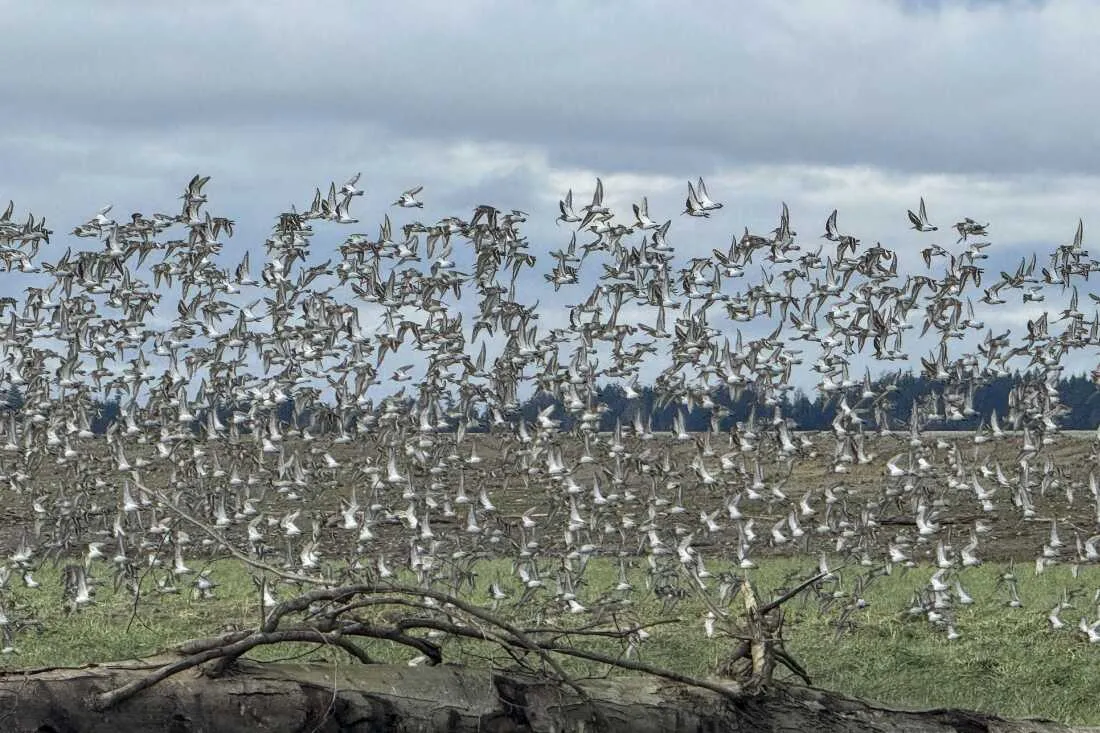 A flock of dunlins, shorebirds that winter in Washington and nest on Arctic tundra, flies in tight formation over the tribally owned wetlands along the Stillaguamish River on Dec. 19, 2025. Image: Kathleen Lumiere/Kathleen Lumiere
The large number of birds shows the ecological benefits of this new wetland, called zis a ba 2. It is named after a 19th-century Stillaguamish chief. This is the second of three large marshes the tribe is restoring.
Griffith noted that the river can now connect to its floodplain for the first time in 140 years. To speed up marsh rebuilding, crews dug channels before breaching the levee. They found ancient clam shell piles, showing long human presence.
A Changing Landscape
The landscape changed again in December when floods brought sediment and trees, helping the new wetland. That month, severe storms caused widespread flooding in Washington and Oregon.
Washington Governor Bob Ferguson called the December floods the state's costliest natural disaster. FEMA approved disaster aid but denied funding for future flood reduction projects.
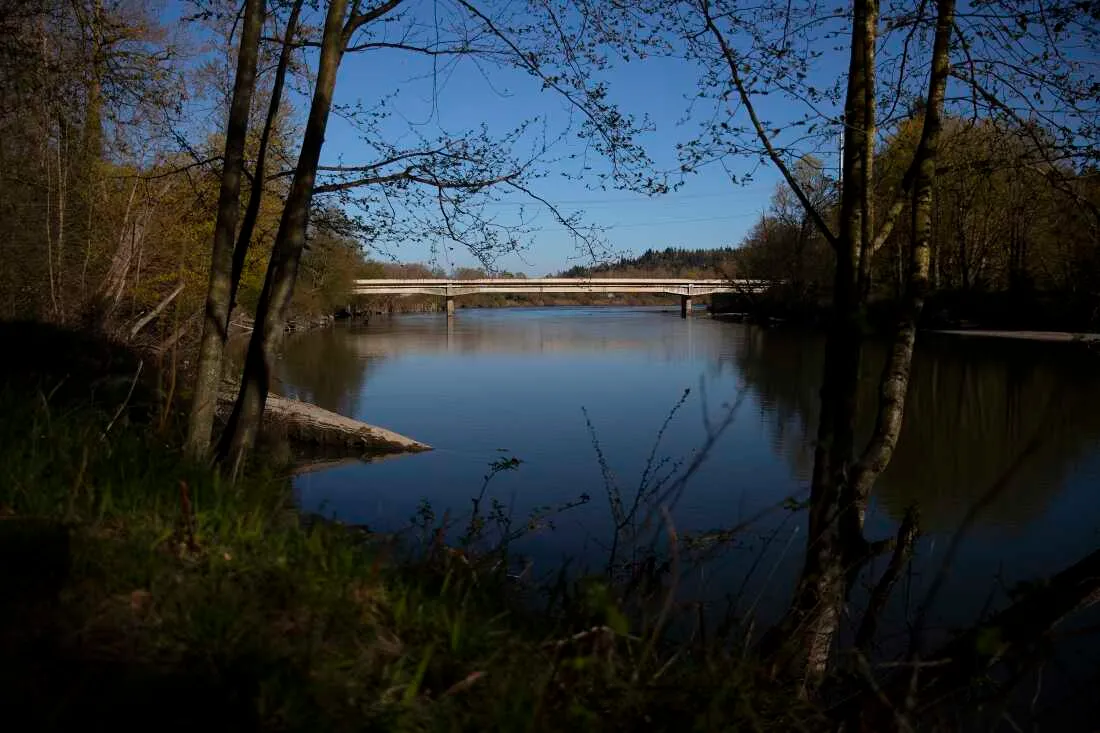 The Stillaguamish River is shown on April 8, 2026, south of Stanwood, Wash. Image: Megan Farmer/KUOW
Tribal officials say their habitat projects will help people and salmon. Restored floodplains allow river surges to spread out. This reduces damage. The tribe built a new, taller levee further from the river before removing the old one.
Griffith explained that giving the river more space reduces maintenance costs for infrastructure.
Farmland vs. Wild Salmon
Changing land use involves tradeoffs. Along the Stillaguamish River, there is a conflict between growing farm crops and wild salmon.
Tyler Breum, a farmer from Stanwood, Washington, farms potatoes and seed crops. He noted that farmland is limited. He believes levees are essential for farming and living in the floodplain.
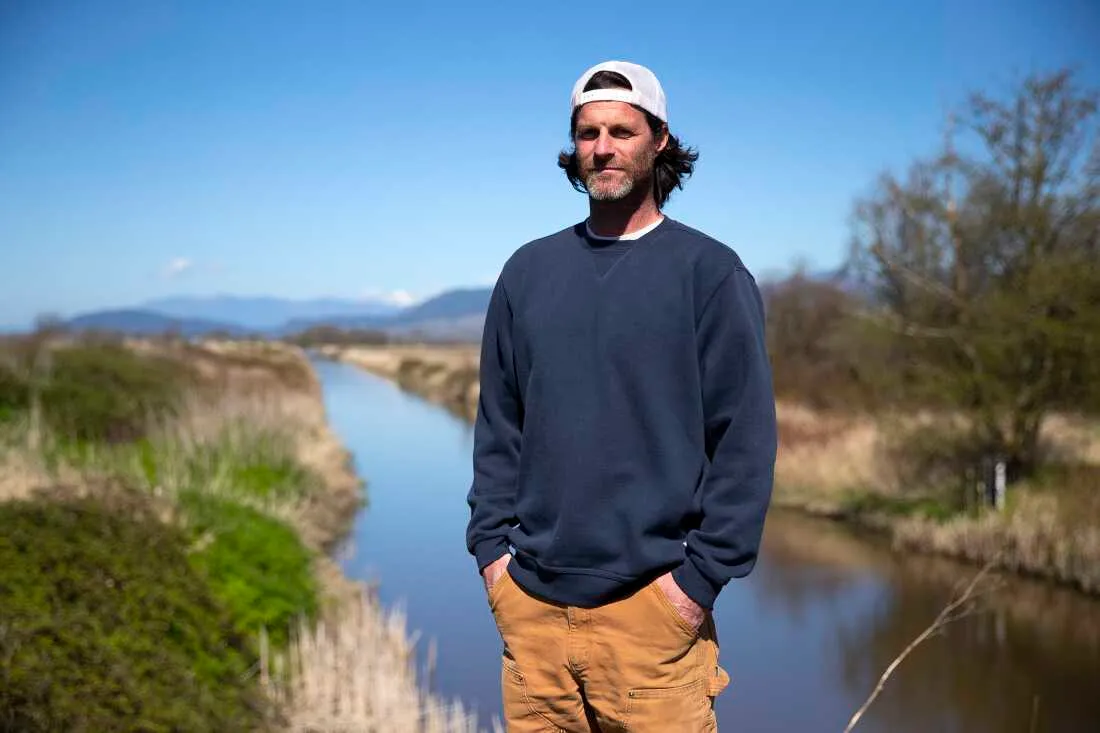 Fifth-generation farmer Tyler Breum stands along the Tom Moore Slough levee, near Big Ditch, close to his family's farmland on April 8, 2026, near Stanwood, Wash. Image: Megan Farmer /KUOW Photo/Megan Farmer
During the December floods, Breum worried about a levee near his farm. A hole in that levee during a 2021 flood was luckily patched quickly. A Snohomish County study in 2022 found that if the levee failed, 1,100 people could be displaced.
In April, new damage was found on the levee from severe winds and high tides in January. Breum has been trying to get the levee improved since 2010. City and tribal officials are now seeking emergency permits for repairs this summer.
Breum supports removing some levees for salmon if farmers also benefit. He mentioned that farmers near the tribe's project received a new, strong levee.
Bigger Floods, Taller Levees
Breum and his partners tried to buy the zis a ba farmland but were outbid by the Stillaguamish Tribe. He holds no ill will towards the tribe for buying the land.
The tribe's new levee is four feet taller than the old one. This could help nearby farms withstand larger floods and rising seas due to climate change.
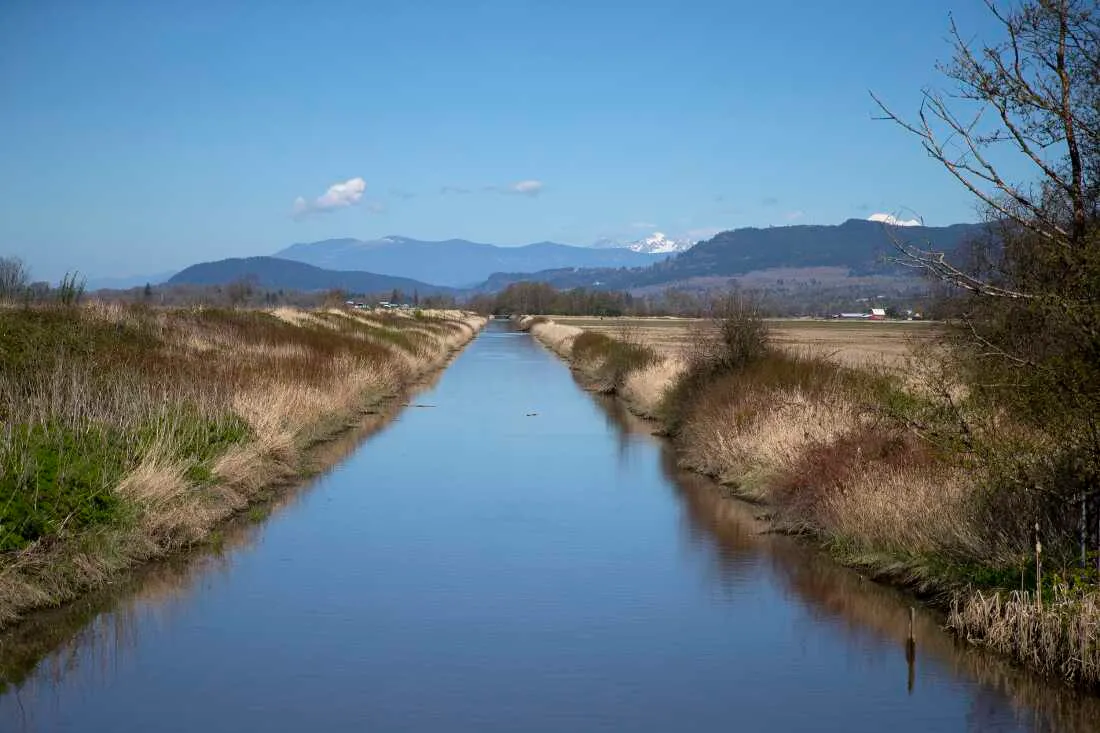 The Tom Moore Slough levee, near Big Ditch, protects farmland near Stanwood, Wash., on April 8, 2026. Image: Megan Farmer/KUOW
The Stillaguamish Tribe has restored hundreds of acres of tidal habitat. They plan to restore much more. Scientists say thousands of acres are needed to help Puget Sound Chinook recover.
Scott Boyd's great-grandfather fished these waters for a living. Boyd hopes his four children might one day have the same opportunity.