

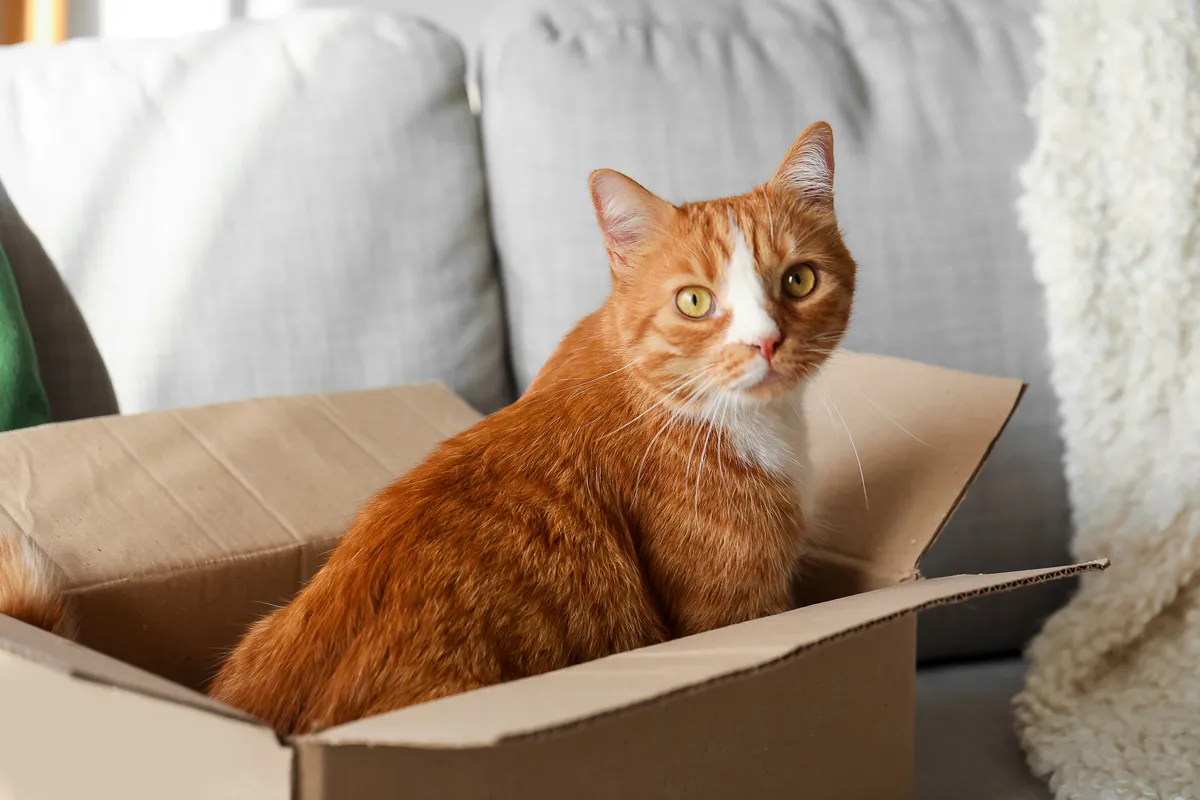
Every cat parent knows the scene: you buy the fancy toy, and your cat ignores it to climb into the cardboard box it came in. There's something almost magnetic about a plain box to a cat. And it turns out this isn't random behavior—it's millions of years of evolution compressed into a single cardboard rectangle.
Feline behavior consultant Mikel Delgado explains that boxes tap into something primal. Cats are hardwired to seek out hiding spots, a strategy that made sense when they were both predator and prey in the wild. Outside, a cat hunts birds and insects while staying alert for hawks or foxes. A box mimics the natural nooks outdoor cats use: protection on the sides, mystery from above, a perfect vantage point for a surprise pounce. That seemingly silly leap onto a plush toy is actually a finely tuned expression of feline hunting strategy.
The Evolution of Safety
But boxes aren't just about hunting. They're emotional anchors. Danielle Gunn-Moore, a professor of feline medicine, notes that a cat's first environment is often a warm, protected enclosure—the space where a mother cat delivers her kittens. This early imprint matters. When adult cats access similar covered spaces, something shifts. Research shows that newly rescued cats have reduced cortisol levels (a stress marker) when given access to a box. Even a brand-new delivery box on your living room floor can spark curiosity and comfort.
We're a new kind of news feed.
Regular news is designed to drain you. We're a non-profit built to restore you. Every story we publish is scored for impact, progress, and hope.
Start Your News DetoxFor indoor cats especially, this matters more than we might think. While free-roaming cats can flee to rooftops or hidden yards when frightened, indoor cats have fewer escape routes. "We keep them in an environment where they don't have a lot of control," Delgado says, which can heighten their sensitivity to stress. A box becomes a small pocket of agency in a world they didn't choose.
Kittenhood shapes these habits for life. Between two and nine weeks old, kittens form crucial impressions of the world. Positive encounters build resilience; sparse or negative ones can make a cat more easily startled as an adult. For cats with difficult early histories, easy access to safe spaces helps them decompress when their internal threat alarms fire unnecessarily.
Reading the Signs
That said, context matters. A relaxed cat snoozing inside a box is very different from one crouched at the back with wide eyes. Constant hiding can signal trouble. "For a cat to be hiding all the time, it's really not good," Gunn-Moore says. If your cat is retreating to boxes more than usual, a veterinarian or feline behaviorist can help identify what's triggering the behavior and create a plan to support their sense of safety.
Your cat's box obsession isn't a silly quirk—it's evolution at work. Boxes give cats control, adventure, and reliable refuge from stress. Offering a few cozy hideouts around your home is a simple way to support their instinctive needs. And when your next delivery arrives, you already know who gets first dibs.





