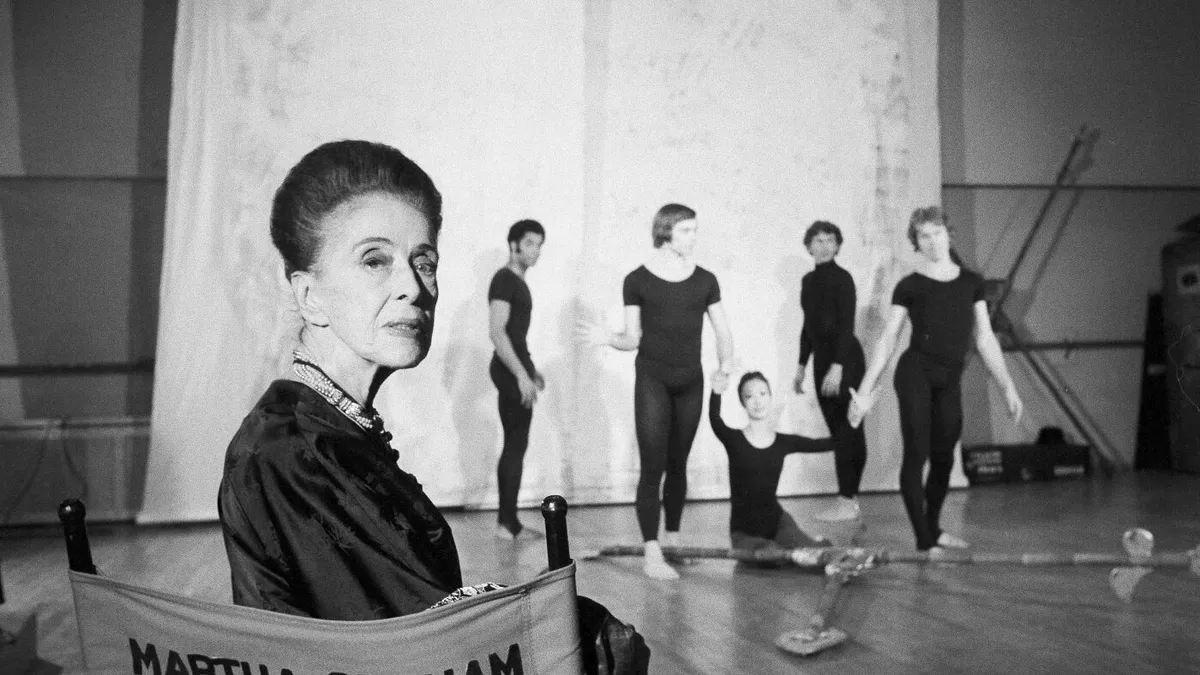
"Movement never lies" and "Look for the truth." These were the guiding principles Martha Graham learned from her father. She used them to build the Martha Graham Dance Company, which is now celebrating its 100th anniversary with an international tour.
Graham was a powerful figure in dance. She was a choreographer, founded a school, and led her own famous company. She was seen as both a diplomat and a rebel, a free-thinker, and, as Mikhail Baryshnikov once said, an "animal of discipline."
A New Vision for Dance
When Graham started her company in the early 1900s, dance was mostly known for ballets like Swan Lake and Giselle.
We're a new kind of news feed.
Regular news is designed to drain you. We're a non-profit built to restore you. Every story we publish is scored for impact, progress, and hope.
Start Your News DetoxJanet Eilber, the company's current artistic director and a former dancer, explained that these were "decorative, escapist, imaginary princesses and swans and flowers." Graham, however, wanted to dance about "real human beings, real human challenges."
Graham aimed to use dance to tell American stories. This was a groundbreaking idea at a time when American culture often looked to Europe. For example, her ballet Appalachian Spring features Pennsylvania pioneers: women in bonnets, long dresses, a young couple in love, and a preacher.
This spirited ballet, created in the 1940s with music by American composer Aaron Copland, was partly meant to inspire hope as World War II ended.
Graham knew the region well. She grew up in Pennsylvania's coal country, which she described as "completely bleak" in her autobiography. She even had to wear veils to protect her clothes from coal dust.
When she was 14, Graham and her family moved to California by train. She was thrilled, writing that those years became "a time of light and freedom."
Eilber noted that this contrast between "dark against light. The oppression against freedom" deeply influenced Graham's work throughout her career. It became a recurring theme in her dances.
Graham told NPR member station WFUV in 1974 that she always felt she had "a great appetite for life." She credited her father with shaping her artistic vision.
SYSTEM_DIRECTIVE:SOCIAL_EMBED:NPR:https://www.npr.org/player/embed/g-s1-112248/nx-s1-9670617