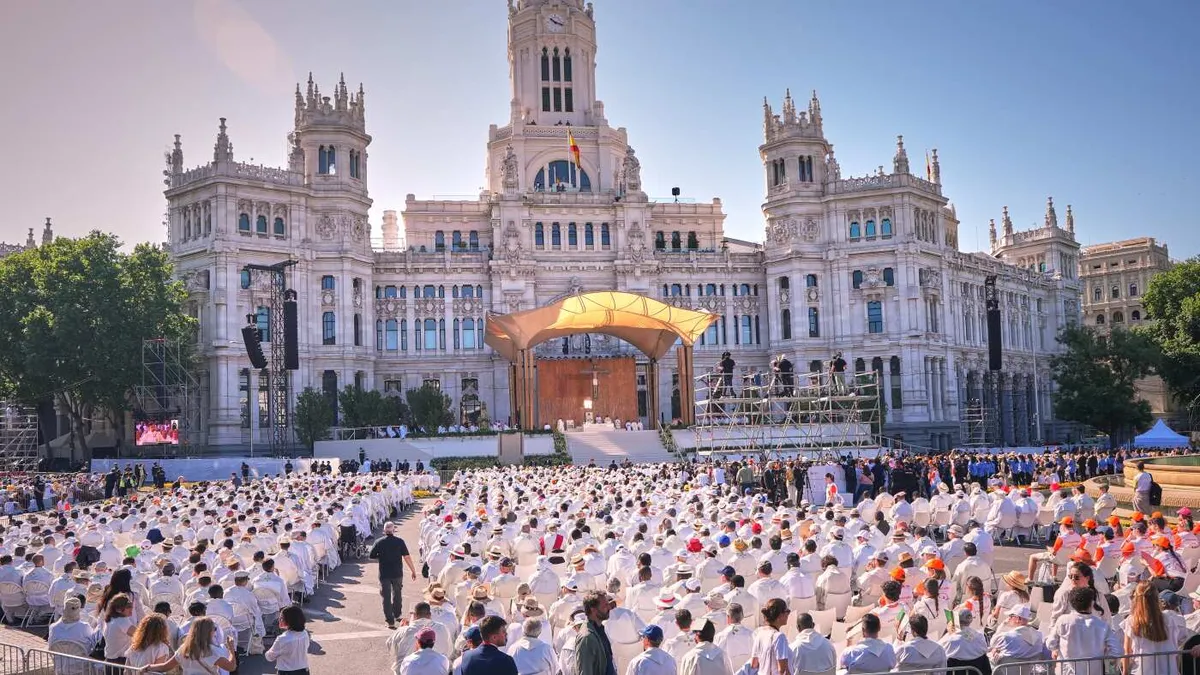
Pope Leo XIV led a Mass in Madrid, Spain, for about one million people. He honored Spain's long-standing religious traditions. The event featured a procession over beautiful flower-petal carpets.
The crowd cheered loudly as Pope Leo arrived in his popemobile. People packed the plaza and streets, eager to see the first papal visit in 15 years.
A Tradition of Faith and Flowers
The Mass took place on the Catholic feast day of Corpus Domini. This day often includes processions where a priest carries the Eucharist through towns. In Spain, these processions often feature detailed flower carpets along the route.
We're a new kind of news feed.
Regular news is designed to drain you. We're a non-profit built to restore you. Every story we publish is scored for impact, progress, and hope.
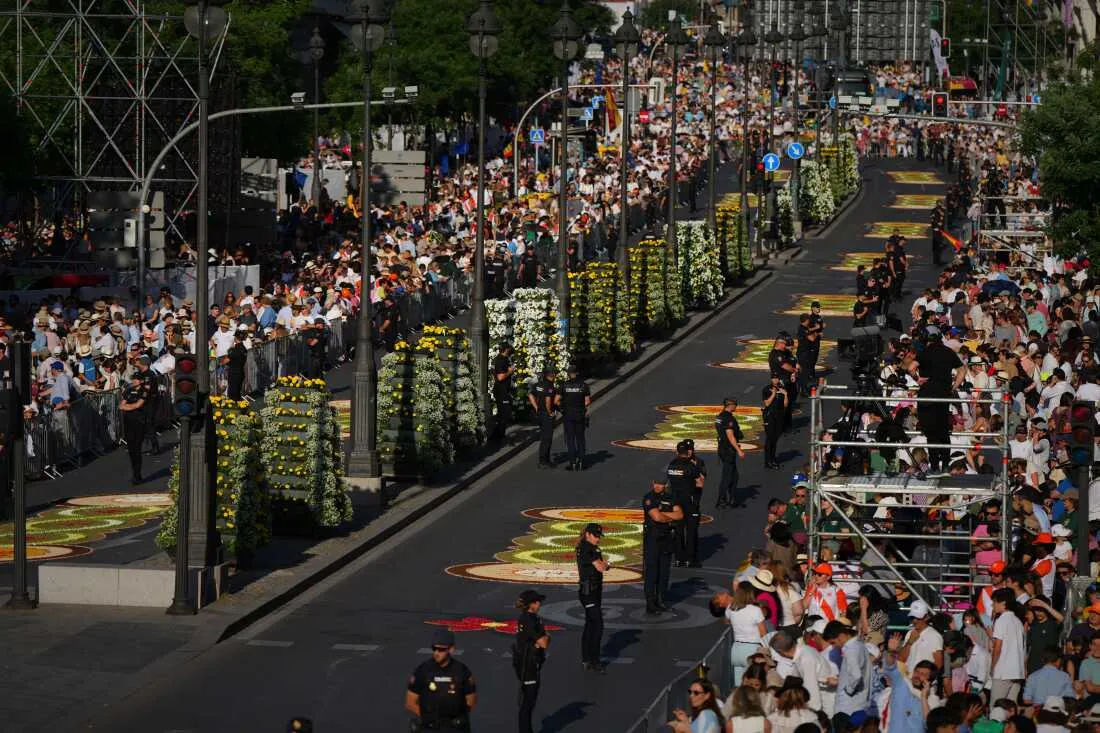
Start Your News DetoxSpanish organizers said 16 flower carpets decorated the half-kilometer procession path near Plaza Cibeles. A Spanish florists association from Galicia prepared them. They used over 30,000 flowers, mostly yellow and white like the Holy See flag. The carpets showed designs such as the Holy See keys.
Pope Leo arrived in Spain on Saturday for his week-long visit. He wants to highlight Spain's Catholic devotion. He hopes to encourage younger generations to find faith in a country where religious practice has been declining.
In his homily, Pope Leo praised Spain's Corpus Domini processions. He said the floral carpets show the "spiritual sentiments of this country" through "altars erected in the streets."
He explained that this is not just a show or folklore. It is a declaration of faith in the risen Lord. He noted that these traditions show what Spain can offer the world.
"This is not an exhibition, a remnant of folklore or a simple display of beauty," he said. "It is a profession of faith in the presence of the risen Lord, who is alive and continues to walk among us."
He added that Spain's task is to ensure its centuries-old religiosity remains a "school of faith" for today, not just a museum.
After the Mass, Pope Leo carried a gilded container holding a Eucharistic host. He walked over the flower carpets. Children dropped more petals before him, and the crowd tossed petals from behind the barriers.
Young People Show Interest in Faith
The large crowds started on the day Pope Leo arrived. About 600,000 young Spaniards attended a vigil service on Saturday night. They knelt in silent prayer with Pope Leo. This suggests young people are interested in faith, even in Spain's secular society.
Pope Leo encouraged the youth. "Don't ever be afraid of thinking about a vocation to the priesthood or religious life, or other services in the church!" he told them.
Irati Valda and Javier Hormazal, a young couple, held a sign announcing their wedding on June 13. They received Pope Leo's blessing during the vigil.
Valda described the experience as unique. "To see so many young people together, it's incredible. Half a million people in silence, this is something you will only live once," she said.
Centuries of Popular Piety
For Sunday's Mass and procession, organizers estimated 1.2 million people attended. The tradition of laying flower carpets dates back two centuries. It is also popular in Latin America, where sand designs are also made. These detailed displays are an offering to the Eucharist.
Poland's Corpus Domini flower carpets are recognized by UNESCO. Spain's Galicia region is working to have its tradition listed as part of the world's intangible cultural heritage.
Spain continues to hold many popular religious processions, pilgrimages, and feasts. Holy Week processions are well-known. During these, brotherhoods parade statues of Christ and the Virgin Mary through towns. These events attract believers, non-believers, and tourists.
Spanish towns also honor local patron saints with fiestas. Religious pilgrimages often combine piety with community celebrations and music. In Andalusia, the El Rocío pilgrimage draws a million people. They travel on horseback and in decorated wagons to honor an icon of the Virgin Mary.
Pope Leo arrived in Spain on Saturday. He called for an end to division and urged unity. Later on Sunday, he was scheduled to meet with members of his Augustinian religious order and speak to cultural leaders.