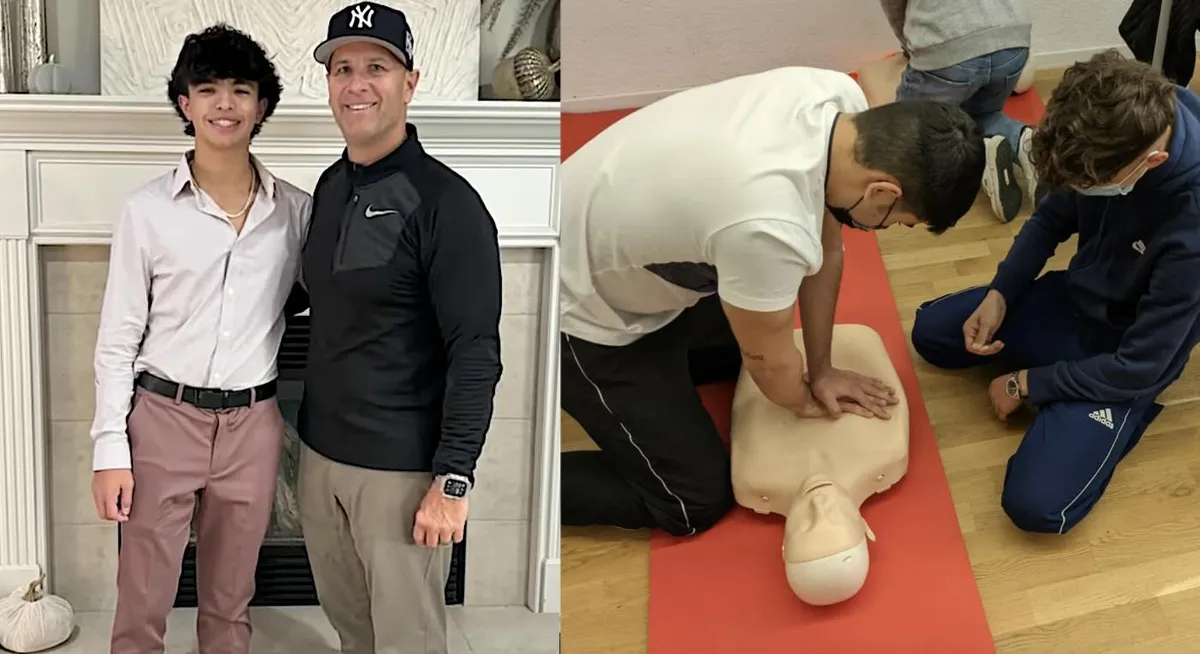
Anthony Killinger learned CPR in his school gymnasium less than a year before his mother knocked on his bedroom door with three words that would matter forever: "I think he's dead."
Downstairs, his stepfather Mike Reese lay unconscious on the ground, making a snoring sound that Killinger recognized as a sign of cardiac arrest. The 10th grader from Lancaster didn't freeze. He called 911, and when the dispatcher told him to start compressions, he did—for eight minutes straight, checking for a pulse that kept fading, until suddenly it didn't.
When the EMS arrived, they told Killinger what the numbers meant. Cardiac arrest kills most people it touches. Of those who survive, many face permanent brain damage from oxygen deprivation. Reese had beaten both odds.
We're a new kind of news feed.
Regular news is designed to drain you. We're a non-profit built to restore you. Every story we publish is scored for impact, progress, and hope.
Start Your News Detox"The doctor said it's like a 9% chance to just survive cardiac arrest," Killinger said later. "Then it's another thing to survive and have no brain damage. It was crazy that he survived and didn't have anything."
Reese spent a week in the hospital and came home with a defibrillator implant. His baseball coach stepdad and his stepson—now bonded by something deeper than sport—reunited in that hospital room. Reese, dealing with the expected fatigue that follows cardiac arrest, was simply grateful.
This isn't a rare story anymore, though it still matters every time. CPR training is widely available—through schools, community centers, fire stations, often for free. The American Heart Association estimates that immediate CPR can double or even triple someone's chances of survival. Yet most people who witness cardiac arrest never learned what to do. Killinger was the exception because his school made that training routine, not optional.
That eight-minute window between collapse and brain damage is the whole story. It's the gap where training meets crisis, where a teenager's muscle memory becomes someone's second chance at life.