Imagine sketching out an idea for a mechanical volcano in 1775, complete with glowing lava and explosive bursts. Then imagine, 250 years later, two engineering students in Australia unearthing that very sketch and actually building it. Because that's precisely what happened.
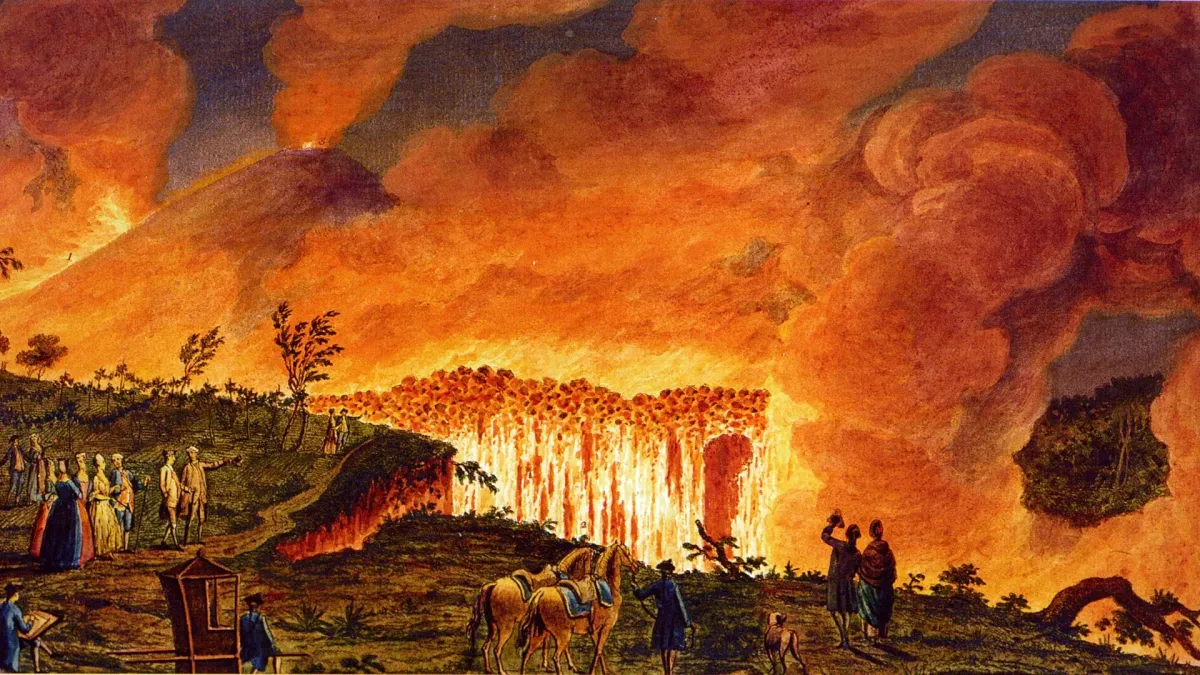
Sir William Hamilton, the British ambassador to Naples and Sicily (and an avid volcanologist, because apparently that's a hobby ambassadors used to have), first conceived of this dramatic contraption. He wanted to capture the terrifying beauty of Mount Vesuvius in miniature, drawing inspiration from a 1771 watercolor showing a lava flow at night. The goal: light and movement to mimic the real thing. Whether Hamilton ever actually constructed it himself is lost to history, but a detailed sketch survived in a French library, waiting for its moment.
Fast forward to the University of Melbourne. Dr. Richard Gillespie, a senior curator, decided it was high time this historic device saw the light of day — or, more accurately, the artificial glow of LED lava.
We're a new kind of news feed.
Regular news is designed to drain you. We're a non-profit built to restore you. Every story we publish is scored for impact, progress, and hope.
Start Your News DetoxFrom Paper to Pyroclastic Perfection
Master's students Xinyu (Jasmine) Xu and Yuji (Andy) Zeng took on the challenge. For three months, they dove into Hamilton's vision, translating 18th-century clockwork ideas into 21st-century tech. We're talking laser-cut timber and acrylic, programmable LED lighting, and electronic control systems. Because sometimes, the best way to understand the past is to build it yourself, with a few modern upgrades.
They even grappled with some of the same design headaches Hamilton likely faced, like hiding all the intricate mechanisms while still making the light effects pop. Which, if you think about it, is both impressive and slightly terrifying – a mechanical volcano that's also a master of disguise.
Their completed Vesuvius replica is now the fiery centerpiece of The Grand Tour exhibition at the University's Baillieu Library, where it will be erupting (metaphorically, thankfully) until June 28, 2026. It's a delightful reminder that some brilliant ideas just need a few centuries and some dedicated engineers to truly come alive.