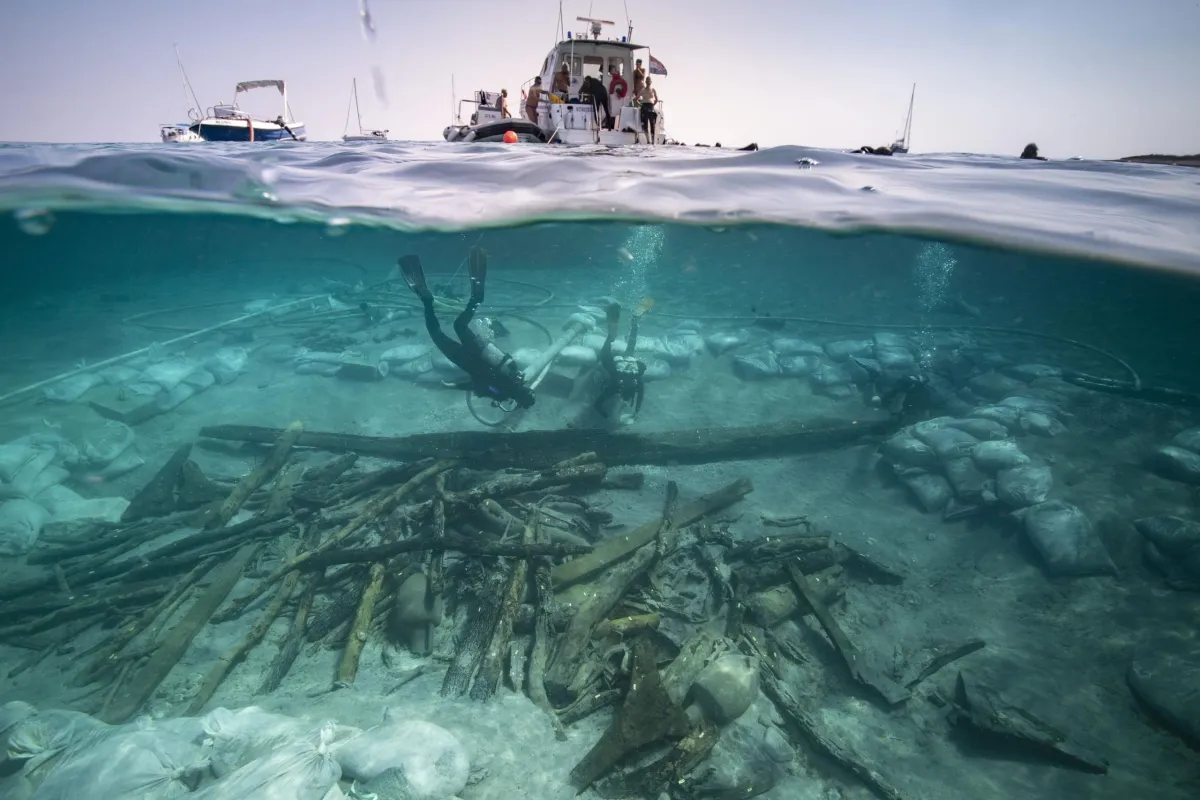
Turns out, ancient Roman sailors weren't just good at conquering land; they were also pretty adept at keeping their boats from sinking. A new study has revealed that a 2,200-year-old Roman shipwreck was slathered in surprisingly advanced organic coatings, proving that even back then, waterproof was the word.
For millennia, anyone wanting to cross a body of water without becoming fish food needed a ship that could withstand saltwater and fend off marine critters. But the actual waterproofing tech used by our ancestors? That's been a bit of a blind spot for scientists. Until now.
The star of this aquatic archaeology show is the Roman Republican shipwreck Ilovik–Paržine 1, which decided to call it quits near modern-day Croatia some 2,200 years ago. Researchers from France and Croatia decided to poke around its surface, hoping to uncover some ancient boat-building wisdom.
We're a new kind of news feed.
Regular news is designed to drain you. We're a non-profit built to restore you. Every story we publish is scored for impact, progress, and hope.
Start Your News DetoxDr. Armelle Charrié, an archaeometrist, pointed out that these organic waterproofing materials are often ignored, despite being absolutely crucial for any self-respecting sea voyage. Her team found two main types of coatings on the ship: one was pure pine tar (or pitch), and the other was a nifty blend of pine tar and beeswax. Because, apparently, even ancient Romans appreciated a good wax job.
They even analyzed the pollen trapped in the coating, which is basically like getting a botanical timestamp. This helped them figure out what plants were growing nearby when the ship was built or, more likely, when it got a much-needed touch-up.
The Sticky Science of Roman Ships
The Ilovik–Paržine 1 wreck was discovered in 2016. This study is the first to combine molecular analysis of the coatings with pollen data, giving researchers a full picture of both the materials and the surrounding flora. It's like finding out what your great-great-great-grandparents ate for lunch just by analyzing their shoes.
The team used all sorts of fancy techniques, including mass spectrometry, to identify the organic mixtures. They found that most of the 10 samples were made from heated conifer resin, or pitch. But one sample stood out: a flexible, easy-to-apply mix of beeswax and tar, known as zopissa to the Greeks. Because why have one waterproofing solution when you can have a luxury blend?
Pitch is notoriously sticky, which means it's excellent at trapping microscopic pollen grains. By studying these tiny botanical time capsules, researchers could pinpoint where the materials were sourced and where repairs likely happened. It's like a crime scene investigation, but for ancient ship maintenance.
The pollen data painted a picture of diverse environments: Mediterranean coastlines, Adriatic valleys, even hints of mountainous regions like Istria and Dalmatia. Holly oak, pine forests, olive trees, even alder and ash — it seems this ship traveled through quite the botanical buffet.
Even more fascinating: the ship was coated four to five times over its lifespan. The stern and middle used the same material, but the bow had three different layers, suggesting multiple repairs with materials from various parts of the Mediterranean. It's almost as if the Romans understood that preventative maintenance saves you from a really bad day at sea.
Previous studies hinted the ship was built in Brundisium (modern-day Brindisi, Italy), and the pollen evidence backs this up. Some coatings were likely applied there, while others seem to have been added along the northeastern Adriatic coast where the wreck was found. Because even 2,200 years ago, you couldn't just get your ship serviced anywhere. Some places just did it better.