For over a century, scientists have been scratching their heads about where the universe's most energetic particles — cosmic rays — actually come from. These things pack a punch far beyond anything we can whip up in a lab, leaving physicists with a cosmic scavenger hunt.
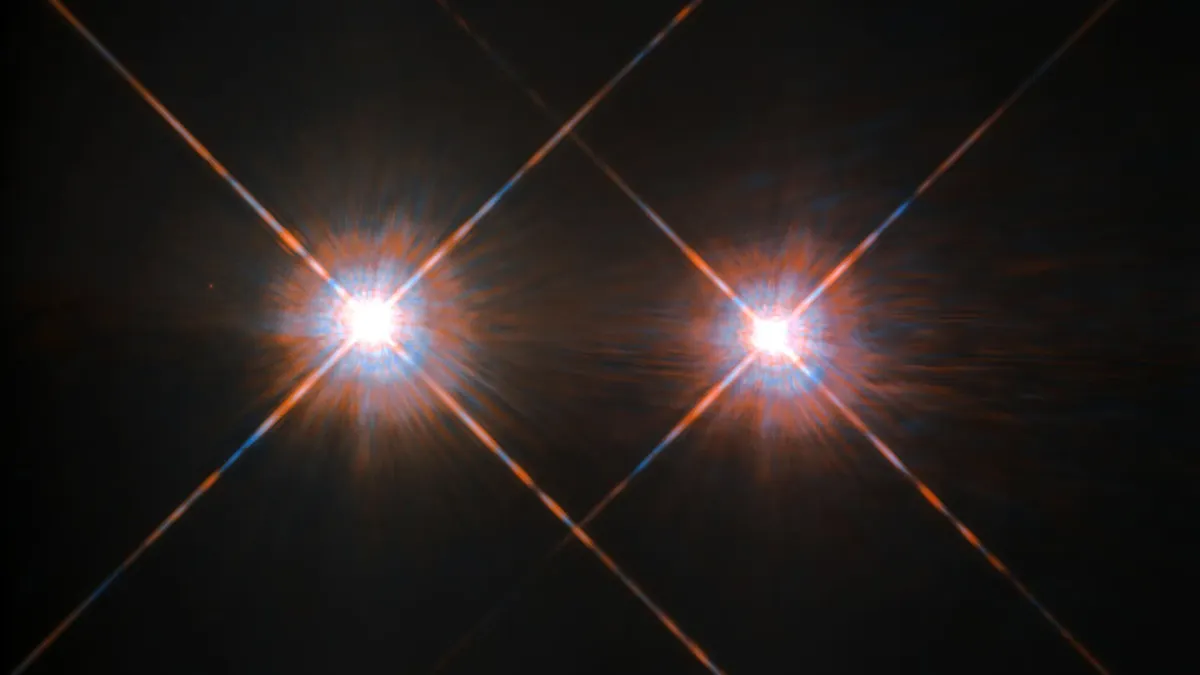
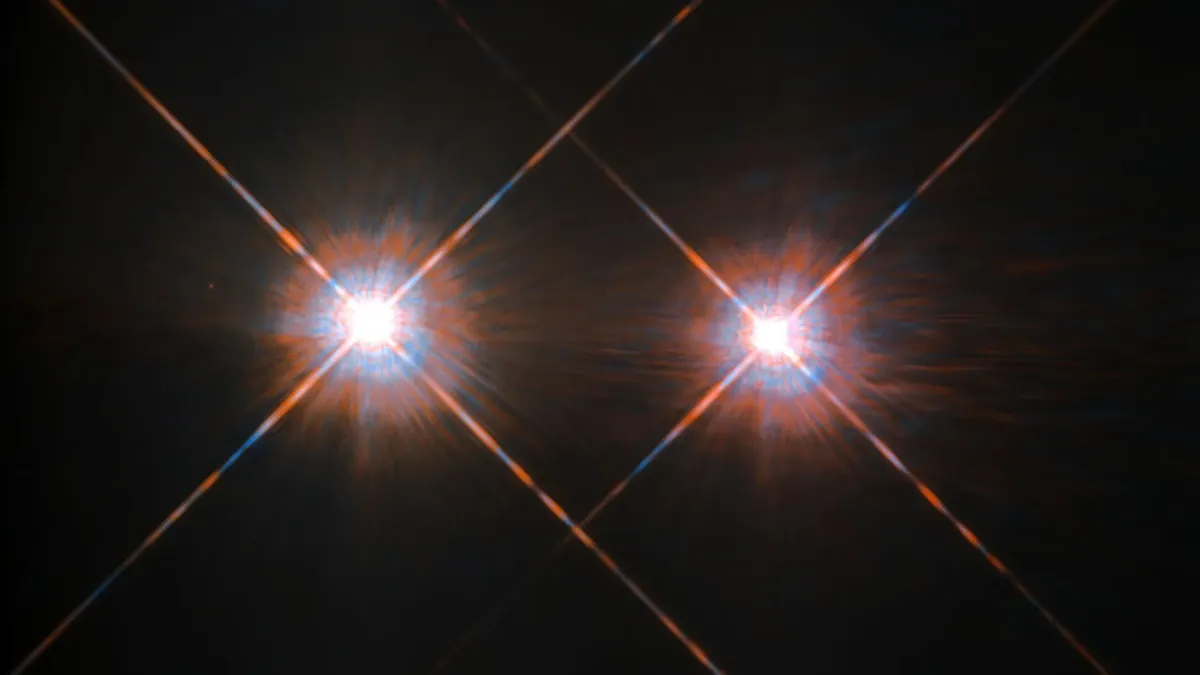
Now, thanks to the rather impressively named Large High Altitude Air Shower Observatory (LHAASO), we have a new suspect. It's a binary star system, LS I +61° 303, and it's been caught red-handed, blasting out gamma rays above 100 tera-electron volts (TeV). Let that satisfying number sink in. That's ultra-high-energy territory.
To put 100 TeV in perspective, it's more than 15 times the energy of a single proton zipping around the Large Hadron Collider (LHC) — which, for the record, is humanity's most powerful particle accelerator. Our best tech gets to about 6.5 TeV per proton. Space, apparently, has better toys.
We're a new kind of news feed.
Regular news is designed to drain you. We're a non-profit built to restore you. Every story we publish is scored for impact, progress, and hope.
Start Your News DetoxThis is the first time such extreme energy has been confirmed from a gamma-ray binary, suggesting these systems are actually "PeVatrons" — cosmic particle accelerators capable of reaching peta-electron volt (PeV) energies. Translation: They're basically tiny, incredibly violent black holes or neutron stars that are really good at throwing things fast.
Reading Invisible Footprints
Catching these high-energy gamma rays isn't like pointing a telescope. They don't make it to Earth directly. Instead, they smack into our atmosphere, creating a cascade of secondary particles, like cosmic billiard balls, known as air showers. LHAASO is designed to catch these atmospheric fireworks.
By tracking the spread and impact of these secondary particles, scientists can reverse-engineer the energy and origin of the initial gamma ray. This detective work allowed them to blow past previous measurements of LS I +61° 303, which only went up to about 10 TeV. With LHAASO's keen eye, they saw energies nearing 200 TeV, firmly in the "whoa, that's high" category.
This discovery officially upgrades LS I +61° 303 to an ultra-high-energy emitter. The study authors, likely with a triumphant glint in their eyes, noted: "These results provide compelling evidence of extreme particle acceleration in LS I +61° 303."
An Orbit That Keeps Things Interesting
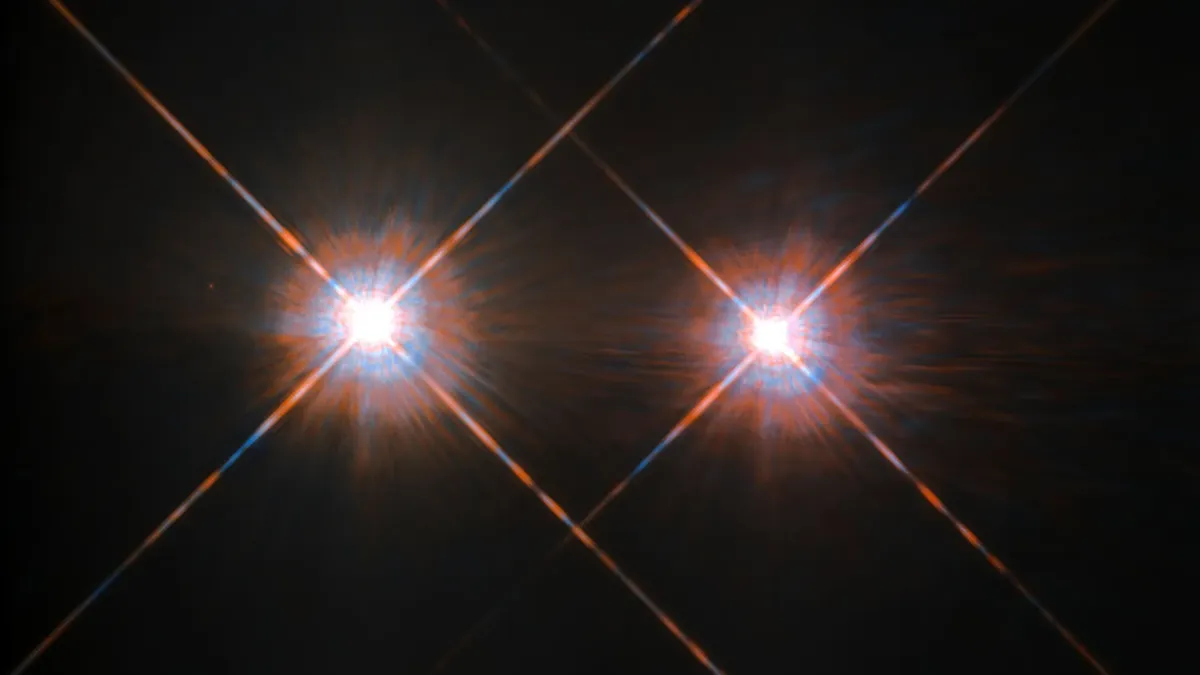
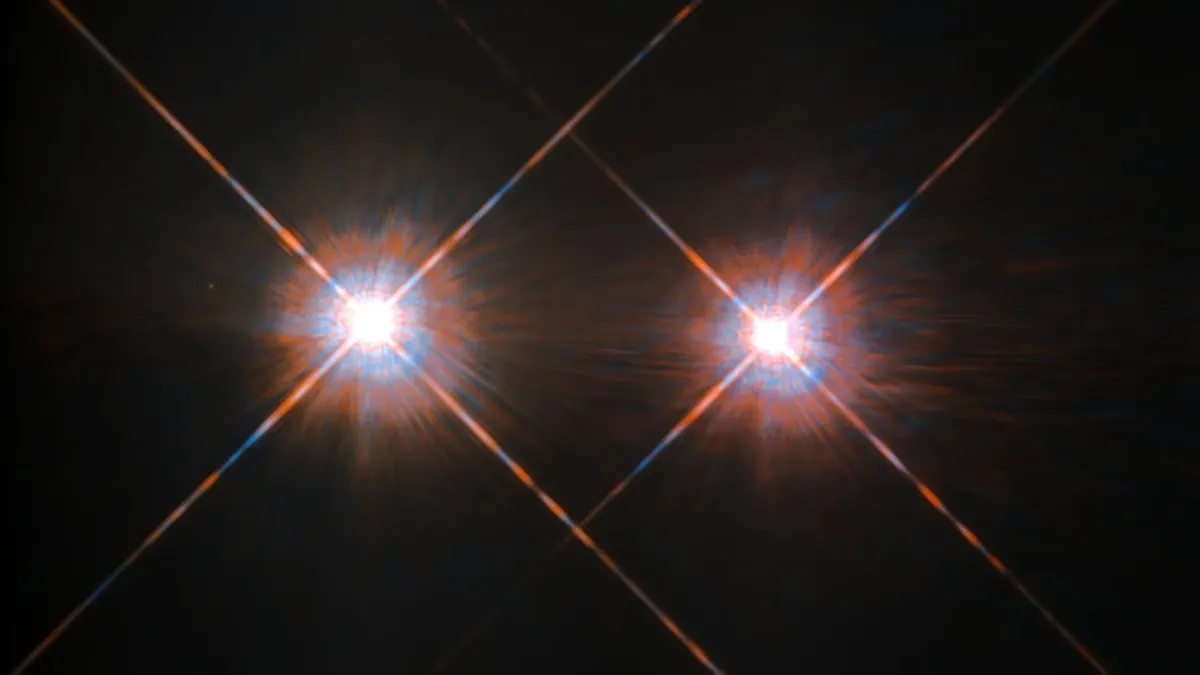
LS I +61° 303 isn't a static system. It's a cosmic dance between a massive star and a compact object (probably a neutron star or black hole) that orbit each other every 26.5 days. This celestial waltz constantly reshapes their environment, and researchers found the gamma-ray output isn't just fluctuating; it's changing differently at different energies as the orbit progresses. Because, of course, it is.
This energy-linked variation suggests the particle acceleration environment itself is in flux — magnetic field strengths, particle densities, and collision zones all evolve with the stars' tango. Essentially, the engine powering these gamma rays is never in a steady state, making it a particularly moody accelerator.
This variability also offers clues about what particles are being accelerated. In such strong magnetic fields, electrons would quickly lose energy. So, when you see gamma rays above 100 TeV, it strongly implies protons or heavier particles are doing the heavy lifting. These particles can travel farther and collide with dense stellar winds, producing gamma rays through high-energy interactions. It’s a bit different from, say, supernova remnants, where acceleration is more consistent.
Adding Another Heavyweight to the List
The century-old mystery of ultra-high-energy cosmic rays just got a new, dynamic player. This result doesn't just add a new possibility; it shows that gamma-ray binaries aren't just energetic — they can achieve the extreme conditions required to act as PeVatrons. Which, if you think about it, is both impressive and slightly terrifying.
While this discovery expands our understanding, it also makes existing models a bit more complicated. The strong dependence on orbital phase means particle acceleration can switch modes or efficiency rapidly. It's harder to model than, say, a nice, steady supernova explosion.
There are still unknowns, naturally. The exact mechanism driving the acceleration isn't fully pinned down. And while gamma rays point to protons, direct confirmation will require other signals, like elusive neutrinos. Future research will likely involve combining observations from multiple cosmic messengers. Because when the universe gives you a puzzle this good, you don't just walk away.