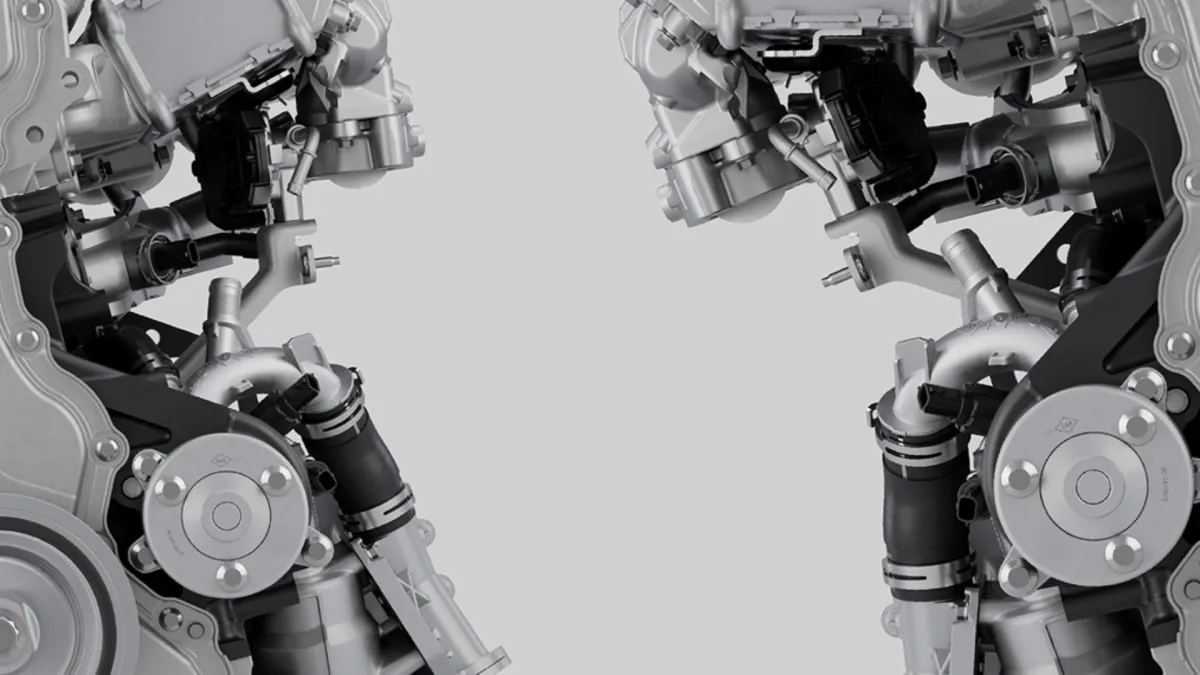
A new hybrid powertrain that runs entirely on renewable gasoline is moving from concept to real cars. Horse Powertrain—a joint venture formed in 2024 from Geely and Renault's combustion engine divisions—unveiled the system as a practical middle ground for markets not yet ready for full electrification. The company plans to show its first working prototype in early 2026.
This isn't about choosing sides in the EV debate. Battery electric vehicles are expanding, yes. But automakers are simultaneously building hybrids that offer lower emissions during the decades-long transition to full electrification. Horse Powertrain supplies powertrains to Volvo Cars, Nissan, and Mitsubishi Motors, and counts Saudi Aramco as a 10% stakeholder—a signal that even traditional energy companies see the shift toward cleaner fuels as inevitable.
The Engineering
The system achieves its efficiency gains through precision engineering. It uses a 17:1 compression ratio (higher than most current engines), a redesigned exhaust gas recirculation system, optimized turbocharging, and transmission tuning built specifically for hybrid operation. Together, these pull more useful energy from each combustion cycle while recovering energy during braking—the hybrid advantage.
We're a new kind of news feed.
Regular news is designed to drain you. We're a non-profit built to restore you. Every story we publish is scored for impact, progress, and hope.
Start Your News DetoxThe numbers are concrete. Under standardized European testing conditions, it delivers roughly 71 miles per gallon, representing a 40% improvement over the 2023 European average for new cars. A mid-size vehicle with this powertrain would cut carbon dioxide emissions by about 1.95 U.S. tons per year compared to a conventional gasoline engine, assuming typical annual driving of 7,800 miles.
The partnership with Spanish energy company Repsol adds another layer. Repsol supplies the renewable gasoline—fuel made from renewable feedstocks rather than crude oil—and helped develop the H12 hybrid engine concept that underpins the system. The engine achieved a peak thermal efficiency of 44.2%, placing it at the upper end of current production-capable hybrid systems.
Why This Matters Now
The timing reflects a practical reality. Not every market has the grid infrastructure, energy supply, or regulatory environment to support rapid full electrification. Some regions will need combustion engines for years. This hybrid system, running on renewable fuel, offers a way to cut emissions significantly while working with existing infrastructure. It's a bridge, not a destination—but a necessary one.
Two prototype engines are already being tested. The first demonstrator vehicle comes in early 2026. This progression suggests the technology is moving toward actual production, not staying locked in the lab. Automakers are increasingly tailoring propulsion solutions for specific regions rather than forcing one global solution onto markets with different needs.