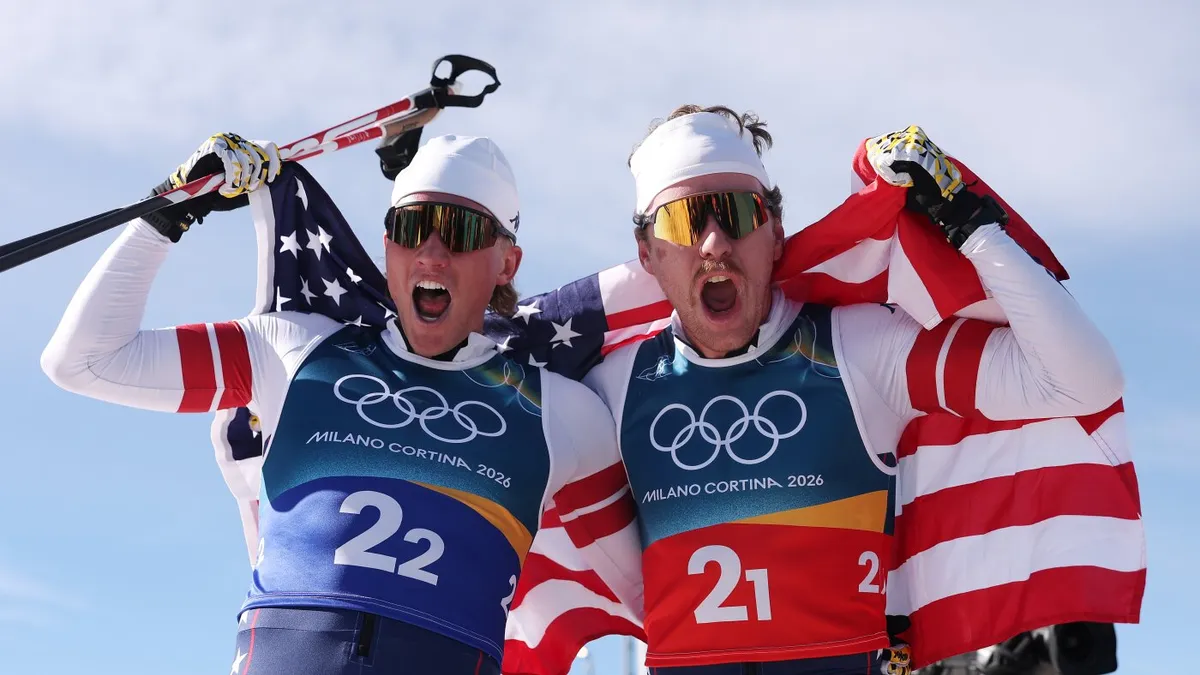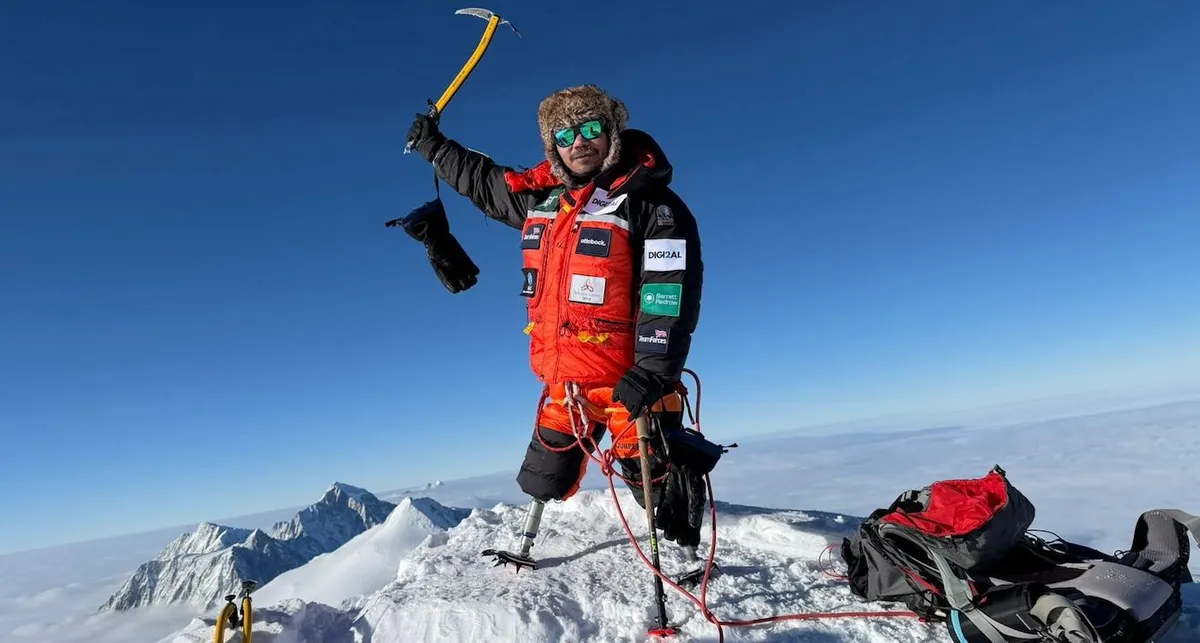
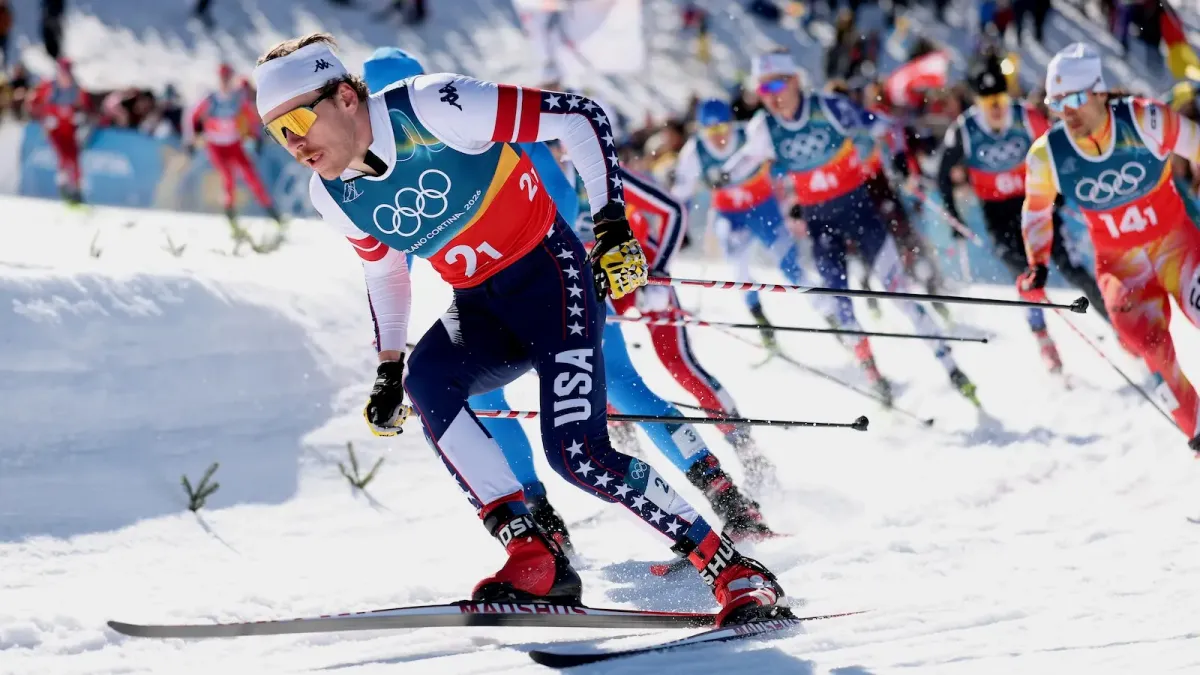
Ben Ogden crossed the finish line in second place at Milan-Cortina, breaking a 50-year drought for American men's cross-country skiing. Five days later, he and Gus Schumacher took silver in the team sprint. By mid-Games, Team USA had already claimed over a dozen medals—including Mikaela Shiffrin's alpine gold, Chloe Kim's halfpipe silver, and Jessie Diggins' Nordic bronze despite a bruised rib. For the cross-country team, three medals marks their largest haul ever.
But there's something else making this moment unusual: these medals were won under the first-ever Olympic ban on fluorinated ski waxes containing PFAS—the "forever chemicals" that don't break down in the environment or the body.
Why Elite Skiers Are Ditching Speed Advantage
Since the 1980s, elite snow athletes have relied on fluoro waxes for a straightforward reason: they work. Former U.S. racer Nathan Schultz describes them as providing a "really ridiculous speed advantage," repelling water and dirt in ways other waxes can't match. The catch is brutal. PFAS—per- and polyfluoroalkyl substances, a class of 15,000 chemicals—never break down. Studies have linked exposure to thyroid disease, developmental problems, and cancer.
We're a new kind of news feed.
Regular news is designed to drain you. We're a non-profit built to restore you. Every story we publish is scored for impact, progress, and hope.
Start Your News DetoxThe International Ski and Snowboard Federation announced plans to ban fluoro waxes in 2019. The ban took effect in 2023, making Milan-Cortina the clearest test yet of whether elite snow sports can thrive without them.
Chris Hecker, ski technician for Schumacher, describes the last three weeks as "some of the trickiest waxing I've experienced." Rain one day, sun the next, then heavy snow. Every variable—precipitation, humidity, even a one-degree temperature shift—changes which skis and waxes work best. Fluorinated waxes had been a "great equalizer" across varied conditions, particularly in warm or wet snow. Without them, success depends far more on ski choice and the grind pattern etched into their base, much like tire tread.
Elite cross-country racers travel with dozens of pairs—sometimes over 100. "We're always chasing marginal gains," Hecker says. "At this level, tiny differences matter." The team adapted through constant testing and re-evaluation. "It's nearly impossible to have the absolute best skis every single day," Hecker acknowledges. "That said, we've had a wildly successful Olympics."
Tanner Keim, ski tech with the U.S. free ski team, faced similar challenges. The warmer Italian conditions and high humidity meant fluoro waxes would have been ideal. His athletes have earned two silver medals anyway. Still, he admits: "I would have been a little bit more confident with the fluoros."
Testing and Enforcement
Enforcing the ban proved nearly as difficult as adapting to it. The EPA fined equipment company Swix hundreds of thousands of dollars in 2020 for illegally importing PFAS wax. The FIS delayed implementation partly because testing was unreliable and risked false positives. A reliable testing regime was sorted out two years ago.
Milan-Cortina saw the first Olympic disqualifications for violating the ban: two South Korean Nordic skiers and a Japanese snowboarder. All claimed accidental use—wrong wax applied or tainted wax used by mistake. The South Korean Ski Association noted that "test results showed that fluoride was detected in one of the fluoride-free waxes," suggesting contamination rather than deliberate violation.
Ben Ogden was asked after his latest podium whether American men might slip back into another 50-year slump. "No—I don't think it'll be another 50 years," he said, two silver medals around his neck. With the men's and women's 50-kilometer races still to come, Team USA has two more chances to prove that world-class performance and environmental responsibility aren't mutually exclusive.