

A sheep on the Isle of Lewis stops mid-stride to pose. An orangutan holds your gaze with eyes that seem to ask a question you can't quite answer. A mother lioness carries her cub through the Kenyan savanna, both of them moving toward somewhere safer.
These are the images that won the reFocus Awards, a global celebration of photography that captures animals as they actually are—not as symbols or metaphors, but as themselves. A northern white rhino, nearly extinct, filmed in a lab where scientists are attempting something that seemed impossible just years ago. A manta ray filtering plankton through clear water off Tenerife, small fish trailing in its wake for protection. A Canada lynx crossing snow in a boreal forest clearing, tracked by a photographer who waited hours on the chance of seeing it.
What strikes about these photographs is how they sit with complexity. They're beautiful without being sentimental. A young lion drinks at midnight. A Siberian tiger plays-fights with another. An Arctic fox dozes in snow between Norway and the North Pole. These aren't moments staged for sentiment—they're moments a photographer waited for, sometimes for years.
We're a new kind of news feed.
Regular news is designed to drain you. We're a non-profit built to restore you. Every story we publish is scored for impact, progress, and hope.
Start Your News Detox
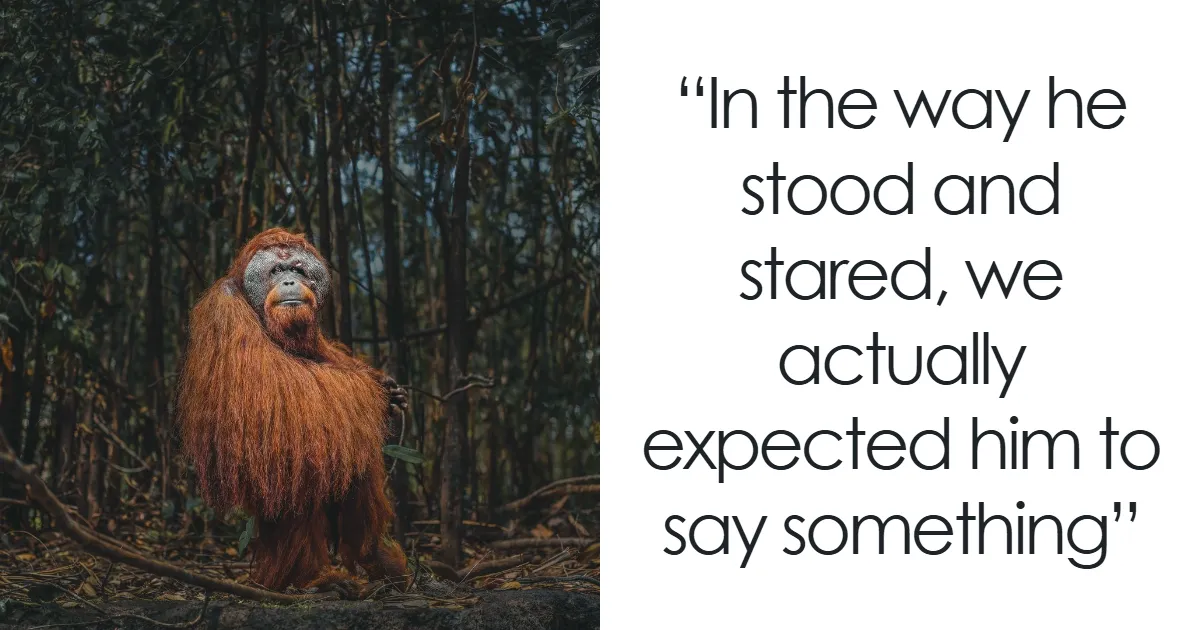
One photographer in Borneo captured an orangutan in a way that felt like portraiture. "In the way he stood and stared, we actually expected him to say something," they wrote. "To speak on behalf of the forest." The image doesn't need words. It carries weight—the weight of habitat loss, deforestation, the quiet struggle of a species trying to survive in a rapidly changing world.

Other moments are gentler. A mother chipmunk with her baby on her back, both looking at the camera. A lioness moving her cubs to a new den. Cheetah cubs playing. A fur seal charging toward the photographer after being chased by a younger seal—an interaction so specific, so alive, that you can almost feel the water.

The photographers behind these images often spend years in the field. One documented African wildlife for 22 years before capturing the specific portrait they'd been waiting for. Another positioned themselves above an orangutan to catch all four elements in one frame—sky, water, habitat, and the animal itself—staying calm over a tree while the camera pointed downward. A wildlife photographer waited in snow for hours hoping a Canada lynx would cross a clearing, knowing it was a long shot. When it appeared, it was gone within seconds.

These photographs matter because they document something real. Not a curated version of nature, but the actual texture of animal life—the play, the struggle, the quiet moments of rest. A brown bear lit by setting sun in a dark forest. A snowy owl with yellow eyes scanning ground below. A manta ray moving through water like it's flying.

They also document what we stand to lose. The northern white rhino exists now only in a lab, with scientists attempting to bring it back through surrogate mothers from another subspecies. Orangutans face deforestation and habitat loss. These images aren't feel-good distractions—they're witnesses to what's at stake.
But they're also proof that someone was there, watching, waiting, patient enough to see an animal as itself. That kind of attention matters. It's the first step toward caring about something beyond ourselves.





