

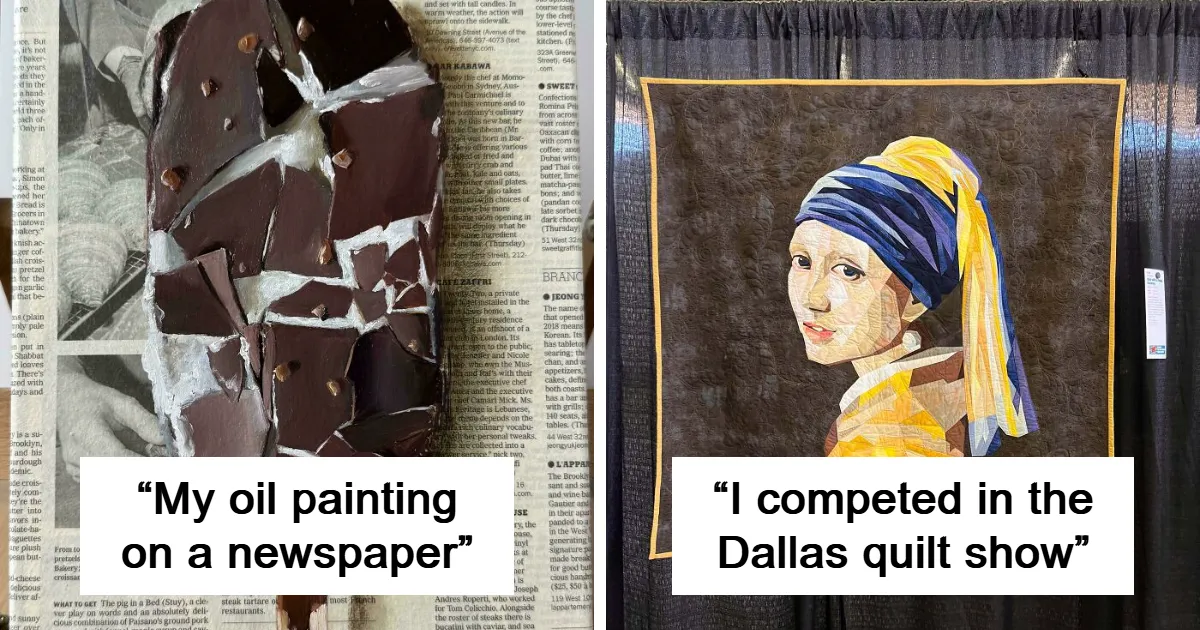
There's something happening in craft communities right now that goes beyond Instagram aesthetics. People are spending hours on embroidered landscapes, sculpting with clay, crocheting entire prom dresses, and building bags from 500+ salvaged tags. It's not just about the finished object — it's about the reclamation of time and attention in a world that usually demands speed.
The shift is quiet but visible. A turkey vulture emerges from vintage typewriter parts. A snowy landscape takes shape through thousands of needle passes. Someone picks up a stone in the forest and decides it belongs on a belt, transformed. These aren't commissioned pieces or professional work. They're people choosing to make things with their hands, often sharing the process online not for validation, but as evidence that this kind of work still matters.
The texture of slowness
What's worth noticing is what these projects demand: sustained attention. Embroidery requires you to sit still. Clay sculpture means working with material that resists and teaches. Crochet is meditative in a way that scrolling never is. In a period when the average person checks their phone 96 times a day, these crafts are a deliberate step sideways — not rejecting the world, but creating a pocket of it where your hands do the thinking.
We're a new kind of news feed.
Regular news is designed to drain you. We're a non-profit built to restore you. Every story we publish is scored for impact, progress, and hope.
Start Your News DetoxThere's also an environmental thread running through much of this work. Recycled materials, repurposed objects, things that might have been discarded finding new life as art. A vase made from something destined for the bin. A bag constructed entirely from tags. It's not activism dressed up as craft — it's just the natural outcome of paying attention to materials and refusing waste.
Why this matters now
The people sharing these projects aren't claiming to be professional artists. They're electricians, students, office workers, people with ordinary jobs who've decided that making something real is worth the time. That matters because it pushes back against the idea that creativity is a special talent reserved for "talented individuals." It's not. It's a choice to slow down, learn a skill, and sit with something until it becomes what you imagined.
The jealousy people mention in these posts is real, but it's the useful kind — the kind that makes you think, "Maybe I could learn that." And increasingly, people are. Craft communities are growing. Supply stores report steady demand. The skills that seemed to disappear a generation ago are being picked back up, taught peer-to-peer, shared without gatekeeping.
What comes next is probably more of this — not as a trend that peaks and fades, but as a quiet persistence. People discovering that making things by hand is one of the few activities that still feels entirely their own.





