Before planes, before cars, there were trains. And for a brief, glorious century, they were the undisputed kings of speed and luxury, transforming a sprawling, disconnected land into a slightly less sprawling, slightly more connected one.
It all started with a charmingly clunky contraption in 1804 Britain, thanks to Richard Trevithick and his steam locomotive. Americans, ever eager to supersize an idea, took one look and said, "Hold my horse-drawn railcar." Because that's how the Baltimore and Ohio Railroad, North America's first, actually started in 1830: with horses.
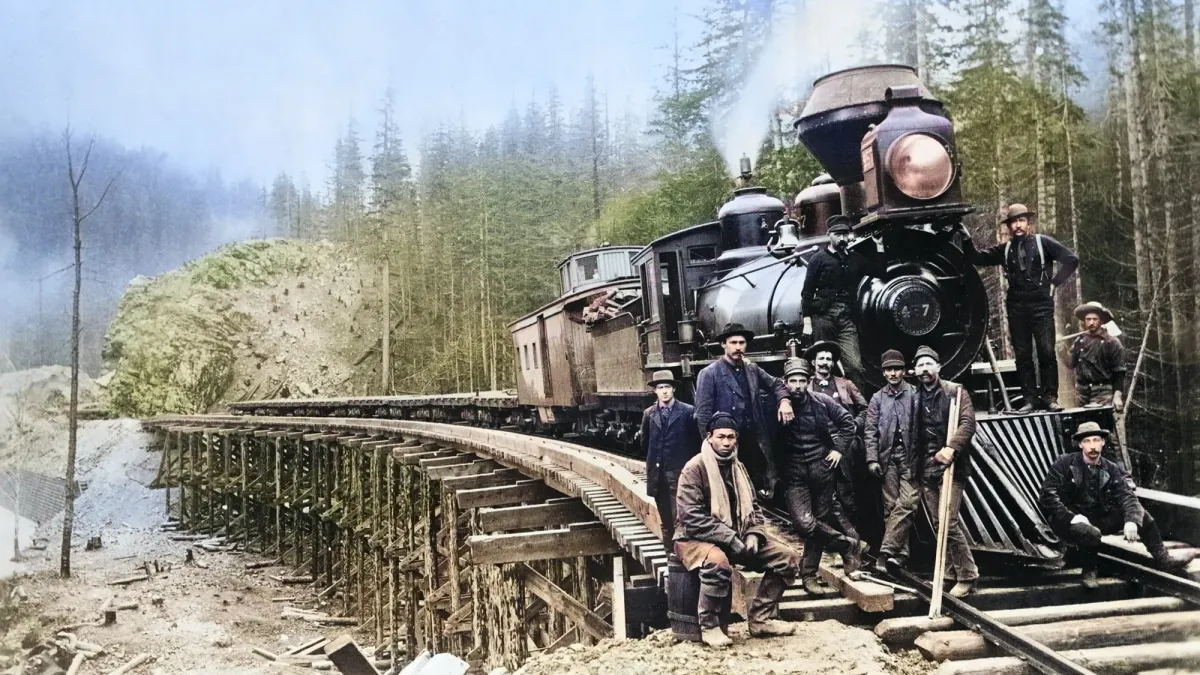
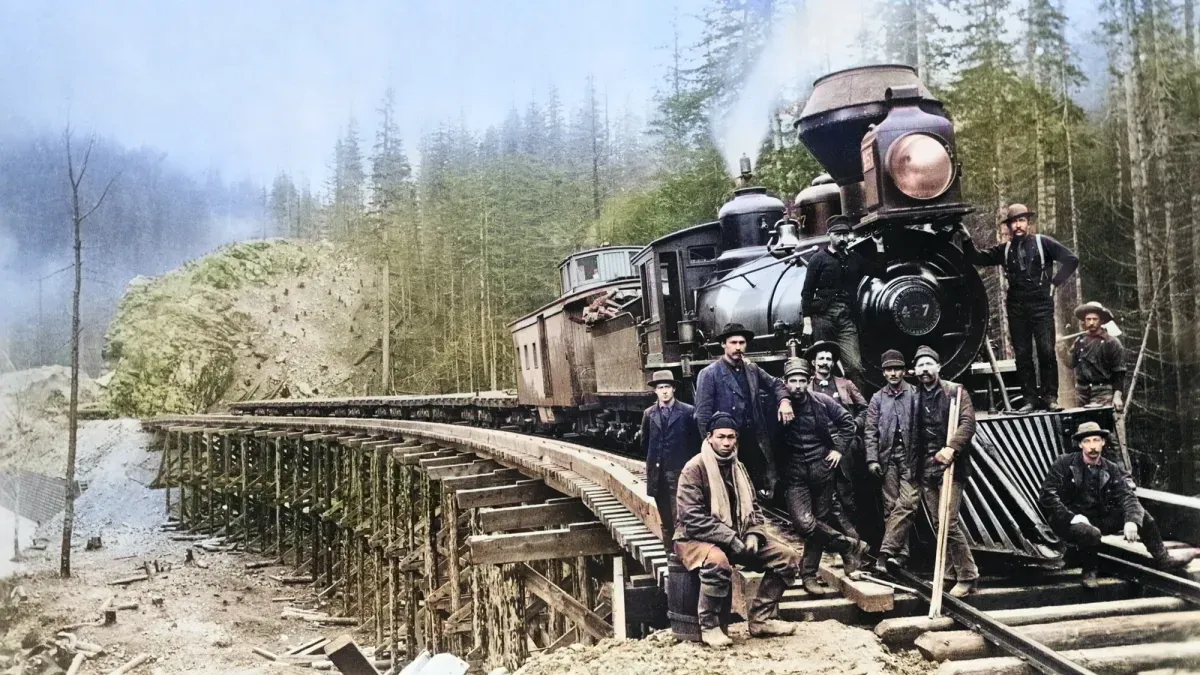
Fast forward just a few decades, and the U.S. had laid down 9,000 miles of track. That's more than the rest of the world combined. Let that satisfying number sink in. While the rest of the globe was still figuring out which end of the steam engine was the front, America was full-steam ahead into its railway golden age. Enter Cornelius Vanderbilt, who wasn't just building railroads; he was building an empire by snapping up everything in the Northeast. By 1902, the U.S. boasted over 200,000 miles of track. Which, if you think about it, is both impressive and slightly terrifying.
We're a new kind of news feed.
Regular news is designed to drain you. We're a non-profit built to restore you. Every story we publish is scored for impact, progress, and hope.
Start Your News DetoxFrom Granite to Gold Spikes
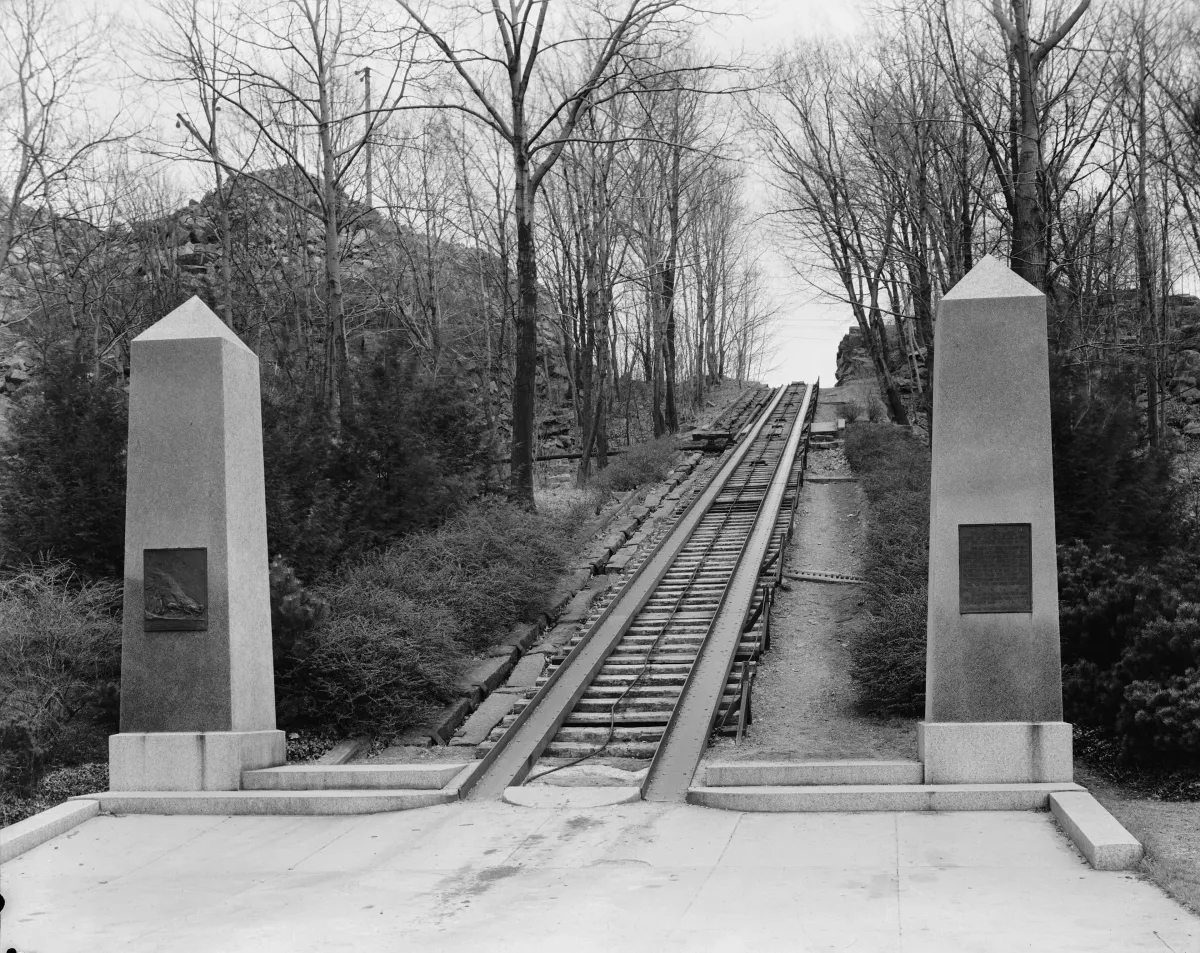
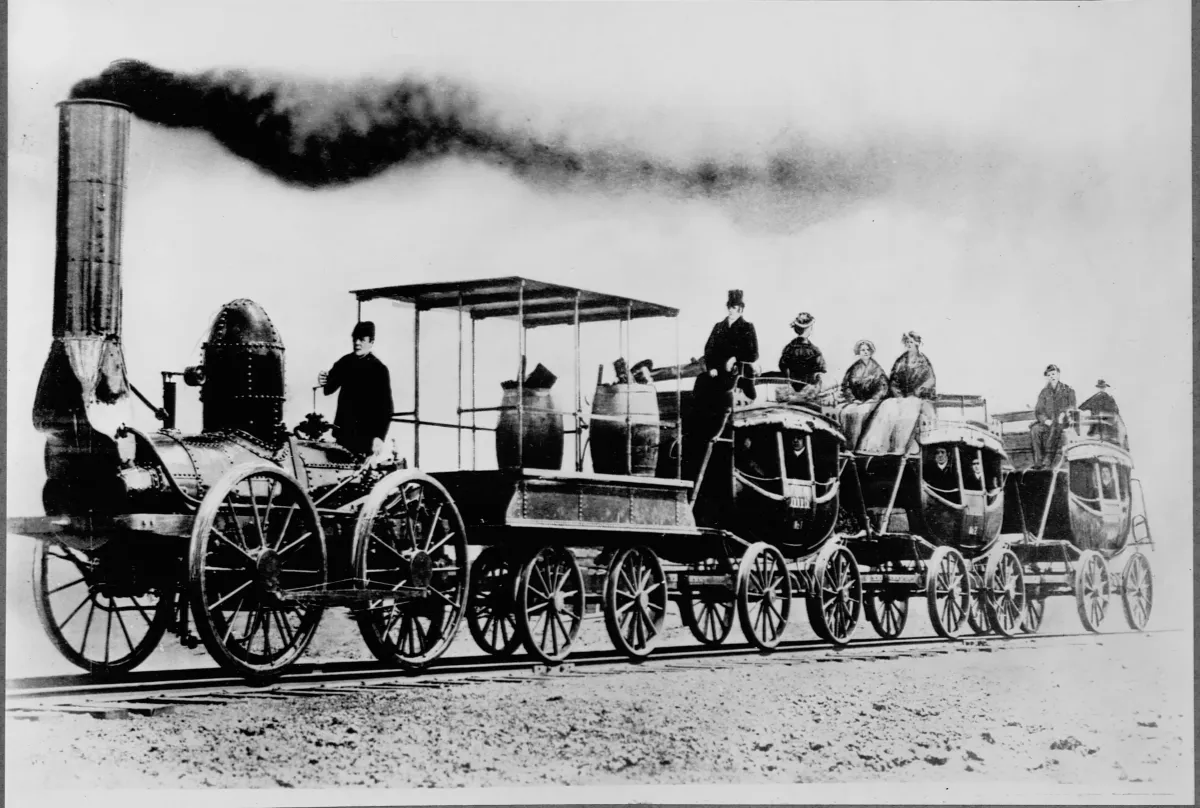
Before the grand transcontinental journeys, there was the humble Granite Railway in Quincy, Massachusetts, in 1826. Its job? Moving, you guessed it, granite for the Bunker Hill Monument. Again, with horses. Then came the DeWitt Clinton in New York, an early steam locomotive that, from 1831 to 1833, pulled actual stagecoaches converted into passenger cars. Because why build new ones when you can just slap some wheels on what you've got?
By the 1860s, trains were no longer a novelty; they were the nation's circulatory system. We went from a mere 380 miles of track in 1833 to over 30,000 miles by 1860. An illustration from the era shows Vanderbilt's New York Central and Hudson River Railroad rocking a four-lane track. Because when you're connecting a nation, you don't mess around.
Then came the ultimate connection: the "Golden Spike" moment in Promontory, Utah, in 1869. The Union Pacific and Central Pacific railroads met, creating the first transcontinental railroad. Suddenly, you could get from one coast to the other without having to, you know, sail around a continent or die of dysentery on a wagon trail.
Luxury, Speed, and a Fight for Fairness
By 1875, train travel wasn't just about getting there; it was about getting there in style. Pullman Palace Railway Cars introduced sleeping, dining, and parlor cars. An illustration from a Spanish travel book called El Mundo En La Mano shows these plush interiors. Because if you're going to cross a continent, you might as well do it with a white tablecloth.
And speed? Oh, they had speed. On May 10, 1893, New York Central and Hudson River Railroad's steam locomotive No. 999 screamed between Batavia and Buffalo, New York, hitting 112.5 miles per hour. That's right, the first time a train broke 100 mph. Let that sink in for a moment: a machine powered by burning stuff, hurtling faster than anything had before.
George Pullman, the man behind the Palace Cars, also brought us the dining car. These were often staffed by Black men known as Pullman porters, who worked long, hard shifts for not much pay. Their response? They formed the Brotherhood of Sleeping Car Porters in 1925, one of the country's first all-Black labor unions. Because even as the world sped up, some things still needed to change the old-fashioned way: by organizing and demanding it.