A year ago, Oumarou Sanda, the mayor of Garoua 2 in northern Cameroon, was named Cameroon’s Citizenship Champion. His municipality earned this award for its work to increase birth registrations.
This recognition came from UNICEF and the Cameroonian government. It highlighted months of effort to fix a major, often unseen problem: many children in Cameroon lack legal identity.
Cameroon's law says every child has a right to a birth certificate. Parents should register births within 90 days for free. After 90 days, registration becomes harder. After one year, families must go to court, which is often expensive and takes a lot of time.
We're a new kind of news feed.
Regular news is designed to drain you. We're a non-profit built to restore you. Every story we publish is scored for impact, progress, and hope.
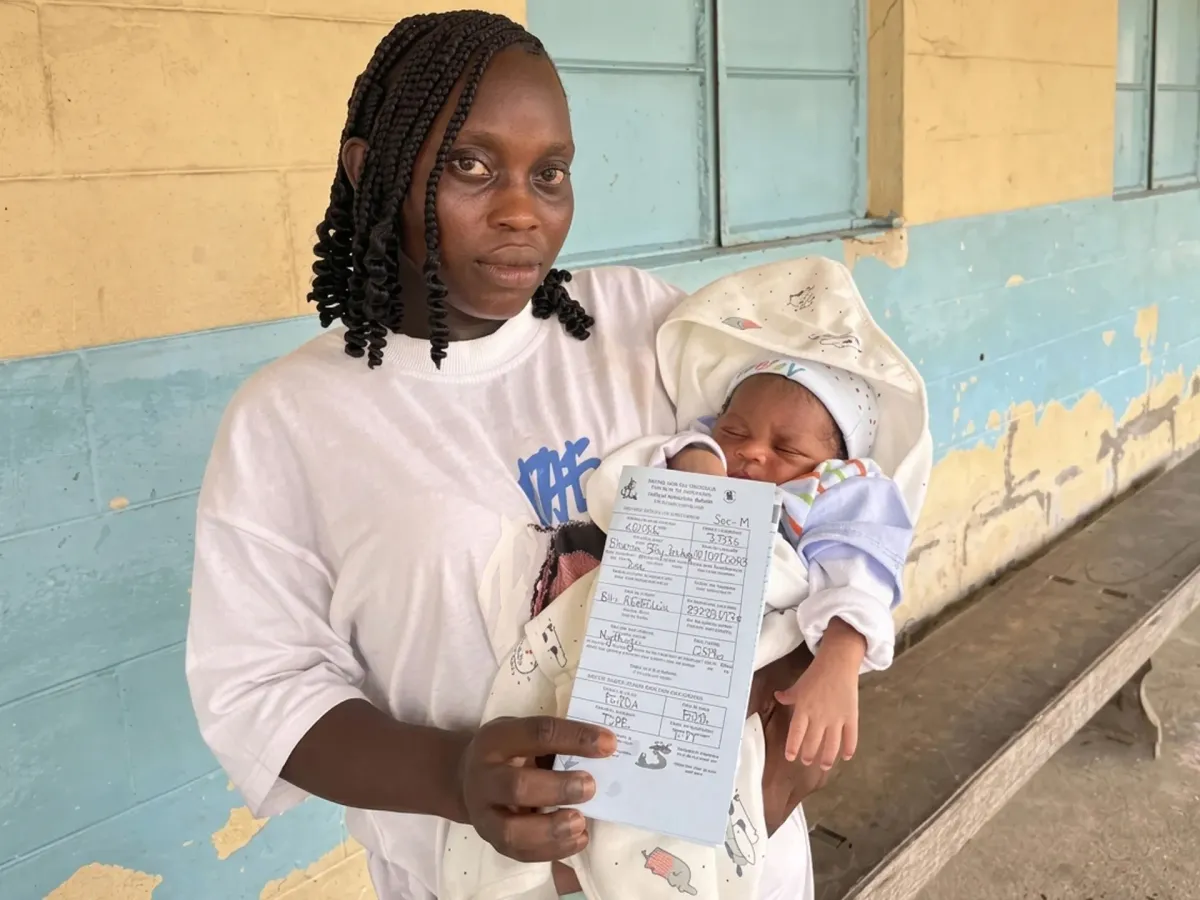
Start Your News DetoxFor many parents, this system is too difficult. Aissatou Bouba, a mother of four, shared that one of her older children was sent home from school years ago because he lacked official papers.
Things changed in 2024. Bouba brought her youngest child to a local health center. Staff registered the birth right after delivery, providing the necessary legal documents.
Her story is common. Cameroon’s Ministry of Basic Education reports that over 1.5 million children, about 30% of primary students, are in school without birth certificates.
Without these documents, problems often appear later in life.
Anna Enanga epse Itoe, who heads the civil status bureau in Tiko, explained the consequences. "If a child stays without a birth certificate, they will not get into secondary school," she said. "They cannot take public exams or get a national identity card, which is needed for many services."
UNICEF estimates that in 2023, only 43.77% of the 560,000 births in health facilities were officially registered. This gap leaves many children at risk beyond just education.
Alexis Mayang, a UNICEF child protection specialist, noted that undocumented children are harder to track and protect. They can be moved across borders with fewer checks. In conflict areas, a lack of ID makes them more likely to be exploited, including being forced into armed groups.
Addressing the Protection Gap
Efforts to fix these issues grew after the first Mayors’ Forum on Birth Registration in April 2024. Local leaders signed a promise to improve civil registration in their areas.
After the forum, UNICEF, with the government and local groups, launched the "My Name" campaign. This campaign aims to find and register children without legal documents across Cameroon’s 360 councils and 14 cities.
![Members of the Tiko Council team conduct a community sensitization session for pregnant women at a local health center to highlight the importance of early birth registration [Lucrece Armande _ Social Voices]](https://www.aljazeera.com/wp-content/uploads/2026/06/Members-of-the-Tiko-Council-team-conduct-a-community-sensitization-session-for-pregnant-women-at-a-local-health-center-to-highlight-the-importance-of-early-birth-registration-Lucrece-Armande-_-Social-Voices-1782791789.jpg?w=770&resize=770%2C513&quality=80) Members of the Tiko Council team conduct a community sensitisation session for pregnant women at a local health centre to highlight the importance of early birth registration: Lucrece Armande _ Social Voices
Members of the Tiko Council team conduct a community sensitisation session for pregnant women at a local health centre to highlight the importance of early birth registration: Lucrece Armande _ Social Voices
Since the campaign started, over 17,000 children have been registered.
Municipalities were judged on how well they improved registration. This included setting up registration services in health facilities and finding undocumented children who were not in school.
In Tiko, officials brought registration services closer to remote communities. They worked with traditional leaders to collect birth declarations from rural areas.
Enanga said that in Tiko, people now come daily to register their children. Thousands of documents have been issued. Local chiefs helped by documenting births in hard-to-reach areas and sending records to council offices.
In Garoua 2, authorities used a different method. They switched from handwritten registers to digital systems. This allowed certificates to be issued in minutes.
Remaining Challenges
Despite these successes, challenges remain.
Many communities still do not prioritize birth registration. Some parents only register their children when they are denied school access or cannot take national exams.
![Mayors from Cameroon's top-performing municipalities, including Mayor Oumarou Sanda of Garoua 2 (center), are awarded for their exceptional efforts in deriving grassroots civil registration [Salomon Beguel _ UNICEF]](https://www.aljazeera.com/wp-content/uploads/2026/06/Mayors-from-Cameroons-top-performing-municipalities-including-Mayor-Oumarou-Sanda-of-Garoua-2-center-are-awarded-for-their-exceptional-efforts-in-deriving-grassroots-civil-registration-Salomon-Beguel-_-UNICEF-1782791781.jpg?w=770&resize=770%2C513&quality=80) Mayors from Cameroon’s top-performing municipalities, including Mayor Oumarou Sanda of Garoua 2, centre, are awarded for their exceptional efforts in deriving grassroots civil registration: Salomon Beguel/UNICEF
Mayors from Cameroon’s top-performing municipalities, including Mayor Oumarou Sanda of Garoua 2, centre, are awarded for their exceptional efforts in deriving grassroots civil registration: Salomon Beguel/UNICEF
Schools often become the first place where this issue is enforced. Primary students without documents are often turned away from important tests.
Deeper social barriers also exist. In some rural areas, harmful beliefs persist. For example, some believe girls do not need formal documents or education. These practices lead to more undocumented children and increase the risk of early or forced marriage.
Officials and community workers are now involving traditional and religious leaders in awareness campaigns. These campaigns aim to change perceptions and encourage earlier birth registration.
Globally, UNICEF estimates that 166 million children under five are unregistered. In Cameroon, closing this gap will require not just administrative changes, but also a shift in how communities view a child’s legal identity.
Bouba shared her happiness, "I was happy knowing that my son could get educated without any hindrance."