Learning a new art form can be a dizzying dance, especially when that art form involves bending glass tubes full of charged gas. But for Indigenous artists looking to illuminate their work, a new residency is flipping the switch.
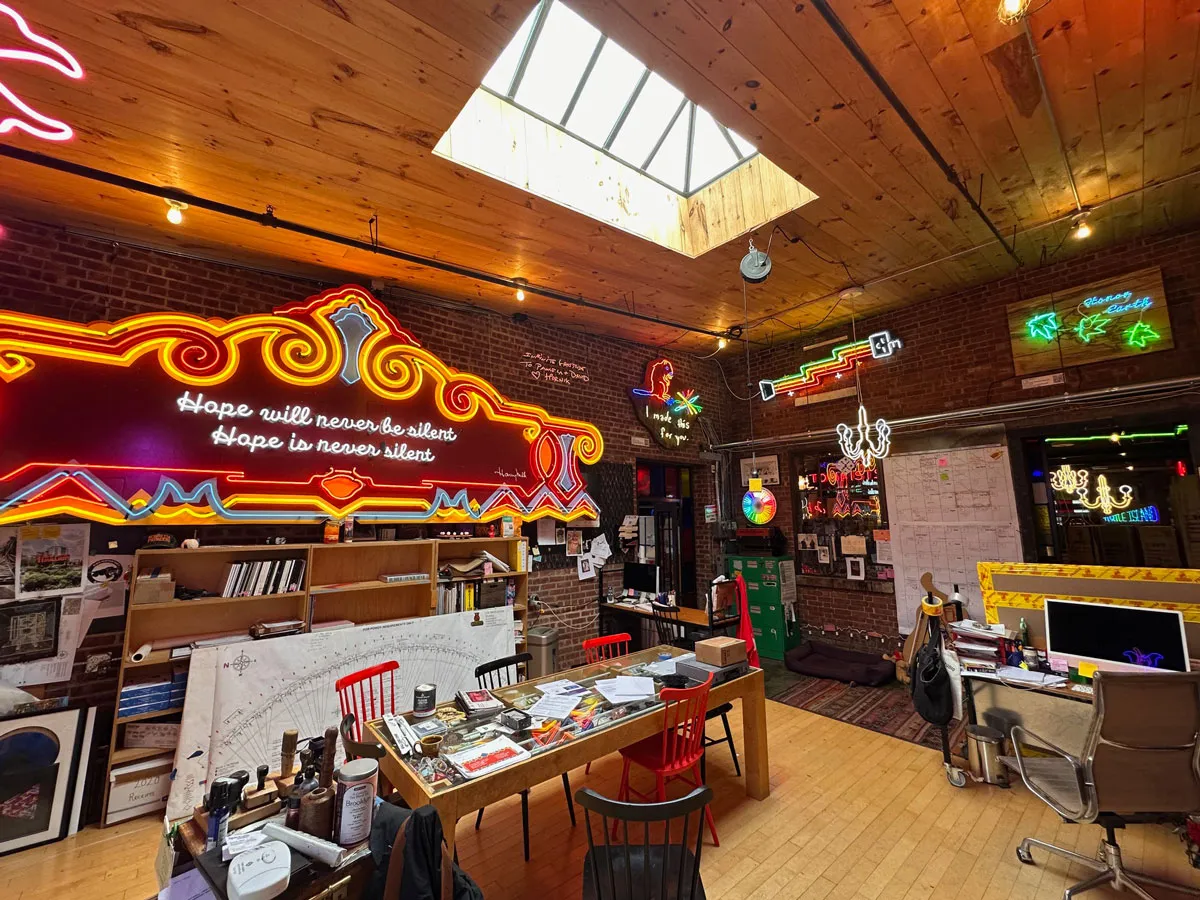
The Walker Youngbird Foundation, a Native-led nonprofit, has teamed up with Lite Brite Neon Studio in Kingston, New York, to launch Native Neon. The idea? Give a Native artist, completely new to the medium, the tools and space to create a brand-new piece in glowing glass.
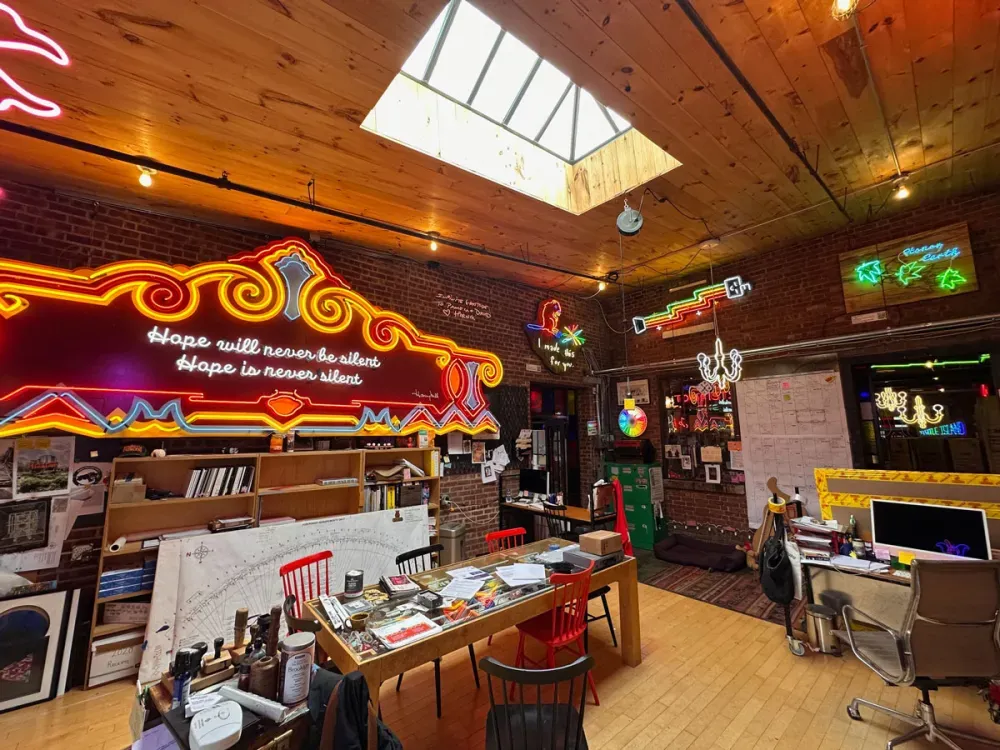
Reid Walker, founder of the Walker Youngbird Foundation, explained they were specifically hunting for neon novices. This isn't about refining an existing neon practice; it's about opening the door for those who've always wanted to try it but haven't had the chance. Because, let's be honest, bending glass with a torch isn't exactly a casual hobby.
We're a new kind of news feed.
Regular news is designed to drain you. We're a non-profit built to restore you. Every story we publish is scored for impact, progress, and hope.
Start Your News DetoxWhere Light Meets Story
The inaugural Native Neon resident is Sarah Rowe, from the Ponca Tribe of Nebraska. Her usual canvas involves painting and installations, often diving into themes of identity, ecology, and fresh interpretations of Native visual histories. If you've seen her Starseeds mural across 15 grain silos in Nebraska, you know her work thinks big. Walker believes neon will help her extend that vision into light and public spaces in entirely new ways.
Rowe beat out over 100 applicants, not by submitting a fully-baked neon blueprint, but by describing how she'd translate her current work into this luminous new format. The foundation smartly recognized that you can't have a finished idea for a medium you don't yet understand. It's a collaborative process, which, if you think about it, is both impressive and slightly terrifying when dealing with high-voltage gas.
The residency itself clocks in at about $50,000 per cycle. Most of that hefty sum goes directly into crafting the neon artwork. But it also covers flights, lodging, and a $10,000 stipend for the artist. Artists retain full ownership and intellectual property rights to their glowing creations, and the program even covers shipping the finished piece home. Each artist spends seven to ten days at Lite Brite, preceded by planning meetings to demystify the medium. That stipend, Walker notes, allows artists to actually step away from their daily grind and focus on the art. Because creativity doesn't pay for rent, sadly.
Breaking Barriers with Brilliant Hues
The spark for Native Neon ignited when Walker acquired neon works by Marie Watt and Jeffrey Gibson. Watt introduced him to Matteline deVries-Dilling, Lite Brite's creative director, and soon the conversation turned to the formidable barriers artists face in getting into neon. A visit to the Lite Brite studio in the Hudson Valley sealed the deal.
Walker put it plainly: neon art demands a lot of infrastructure, making it tough for any artist, let alone Native artists, to access. The program's mission is to dismantle those barriers, offering a pathway into a medium where Indigenous voices haven't always had a prominent presence.
As Walker eloquently puts it, neon works are "stories carried in charged gas and shaped glass." He finds immense power in Native artists shaping this light into their own visual language, asserting authorship in a medium that's historically been out of reach. That's a pretty bright idea, if you ask us.
Marie Watt will serve as the primary advisor for Native Neon, bringing her expertise in translating art into finished neon products. She helps ground the program in serious discussions about materials, moving beyond just the novelty of glowing tubes. Because art, even when it's literally glowing, still needs a solid foundation.
This residency fits snugly into the Walker Youngbird Foundation's broader mission: supporting Native art through grants, tribal-led community projects, and helping museums acquire Native art. Walker's own journey, influenced by his father's art collection and his work with institutions like the Phillips Collection, revealed a "real barrier to entry for Native art" in mainstream museums. With Native Neon, the foundation hopes to zap some of those barriers away, ensuring Indigenous artists shine as brightly as their work.