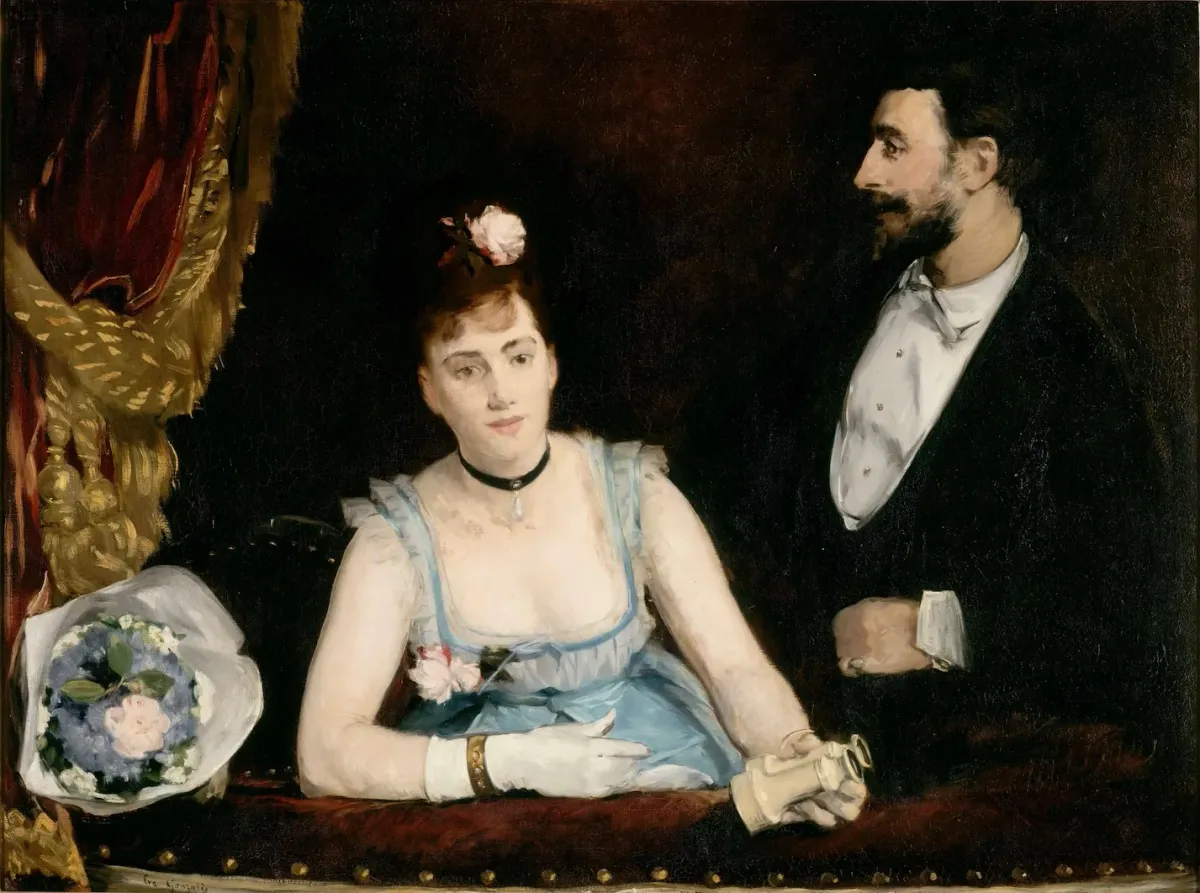
Eva Gonzalès was a French painter who, despite never calling herself an Impressionist or showing with the group, somehow ended up in art history's equivalent of the 'ladies' section. For decades, she’s been filed under 'woman impressionist,' often lumped in with Mary Cassatt and Berthe Morisot as one of the 'Four Grandes Dames.' Because apparently, that's how we categorize talented artists now.
But a new, exhaustive digital catalogue raisonné from the Wildenstein Plattner Institute (WPI) is finally giving Gonzalès the solo spotlight she deserved all along. It’s not just an update; it's a full-blown reputation rescue mission.
Unearthing a Legacy
This isn't your grandma's art book. The WPI’s new catalogue is a digital deep dive that corrects misattributions, unearths lost works, and, for the first time, includes Gonzalès’s sketchbooks. The last time anyone bothered with a comprehensive index was 1990, so you could say an update was overdue. Especially since, as WPI executive director Elizabeth Gorayeb points out, hardly any digital catalogues focus on women artists.
We're a new kind of news feed.
Regular news is designed to drain you. We're a non-profit built to restore you. Every story we publish is scored for impact, progress, and hope.
Start Your News DetoxOne painting, Apples in Basket, was listed as missing in 1990. Turns out, it was just chilling at the Minneapolis Institute of Art, wrongly attributed to someone else. Gonzalès's signature was there all along, hidden in a letter within the painting. Imagine that: an artist's signature tucked away in plain sight, waiting for someone to actually look.
Another newly attributed work is a striking watercolor portrait of Madame Georges Haquette, hinting at Gonzalès’s connections to a vibrant art scene in Dieppe, France. It's like finding a secret message that rewrites a chapter of her life.
The Real Story of Eva Gonzalès
The project also takes aim at the myth that Gonzalès was ignored in her lifetime. Far from it. She regularly exhibited at the prestigious Paris Salon starting in 1870. When one piece got rejected, it found a home at the Doyen gallery, run by a rare female gallery owner. Because sometimes, you just need another woman to open a door.
Contemporaries, including influential critic Émile Zola and feminist writer Maria Deraismes, admired her technique. These glowing reviews, once buried in archives, are now digitized and accessible, proving that Gonzalès was celebrated, not overlooked.
Gonzalès tragically died in 1883 at just 34, due to childbirth complications. Her husband tried to keep her legacy alive with a retrospective and auction, but they flopped. Her family bought back most of her work, which sounds sad, but ultimately ensured her art survived. Her son later loaned her pieces for exhibitions, keeping her name circulating until the 1990 catalogue brought renewed institutional and market attention.
This WPI project isn't just about one artist. It’s a spotlight on how these costly, time-consuming catalogues — often fueled by commercial interest — can inadvertently sideline artists with less institutional backing. Which, historically, has often meant women.
While male art giants like Ed Ruscha and Pablo Picasso have ongoing catalogue projects with major support, a similar project for Florine Stettheimer is just beginning at WPI. It’s a stark reminder that who gets written into history, and how, matters. And sometimes, it takes a digital revolution to finally get the story straight.