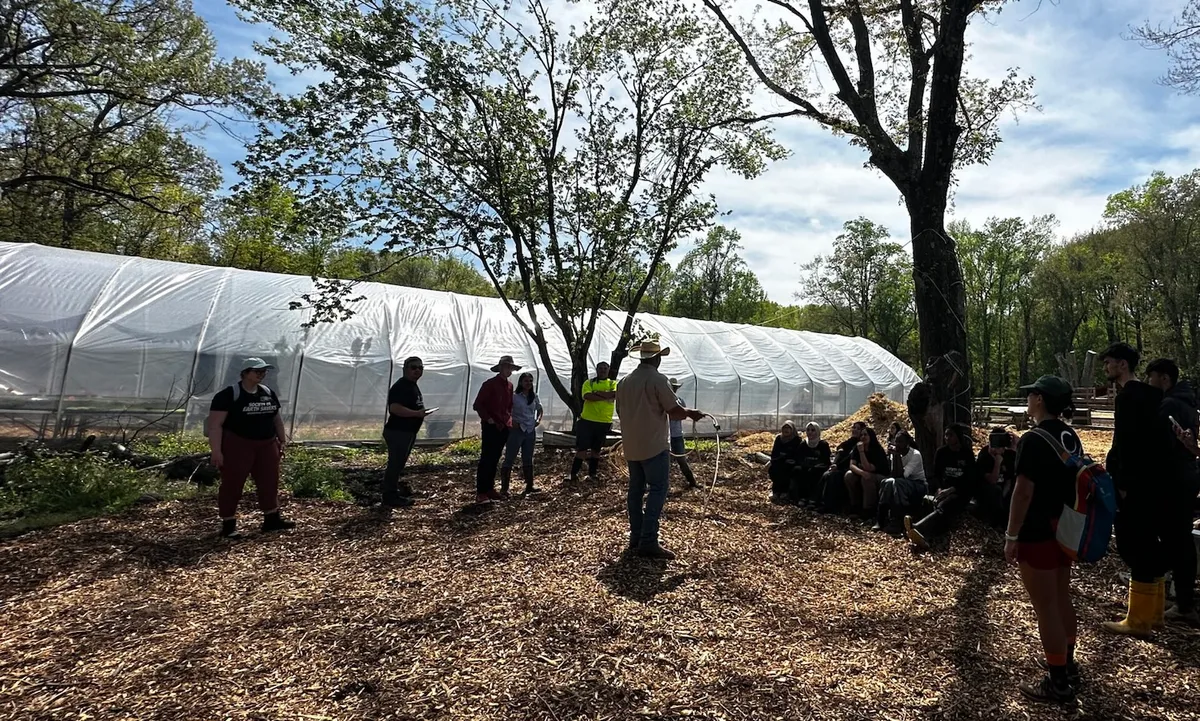
Once upon a time, a patch of land in Maryland was doing its best impression of a landfill. Neighbors treated it as a convenient spot to dump whatever they no longer wanted. Today? It's Wild Kid Acres, a thriving regenerative farm that drew 50,000 visitors last year. Yes, 50,000. Because apparently, that's where we are now: farms aren't just for growing kale; they're community hubs, therapy centers, and incubators for the next generation of farmers.
Founder Gerardo Martinez, a Marine Corps veteran, didn't set out to create a bustling agricultural Disneyland. His initial inspiration came from a farm in Cameroon that served as a one-stop shop for everything from food to church services. It was less a farm, more a community's beating heart. So, in 2019, he and his wife bought the neglected Maryland property, lived in an RV, and started coaxing life back into the soil with regenerative methods.
The Accidental Community Hub
Martinez, by his own admission, wasn't exactly overflowing with empathy at the start. He just wanted to farm. But then, in late 2020, a woman pulled into his driveway, said hello, and promptly burst into tears. That's one way to get a farmer's attention. It was the push Martinez needed to open his gates.
We're a new kind of news feed.
Regular news is designed to drain you. We're a non-profit built to restore you. Every story we publish is scored for impact, progress, and hope.
Start Your News DetoxHe started small: two hours on Saturdays. The response was immediate, overwhelming. In 2021, 6,000 people showed up. The farm quickly became the kind of vibrant gathering place Martinez had witnessed in Cameroon, with volunteers building barns (kids included!) and food being given away. It turns out, if you build it, they will come. And they will probably cry.
Now, Wild Kid Acres is doing more than just growing food and hosting visitors. Martinez realized that the kids coming to the farm weren't just curious; they were asking deep, unsettling questions about ethical farming, planetary care, and why no one was helping farmers. These kids, he observed, often grasped the systemic challenges faster than adults.
So, the farm shifted focus. It's now a launchpad for young people in agriculture, even starting a program to support youth-led farming businesses across the country with marketing, funding, and market access. Because if his grandchildren can't keep the farm going, Martinez figures, what's the point? Which, if you think about it, is a pretty solid metric for success.