Just when tens of thousands of asylum seekers and immigrants were bracing to lose their work permits, a US federal judge stepped in. On Tuesday, a policy from the Trump administration that would have stripped these vital authorizations — set to kick in as early as Wednesday — was temporarily halted. Because, apparently, someone thought a twenty-four-hour notice was plenty.
US District Judge Nathaniel Gorton sided with immigrant rights groups and labor unions, who had challenged new policies from US Citizenship and Immigration Services (USCIS). These policies were essentially an attempt to implement immigration restrictions passed by Congress last year, but with a particularly sharp edge.
A Temporary Reprieve
The judge's order means thousands of people from El Salvador, Sudan, and Ukraine won't immediately lose their ability to work. This temporary protection lasts while the lawsuit, filed by a coalition of organizations represented by Democracy Forward, continues. Judge Gorton, with a masterful understatement, noted that the consequences for those affected were "potentially severe." The order holds until he decides on a longer-term injunction, expected by August 5.
We're a new kind of news feed.
Regular news is designed to drain you. We're a non-profit built to restore you. Every story we publish is scored for impact, progress, and hope.
Start Your News DetoxThe lawsuit specifically targeted several recent USCIS policy changes. Among them: a new rule that would allow the agency to reject asylum applications and revoke work permits if applicants failed to pay a new annual asylum fee. Also on the chopping block was a rule that required initial asylum work permit applications to be processed within a reasonable 30 days. Because who needs efficiency when you can have… more paperwork?
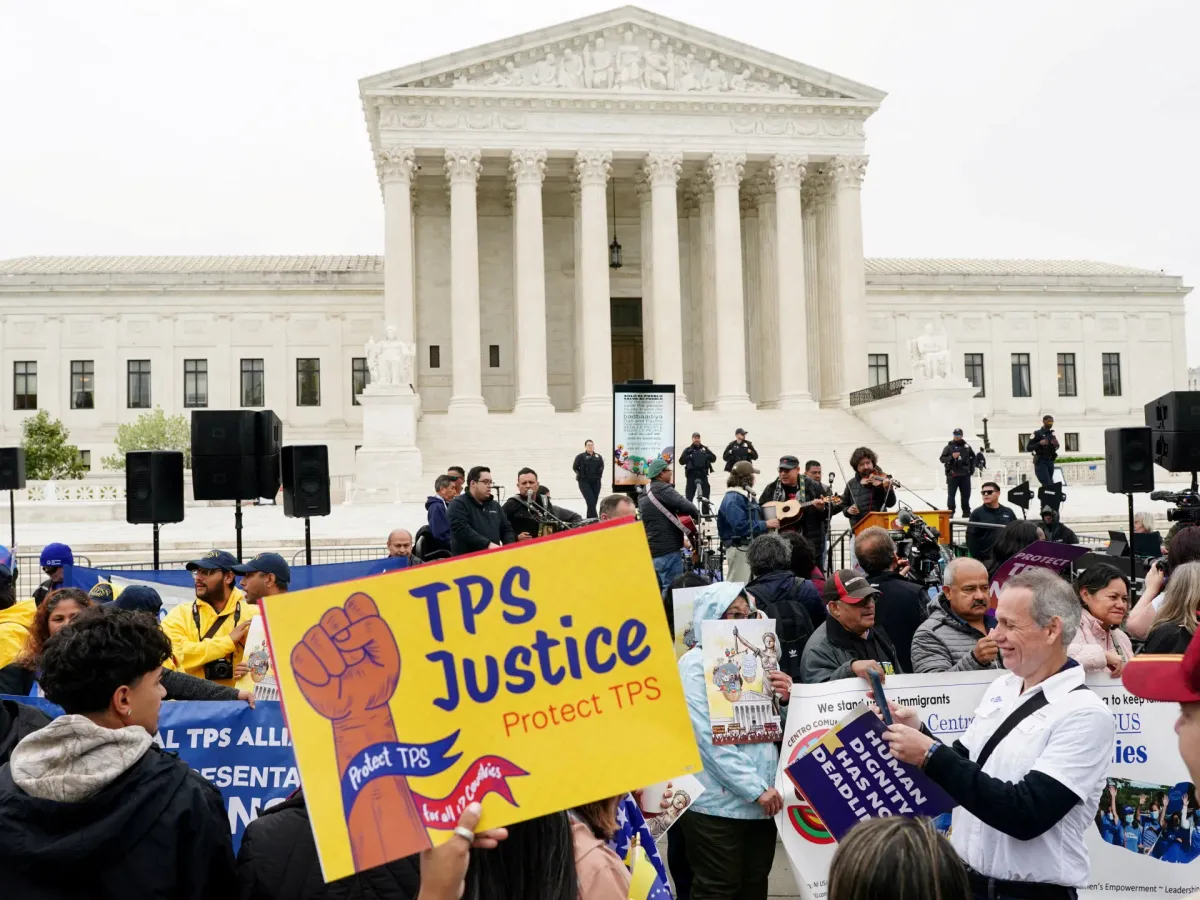
The plaintiffs argued that USCIS made these changes without the legally required public input. They also challenged the retroactive application of these rules to people protected by Temporary Protected Status (TPS) from El Salvador, Sudan, and Ukraine. TPS, for the uninitiated, allows people from countries ravaged by war or natural disaster to live and work legally in the US until it's safe enough for them to return home — a concept that seems pretty straightforward.
Skye Perryman, president of Democracy Forward, highlighted the immediate relief this decision brings. Without it, she pointed out, families who had followed every rule in the book faced losing their jobs and their ability to support themselves. Which, if you think about it, is a pretty high price to pay for simply existing.
While the judge didn't block the collection of the asylum fee itself, he did temporarily block the rather dramatic consequences of not paying it — like application rejection or work permit termination. These controversial rules were part of Trump's creatively named "One Big Beautiful Bill Act," passed by Congress in July 2025. This administration has been rather keen on ending TPS protections for over a dozen countries, even securing a Supreme Court win last month to end protections for thousands of Haitian and Syrian immigrants. For now, however, a judge decided thousands of others get to keep their jobs. A small win, perhaps, but a win nonetheless.