India's "Cockroach" Protests: A Digital Age Challenge
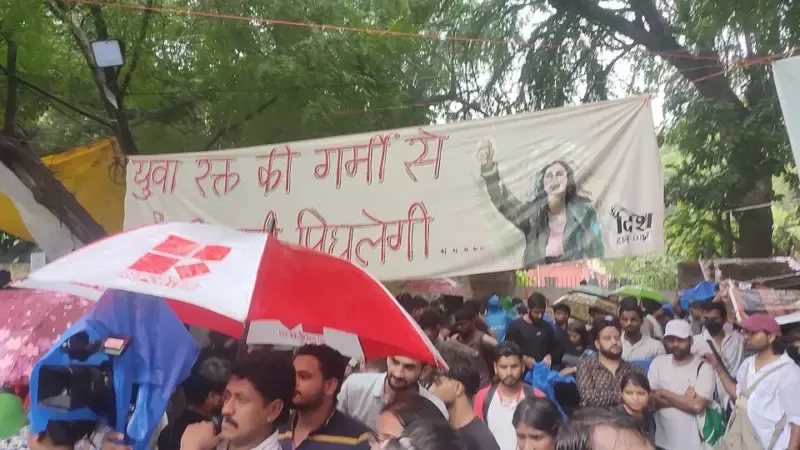
For over three months, India's "Cockroach Janata Party" (CJP) has challenged President Narendra Modi's government. This youth movement started as an online joke. It grew from anger over educational corruption, like leaked exam questions and recruitment scandals.
The movement also highlights issues of unemployment, political accountability, and the dignity of young people.
The CJP began in May 2026. India's Chief Justice, Surya Kant, had compared unemployed young people to cockroaches. Political consultant Abhijeet Dipke turned this insult into a rallying cry. He invited the country's "cockroaches" to unite.
We're a new kind of news feed.
Regular news is designed to drain you. We're a non-profit built to restore you. Every story we publish is scored for impact, progress, and hope.
Start Your News DetoxThe joke went viral. The movement's name, Cockroach Janata Party (CJP), deliberately echoed the ruling Bharatiya Janata Party (BJP). This showed how quickly an internet meme could become a tool for political organizing.
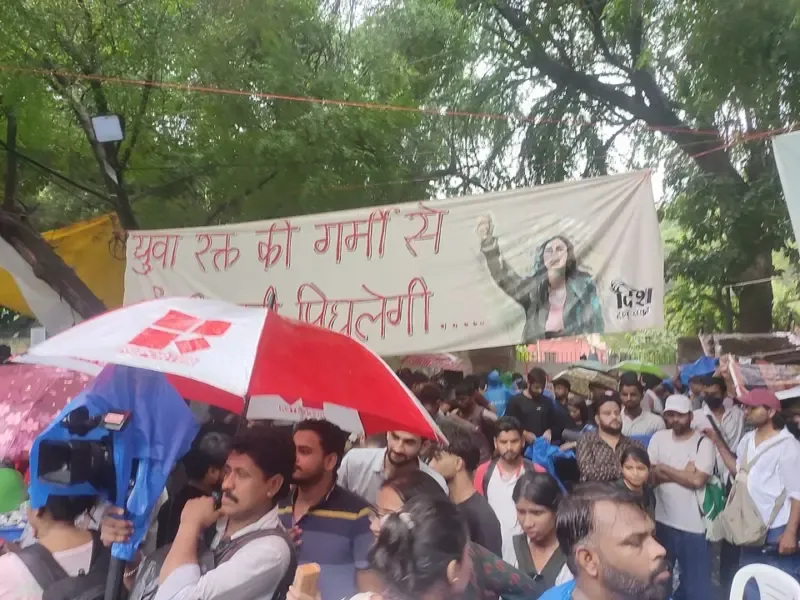
The CJP's first big win came on July 25. Education Minister Dharmendra Pradhan resigned after a 36-day protest. This protest at the Jantar Mantar observatory was about alleged exam problems. The government also promised no punishment for protesters.
By late August, the CJP said the government broke its promises. They announced a new march for September 5. They demanded the withdrawal of all First Information Reports (FIRs) filed against participants. FIRs are official police reports that start a police inquiry.
On September 1, the Supreme Court ordered all FIRs from the July protests to be closed. The central government and four BJP-ruled states moved to stop over 100 cases. Solicitor General Tushar Mehta also said the government would pay families of students who died by suicide after the exam was canceled. CJP co-convener Saurav Das then called off the march.
This shows the CJP has become a powerful political movement. It can now get concessions directly from the state.
Digital Surveillance vs. Citizen Organizing
The Cockroach protests reveal a contradiction in political organizing today. Social media still lets citizens organize outside traditional parties. This is driven by satire, short videos, and volunteer networks. But the same technologies give the state advanced ways to watch and classify participants. This new model combines policing, artificial intelligence, and digital surveillance to monitor dissent.
On July 20, thousands of CJP supporters tried to march to parliament. Police used water cannons, tear gas, pellet guns, and bamboo batons to break up the crowd. Hundreds were detained, and police cases were filed. Delhi Police said people with criminal records joined the protest, making the escalation necessary. In August, the Supreme Court agreed to look into claims of excessive force by police.
Beyond the visible violence, a more significant development occurred. Delhi Police used mobile surveillance vans, 360-degree cameras, and facial-recognition technology. One system, Ikshana, matched faces from camera feeds against police records. Delhi Police told the Supreme Court it flagged 2,873 people with criminal records. However, an investigation by Scroll.in found that at least 25 of those flagged were already in jail.
This technology changes the relationship between citizens and the state. Traditional crowd control happens in the moment. Digital surveillance lets the state reconstruct participation after an event. A captured face can be matched against a database. This creates a record of political participation that lasts beyond the protest.
A petition challenging the use of facial recognition at the protests has reached the Supreme Court. It claims data was collected without consent. India's legal framework for this is still developing. Police originally got the technology to find missing children. Now, it's used for crowd surveillance at political gatherings. Tools meant for public safety are getting broader uses without enough legal safeguards.
Identifying a suspect in a crime is different from identifying everyone at a demonstration. The latter turns exercising a democratic freedom into a reason for state observation. This creates a searchable record of who participated. It can also make people afraid to protest, making the right to protest meaningless.
The Paradox of Digital Activism
Digital authoritarianism is not just about cameras or databases. It's about combining them to identify and analyze people on a large scale. When political activity becomes searchable data, the line between policing unlawful behavior and monitoring lawful participation blurs. This raises questions about what police can collect, why, for how long, and with what oversight.
This debate is global. The EU has restricted real-time biometric identification in public spaces. The US has concerns about police use of facial recognition. This problem is especially serious in the Global South. Governments are getting advanced surveillance tools, but oversight is weak. India shows how quickly policing, mass surveillance, and political monitoring can merge.
However, calling the CJP simply a case of digital repression misses half the story. The movement exists because digital technology also helps ordinary citizens organize. At its peak, its Instagram following was reportedly over 26 million. This is more than India's two main national parties combined. The CJP turned online attention into physical action and political influence. The government's reversal on the FIRs proves this.
This is the CJP's core paradox. The digital age doesn't just strengthen the state or automatically democratize politics. It can do both at the same time. The same platforms that let a young person join a national campaign also make that mobilization easier for the state to observe. The CJP has chosen to be a pressure movement, not a traditional political party. Its journey, from addressing grievances to demanding accountability, shows this tension clearly.
A Global Challenge for Democracies
The Indian experience is part of a global shift. Governments worldwide are getting technologies that identify people in public spaces. They connect this behavior to existing databases. The question isn't whether these technologies make policing more effective. They can. The question is whether states can set rules to limit their use in political contexts. This would prevent public safety tools from becoming instruments of political surveillance.
Democratic freedoms rely on protection from state violence. They also depend on citizens being able to organize without their participation being permanently recorded. Freedom of assembly means little if joining a protest creates a lasting record that can harm individuals later.
But this contest goes both ways. The same infrastructure that helps the state monitor protesters also lets protesters document police conduct. They can challenge official stories, as seen in reports on pellet-gun injuries and the Supreme Court's review of the July 20 crackdown.
The Cockroach protests offer both a warning and hope for democracy. They show that India's young citizens can turn online culture into sustained collective action. They can get real concessions from a powerful government. These include resignations, promised compensation, and the quashing of FIRs. But their treatment by security forces shows the costs of participation. These costs now go beyond arrest or violence. They include the creation of digital records whose scope and future use may be unknown to those being monitored.
For democracies, this is a constitutional problem. Better technology or public safety reasons alone cannot solve it. The more powerful the technology, the more we need clear limits on what the state can collect. We also need rules on how it can use that information and how citizens can challenge its misuse. India must decide if technological efficiency defines political freedom, or if constitutional principles define how technology can be used.
The CJP started as a joke. That joke became a movement that forced a government's hand. Its ongoing struggle with the Indian state shows a deeper change. In an age where political participation can become data, the freedom to protest depends not just on police permission. It depends on whether people can gather without fear.
Deep Dive & References
The meme that became a movement: Inside India’s Cockroach Janta Party - Global Voices, 2026