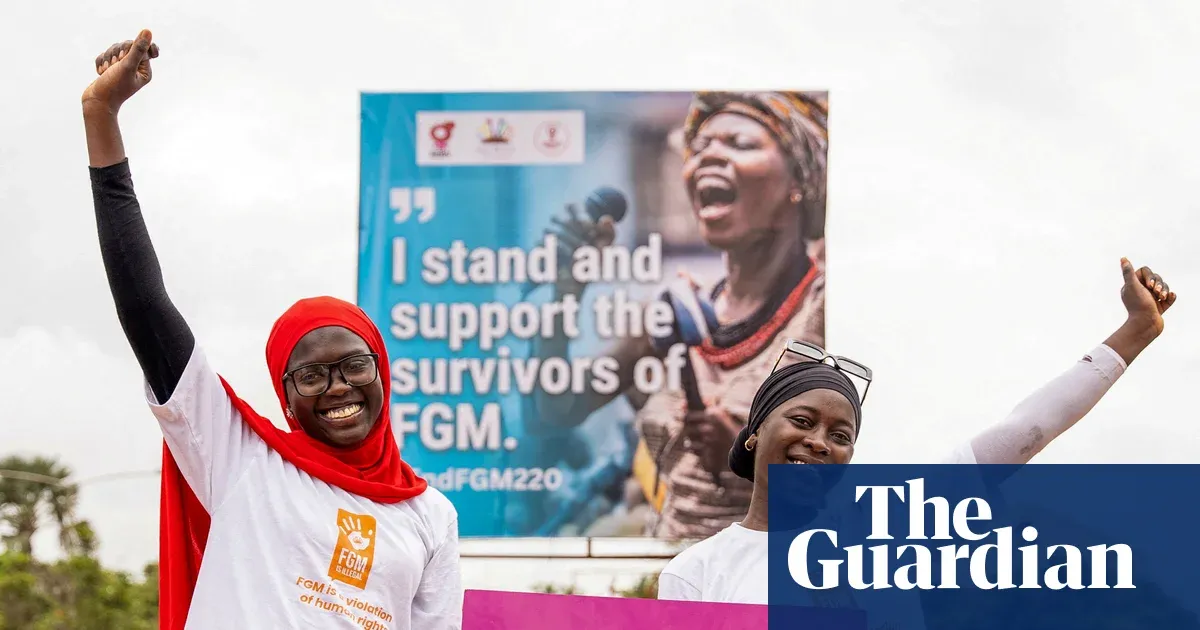
In a world where women's rights often feel like they're taking one step forward and two steps back, and donor funding seems to be constantly playing hard to get, a new $15.5 million fund just landed. Its mission? To create "unstoppable momentum" to finally end female genital mutilation (FGM) worldwide.
This isn't just pocket change; it's being called the single largest donation ever specifically aimed at eradicating FGM. Which is good news, considering over 230 million women and girls globally have been affected by the practice. And even better news for the activists and survivors who've been fighting this battle, often with shrinking resources.
The Her Horizon Fund
The United Nations has set an ambitious goal: eliminate FGM by 2030. But, as with most grand plans, reality has a way of intervening. Progress has been sluggish, partly due to declining funding and, in some places, outright challenges to the legal protections already in place. Case in point: a joint UN program across 18 countries saw its funding slashed by 45% last year. Imagine trying to get anything done with nearly half your budget suddenly gone.
We're a new kind of news feed.
Regular news is designed to drain you. We're a non-profit built to restore you. Every story we publish is scored for impact, progress, and hope.
Start Your News DetoxEnter the Her Horizon Fund. It kicked off with a hefty $14 million from the Wallace Global Fund, plus an extra $1.5 million from an anonymous donor, bringing the total to a cool $15.5 million. The ultimate target? A whopping $100 million from various donors, aiming to create a "tipping point" to wipe out FGM within a single generation. Because apparently, that's what it takes.
Ifrah Ahmed, a survivor and fierce activist from Somalia, is understandably thrilled. Her Ifrah Foundation, which tackles FGM in Somalia where it's alarmingly common, had its own UN funding cut last year. Yet, she found other ways to keep the lights on and the fight going. Ahmed's foundation has been instrumental in pushing for anti-FGM laws in Somalia, with three of seven federal states now having such protections. Two more are waiting on legislative approval, despite some religious leaders pushing back. It's a reminder that progress is never a straight line.
Protecting Progress
Advocates are quick to point out that any gains against FGM are fragile. Even with growing international recognition of it as a human rights violation, the battle isn't over. Countries like Burkina Faso, The Gambia, and Kenya have made FGM illegal, but that doesn't mean it's gone for good. Frontline groups and survivors are constantly on guard, protecting decades of hard-won progress. The Gambia, for example, is currently seeing its 2015 FGM ban challenged in the supreme court, following a failed parliamentary attempt to repeal it. Meanwhile, Sierra Leone's new Child Rights Act conspicuously omits a ban on FGM, despite ongoing campaigns. It’s a bit like taking two steps forward and then tripping over your own feet.
Susan Gibbs, a senior adviser at the Wallace Global Fund, doesn't mince words: FGM is a "global crisis" and a "public health emergency." She notes that while some countries have seen declines, there's also been a troubling surge in pushback against rights and an increase in political crises, all while donor funding dwindles. It’s a perfect storm of bad news.
Gibbs believes we're at a critical juncture. Many frontline organizations are running on fumes, making direct funding crucial to keep their work alive and expanding. She attended the fund's official launch in Kenya, describing the energy as "incredible." Because, let's be honest, when you're fighting for human dignity, you need all the incredible energy you can get.
She emphasizes that lasting change has to come from the ground up — from the survivors and activists who truly understand their communities. They need the resources and the power to lead. Gibbs is confident this fund will have a "catalytic" impact, believing that with enough funding, these activists can actually, finally, end FGM.
For those who need a reminder, FGM involves the partial or total removal of female genitalia for non-medical reasons. It's affected over 144 million women and girls in Africa, 80 million in Asia, and 6 million in the Middle East. The consequences range from severe pain and infection to childbirth complications, chronic pain, and lasting psychological trauma. A 2025 study even estimated that FGM causes roughly 44,000 deaths each year in just 15 countries, making it a leading cause of death for women and girls in those areas. Let that sink in.